Category: News

Blast Furnace Drill Rod Manufacturer News Center, providing real-time updates on factory dynamics, new blast furnace opening tools, metallurgical industry news, foreign trade orders, and exhibition information. Share technical upgrades of blast furnace drilling tools and product cases, learn about our latest production progress and overseas cooperation projects. Welcome steel mill customers to consult and negotiate.

  • Blast Furnace Drill Bits: A Buyer’s Guide to Life and Cost

    Blast Furnace Drill Bits: A Buyer’s Guide to Life and Cost

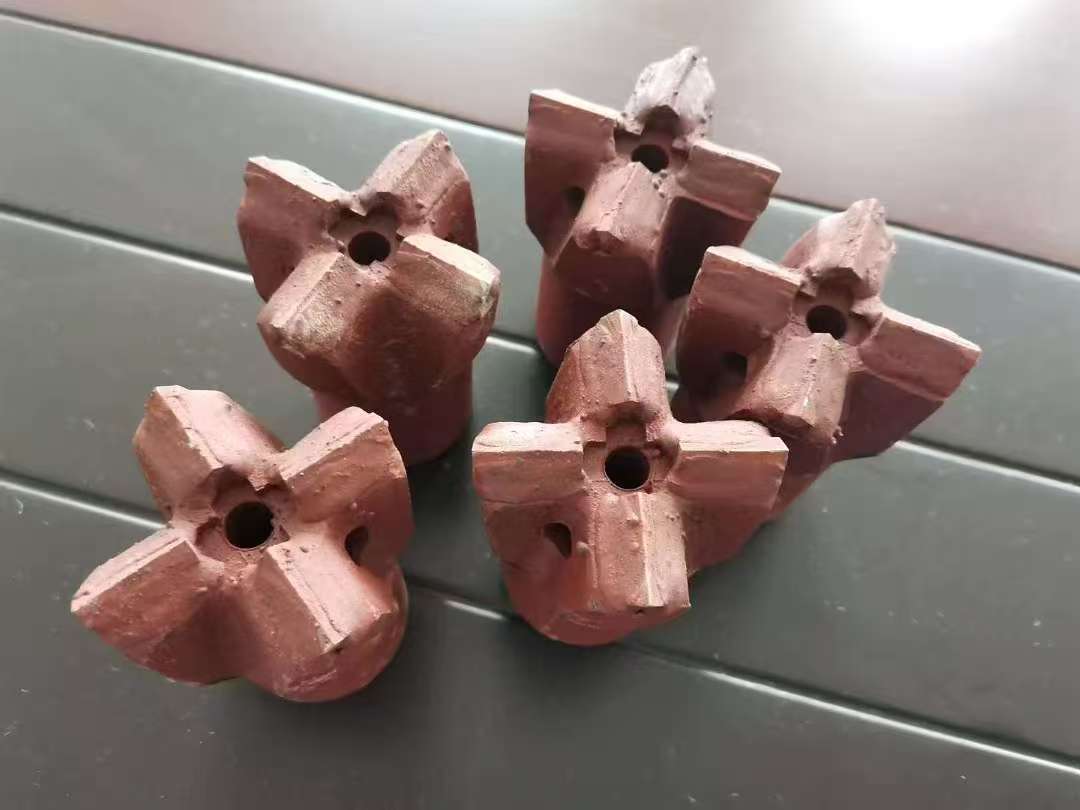
    Blast furnace drill bits are small, consumable, and easy to buy badly. The bit has one job – open a taphole that has been sealed with clay – but it does that job against a mixture of sintered clay, coke, slag and heat, at the end of a long tool string, with a crew waiting on the other side. A bit that looks cheap on the invoice can be the most expensive item in the cast house if it loses teeth on the first hole or stalls halfway through the second.

    What the bit actually has to cut

    A rock bit usually meets a relatively uniform formation. A taphole is not uniform. The clay has been baked by the furnace, mixed with coke and slag, and the channel is surrounded by a temperature gradient that rises steeply toward the iron. The bit crosses soft and hard bands in the same hole, and the abrasive particles wear the steel body as well as the carbide.

    Heat is the second difference. The cutting face sits close to liquid iron, and the steel shank conducts heat back toward the machine. Water must reach the face continuously, both to cool the carbide and to carry clay out of the flutes. A blocked water hole does not simply slow the drill; it can destroy the bit in one pass. A taphole bit is therefore a cooling tool as much as a cutting tool.

    The parts that make up a taphole bit

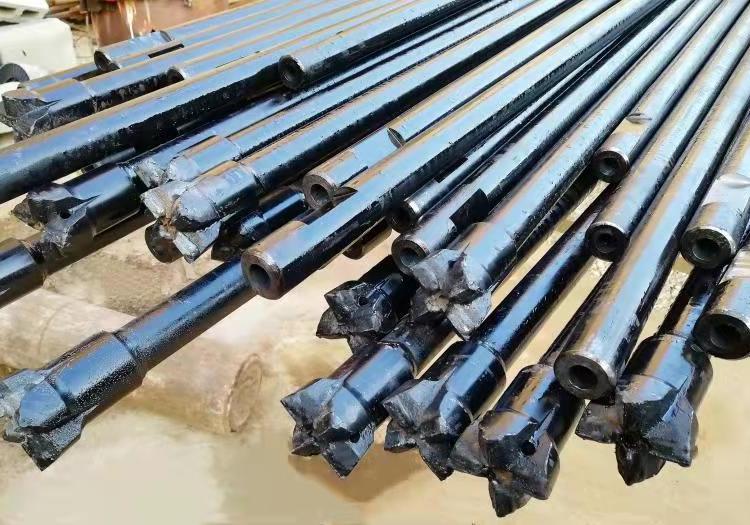
    • Bit body: usually a 42CrMo or 40Cr forging, quenched and tempered for a balance of strength and toughness.
    • Carbide inserts: YG8, YG11C or similar grades, often coarse-grained for shock resistance rather than maximum hardness.
    • Flutes: one-wing, cross, three-wing, four-wing or spiral, depending on how the clay breaks and how much clearance the hole needs.
    • Water holes: a central passage and side ports that deliver coolant to the cutting edges and flush the flutes.
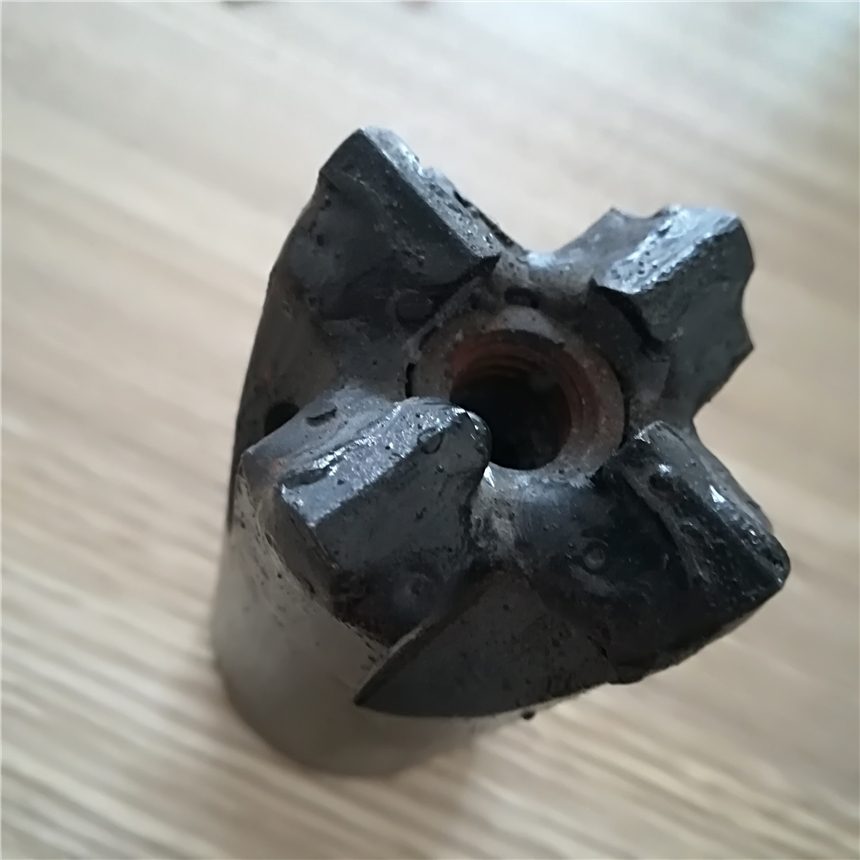
    • Thread: R32 or R38 trapezoidal thread, commonly left-hand so that the bit tightens against the rotation used for withdrawal.
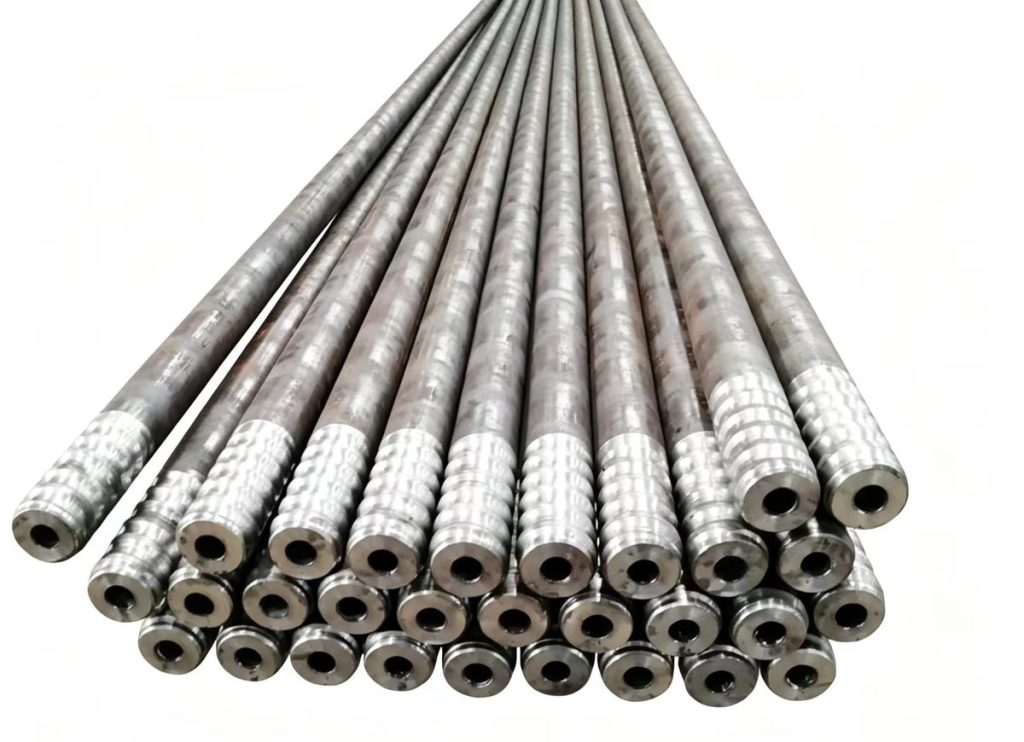
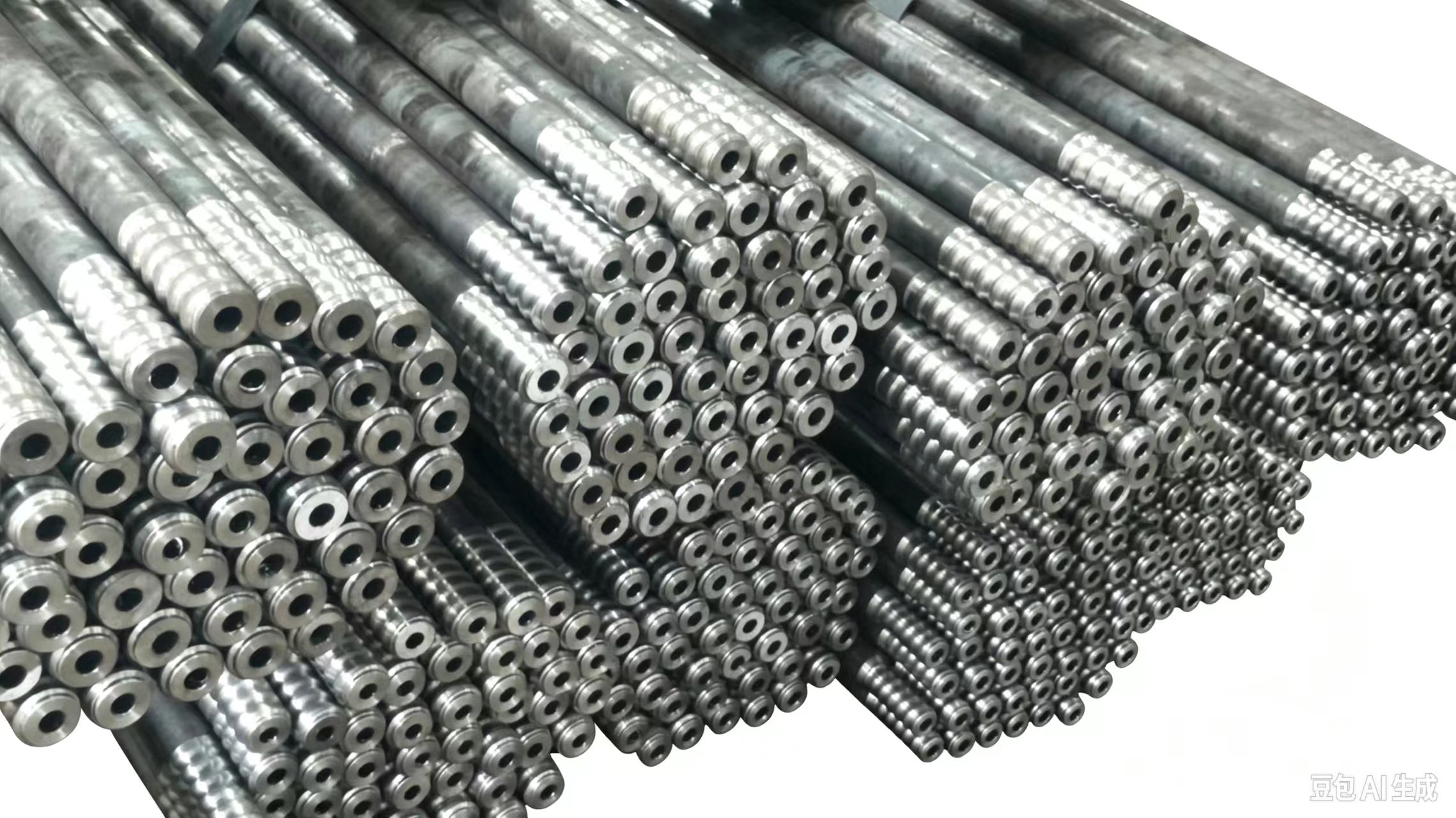
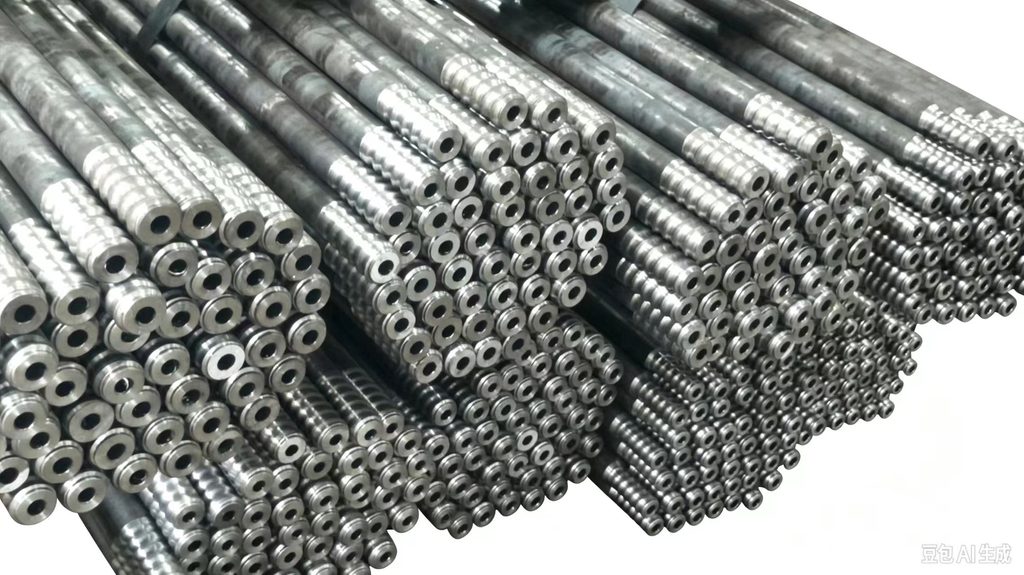
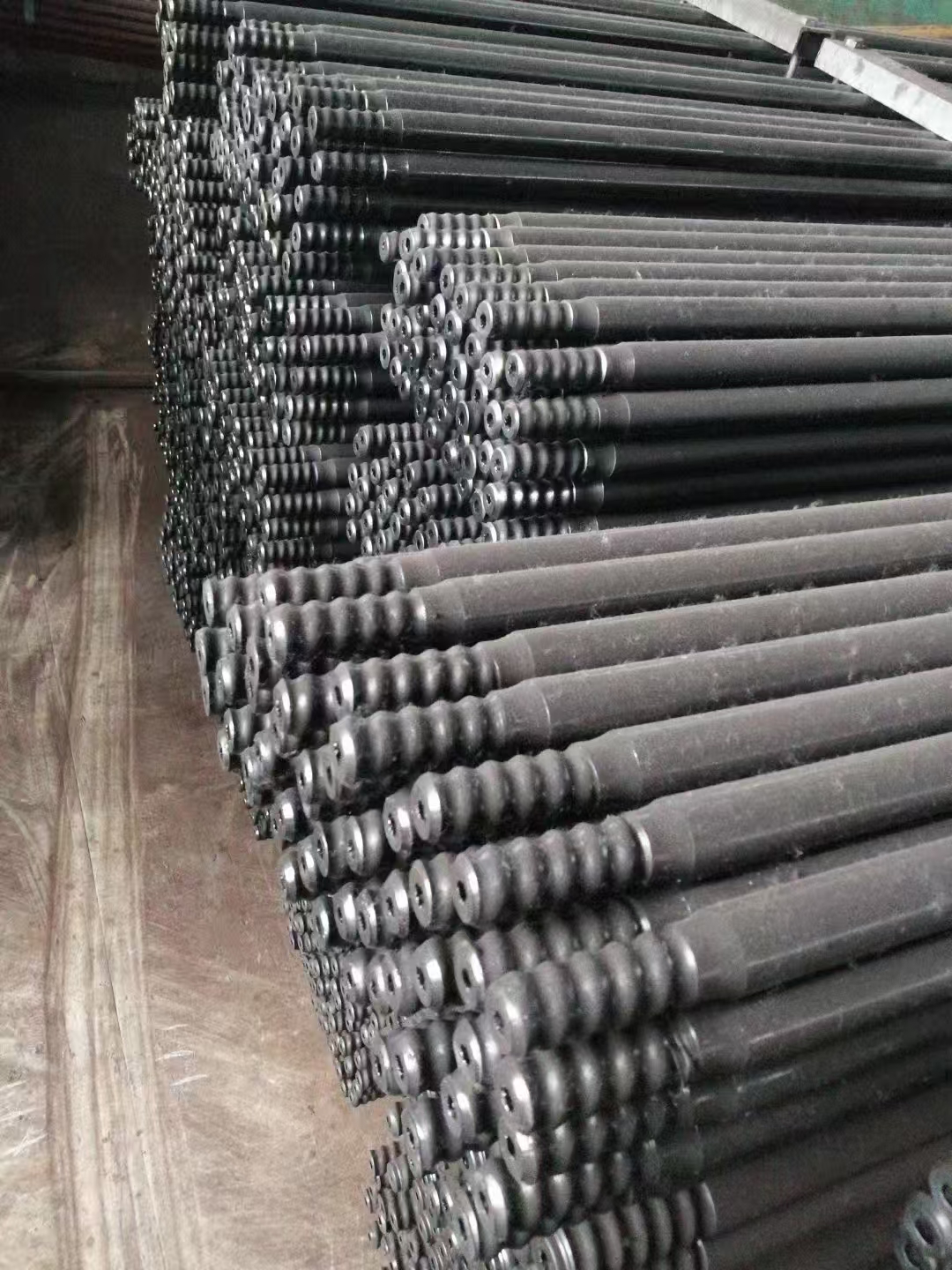
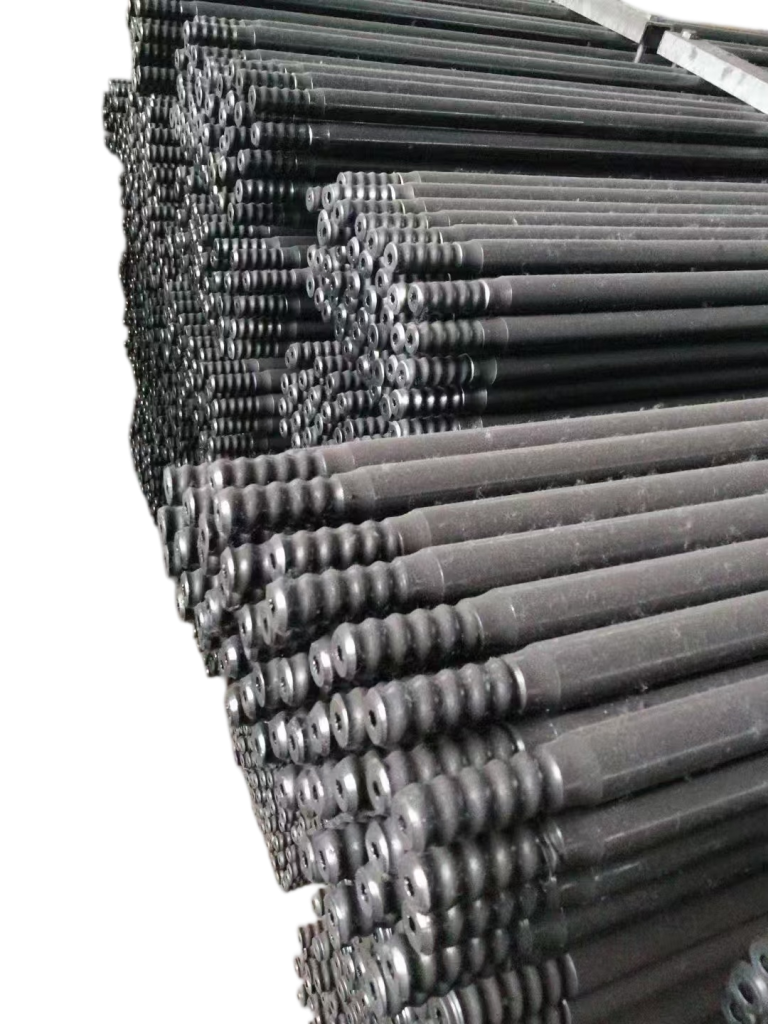
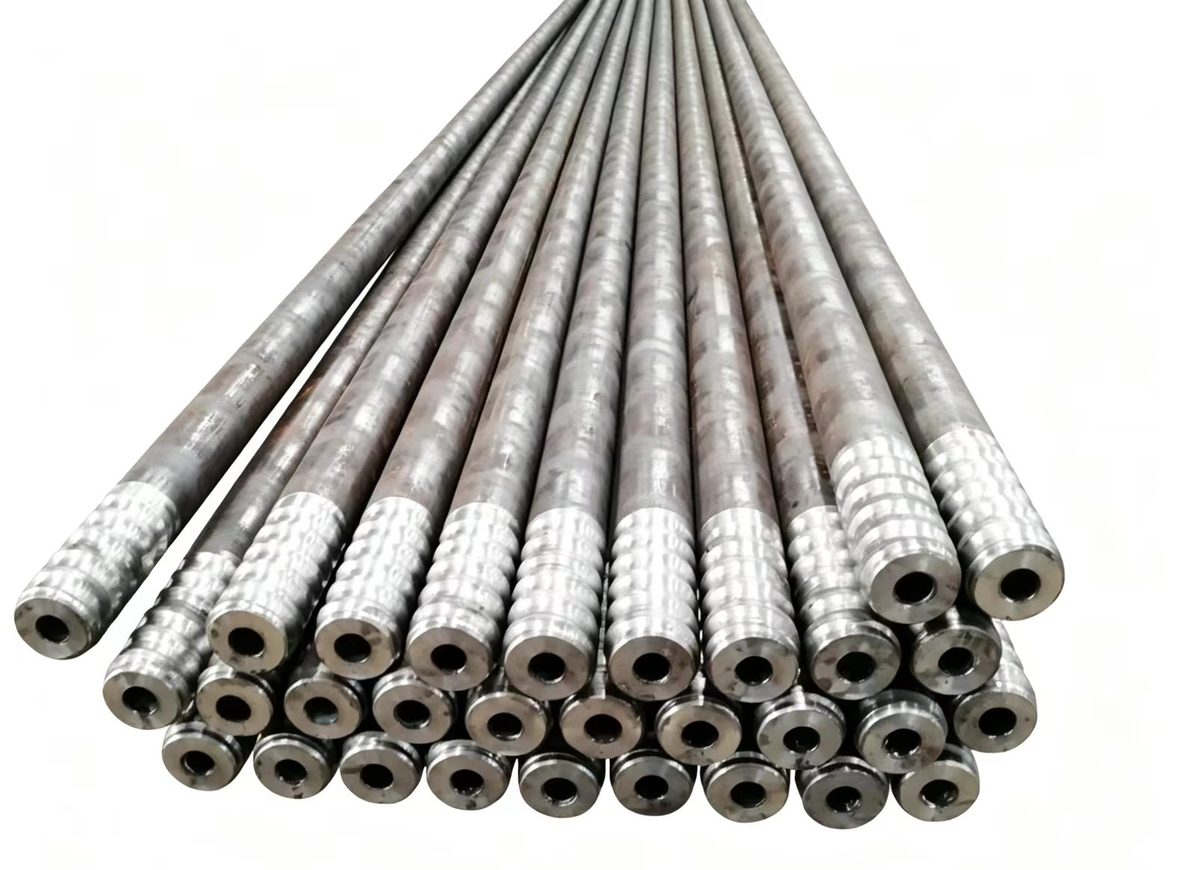
    • Drill rod: hollow hex steel or thick-wall tube that transmits impact, torque and water without adding unnecessary bending.

    These parts are a system. In the field, a high proportion of short lives are not caused by a worn tip at all. They come from a blocked water hole, a damaged thread, a bent rod or a bit that was never aligned with the taphole. Buying a harder insert will not fix any of those.

    Head geometry: what each style is for

    There is no universal winner. Each head shape makes a different trade between centering, cutting speed, flushing and cost.

    • One-wing or chisel: simple and low cost, but limited centering and slower in hard clay.
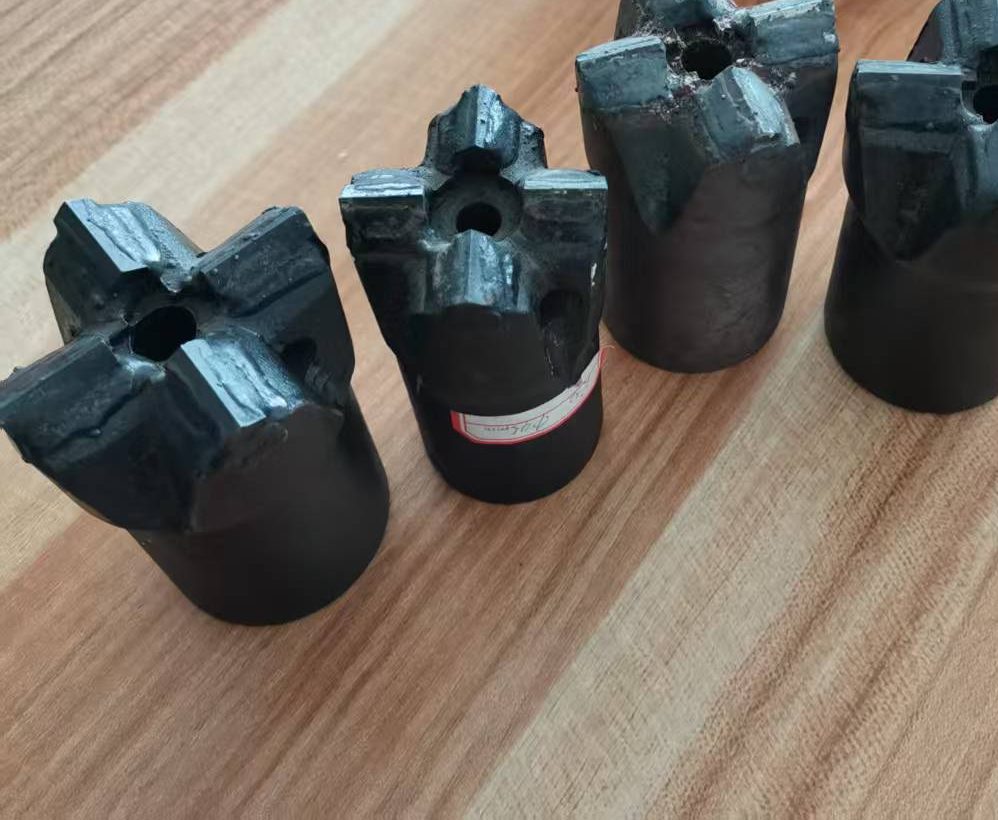
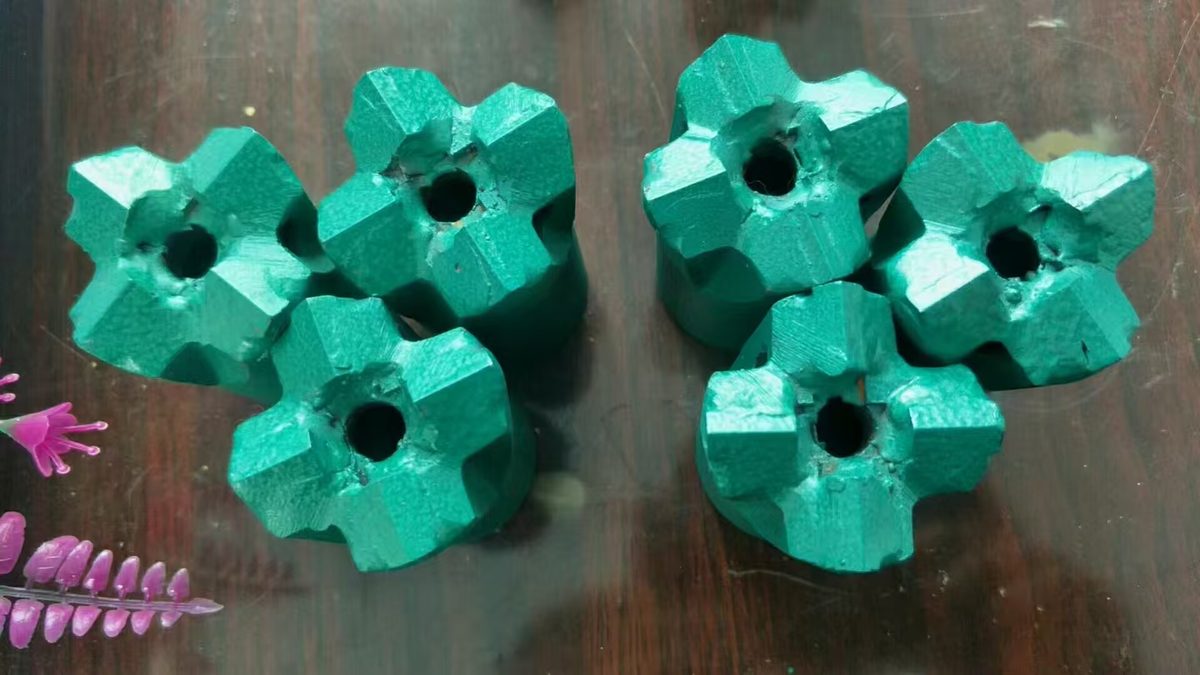
    • Cross: four cutting edges, good centering and good flushing, which is why it is the general-purpose choice in many cast houses.
    • Three-wing or four-wing: more carbide and faster cutting in hard, well-sintered clay, with better resistance to deviation; the trade-off is higher torque and a greater demand on the rod and machine.
    • Button: rounded inserts resist shock and abrasion, but are less aggressive in soft, sticky clay.
    • Replaceable head: reuses the rod and shank and lowers stock cost, provided the head-to-rod interface is made to a consistent standard.

    The choice follows the furnace and the clay: taphole depth, clay strength, coke content, opening machine power, water pressure, and the crew’s habit. A hard, well-sintered clay rewards more cutting edges and a wear-resistant grade. A soft, sticky clay can benefit from more flute volume and a less aggressive head, because the problem is clearing the hole rather than breaking the clay. This is the same logic behind matching bit design to taphole clay.

    What to check in the specification

    A purchase specification for blast furnace drill bits should be short enough to be read and precise enough to be enforced. At minimum, it should state:

    • Bit diameter and tolerance, plus the intended taphole depth range.
    • Thread standard and hand (left or right), with a gauge or sample for verification.
    • Carbide grade and insert geometry, including the exposed height and brazing standard.
    • Water hole diameter, position and minimum flow at the specified pressure.
    • Body material, hardness range and surface treatment.
    • Marking, packaging and the batch traceability the supplier will provide.

    The thread clause is not paperwork. A left-hand R32 connection supplied as a right-hand thread is scrap with a shipping invoice. The same applies to a bit diameter that is nominal rather than measured. Our guide to R32 left-hand threads explains the interface in more detail, and the manufacturing route from round bar to cross bit shows where the critical tolerances are set.

    Failure modes and what they tell you

    The way a bit dies is feedback. Read the pattern before changing the supplier or the grade.

    • Insert cracking or loss: brazing voids, thermal shock or excessive feed. Inspect the joint, control the cooling cycle and match feed to the clay.
    • Mushroomed or polished head: abrasive wear, too much speed or the wrong carbide grade. Try a coarser grade, reduce rpm and review the clay.
    • Burned bit or blocked water: dirty water, a failed filter or no pressure interlock. Filter and flush the line, fit a pressure switch and check flow before every start.
    • Thread damage or loosening: misalignment, over-torque or the wrong thread hand. Align the machine, control torque and verify the thread with a gauge.
    • Bent rod or stuck bit: too much thrust, poor flushing or clay that is softer than expected. Stage the feed, improve flushing and withdraw earlier.

    A bit that loses inserts at the braze line points to a joining problem. A bit that wears evenly to a mushroom shape points to grade or speed. A bit that fails at the thread points to alignment or handling. The failure mode is the starting point for the next purchase, not a reason to buy the most expensive bit in the catalogue.

    Operation: water, alignment and feed

    Most short bit lives are decided before the bit touches clay.

    • Before start: confirm water pressure and flow, align the machine with the taphole, clean and inspect the thread, lock the bit, and check for missing or cracked inserts.
    • During drilling: start at low speed to establish the hole, then apply impact, rotation and feed together. Reduce feed as the bit approaches breakthrough to avoid a sudden breakthrough and a spray of iron.
    • On withdrawal: keep the water on, follow the machine procedure, and inspect the bit, thread and water holes before it goes back into the rack.
    • After the tap: record hole depth, drilling time and failure mode. These three numbers turn a consumable into a managed item.

    The standard operating procedure for taphole drilling covers the sequence in more detail, but the principle is simple: a bit that is aligned, cooled and fed correctly will outperform a harder bit that is forced.

    The number that matters: cost per hole

    The invoice price of a blast furnace drill bit is a poor comparison because it ignores how many holes the bit opens. A useful measure is cost per hole:

    Cost per hole = annual spend on bits and rods / number of tapholes drilled in the year.

    A bit that costs 20% less but drills 30% fewer holes has made the plant poorer. The same arithmetic applies to the rod, the shank and the time the crew spends in front of the runner. This is the argument behind the four wear parts that decide cast house drilling cost, and it is the reason cost per metre is a better benchmarking unit than price per piece.

    Cost per hole also exposes the hidden cost of variability. A supplier whose bits average a good life but fail unpredictably is harder to plan around than a supplier with a slightly shorter but consistent life. Ask for a trial lot, run it on the same furnace and the same clay, and compare the distribution – not the best single result.

    Where the technology is going

    • Gradient carbides and tougher insert geometries that keep a hard surface and a shock-resistant core.
    • Surface treatments and laser cladding on the body and flutes to reduce abrasive wear.
    • Replaceable heads that reuse the rod and shank, cutting stock cost and shipping weight.
    • Machine monitoring of torque, feed, water pressure and vibration to detect a blocked hole or a dull bit before failure.
    • Life prediction from hole-by-hole data, moving maintenance from a fixed interval to a condition-based decision.

    None of these changes the fundamentals. The bit still has to cut the clay, clear the hole, hold the thread and survive the heat. Technology improves the margin for error; it does not remove the need to match the tool to the furnace.

    A system decision, not a spare part

    Blast furnace drill bits are often bought as a spare part and treated as a price line. They are better understood as one component of a system that includes the clay, the rod, the opening machine, the water supply and the crew. Get the system right and the bit becomes predictable. Get it wrong and even an expensive bit will fail early.

    The practical next step is narrow. Measure the hole, check the thread, confirm the water, and ask for a trial on cost per hole rather than a discount on the invoice. That is how a consumable becomes a controlled cost – and how the first cut into the taphole stops being a gamble. For the wider demand picture, see the market prospect for blast furnace taphole drilling tools.
  • Blast Furnace Drill Rod Matching Button Bits: Complete Drilling Set Assembly & Synergy Principle for Furnace Opening

    Blast Furnace Drill Rod Matching Button Bits: Complete Drilling Set Assembly & Synergy Principle for Furnace Opening

    Blast Furnace Drill Rod Matching Button Bits: Complete Drilling Set Assembly & Synergy Principle for Furnace Opening
  • Blast Furnace Drill Rod Material Guide: Quenched & Tempered 45# Steel vs High-Strength Alloy Steel

    Blast Furnace Drill Rod Material Guide: Quenched & Tempered 45# Steel vs High-Strength Alloy Steel

    Blast Furnace Drill Rod Material Guide: Quenched & Tempered 45# Steel vs High-Strength Alloy Steel

    The service life and on-site reliability of blast furnace drill rods fundamentally depend on the selection of pipe base material and heat treatment process. Blast furnace opening works under harsh conditions: the front end faces high-temperature radiation from the blast furnace and endures continuous impact energy, while the rotation of the opening machine brings huge torque. Once the material and heat treatment of the drill rod fail to meet standards, rod torsion fracture and thread collapse are highly likely to occur, directly leading to blast furnace shutdown and heavy economic losses. Therefore, selecting drill rod material scientifically according to blast furnace working conditions is the most important part of procurement.

    Our two mainstream material solutions for blast furnace drill rods are 45# high-quality carbon structural steel and high-strength alloy structural steel. 45# steel is the most widely used base material for blast furnace drill rods in the market. Raw materials adopt seamless steel pipes from large steel mills. After rough machining, the blanks are subject to overall quenching and tempering heat treatment. Quenching and tempering includes quenching and high-temperature tempering procedures, enabling steel to obtain good comprehensive mechanical properties with balanced strength, plasticity and toughness, and significantly improved resistance to alternating impact. The quenched and tempered drill rod is not prone to brittle fracture with controllable cost, suitable for daily tapping hole opening of conventional blast furnaces, and it is the most common model purchased by steel mills at home and abroad.

    For large blast furnaces with harsh working conditions or high-frequency deep hole opening scenarios, we recommend upgrading to high-strength alloy steel drill rods. Alloy steel contains alloy elements such as chromium and molybdenum. After heat treatment, it achieves higher yield strength, high temperature resistance and anti-fatigue life. Under continuous heavy impact and high-temperature radiation, alloy steel drill rods have smaller deformation and much better torsion fracture resistance than 45# steel. They are suitable for heavy-load and continuous blast furnace production lines. However, alloy steel raw materials and processing costs are higher, generally used for core blast furnaces of large steel groups.

    For either material, the thread part will undergo local strengthening treatment. Threads are the position with the most serious stress concentration on drill rods. We adopt precision machining combined with surface strengthening technology to improve thread hardness and wear resistance. The threads resist tooth collapse and wear after repeated screwing and disassembly. During production, each batch of raw materials comes with material certificates to eliminate inferior pipes from the source. At the finished product stage, in addition to conventional dimension and straightness inspection, ultrasonic flaw detection is added for high-end orders to detect hidden defects such as pores, slag inclusions and cracks inside the pipe.

    Many buyers confuse geological drill rods with blast furnace drill rods. Geological drill rods focus on rock drilling, and their high temperature resistance and impact resistance cannot match the harsh environment at the front of blast furnaces and cannot replace special blast furnace drill rods. Our technical team can recommend the most suitable material solution according to customers’ blast furnace model, opener parameters, drilling depth and daily opening frequency, balancing service life and procurement budget, and providing cost-effective drilling tool solutions for metallurgical customers.

  • Blast Furnace Drill Rod: Core High-Strength Threaded Drill Rod for Blast Furnace Tapping Hole Opening Operations

    Blast Furnace Drill Rod: Core High-Strength Threaded Drill Rod for Blast Furnace Tapping Hole Opening Operations

    In the blast furnace ironmaking process, the stability of the tapping hole directly determines the production rhythm of the blast furnace. As the core drilling tool for blast furnace opening machines to transmit torque and impact load, blast furnace drill rods are indispensable key components for tapping hole opening and blockage removal in steel plants. Different from ordinary geological drill rods, blast furnace drill rods work under high-temperature radiation at the front end of the blast furnace for a long time, bearing high-frequency impact, high torque torsion and alternating bending stress. They have strict requirements on material toughness, fatigue resistance and thread connection reliability.

    Our blast furnace drill rods are made of high-quality alloy seamless steel pipes. 45# steel with overall quenching and tempering heat treatment is the mainstream option, and high-strength alloy steel can be upgraded according to customer working conditions. After normalizing and quenching & tempering, the pipe body has uniform and refined metallographic structure, eliminating residual internal stress of the pipe, greatly improving torsion resistance, bending resistance and impact resistance. It resists plastic deformation and fracture failure under high-temperature conditions. The connecting threads at both ends of the drill rod are precisely turned by CNC machine tools, with regular thread profile and strictly controlled tolerance. The large meshing contact surface ensures uniform and stable torque transmission. Multiple drill rods can be quickly connected and extended through threads, easy to assemble and disassemble, avoiding decoupling, thread slipping and loosening during operation.

    The complete drill rod can be matched with cemented carbide button bits to form a complete blast furnace opening drill set. Custom specifications are available. Diameter and single length can be customized according to the opener model and drilling depth requirements. Rods ranging from 1m short rods to 3m extended rods can be processed, flexible for single use or multi-rod connection. Every finished drill rod is inspected for straightness and thread dimension. NDT non-destructive testing is added for key orders to detect tiny internal cracks.

    The products are widely used in tapping hole drilling and clay removal maintenance of large and medium ironmaking blast furnaces, and also suitable for hole opening projects of submerged arc furnaces and other high-temperature furnaces. As an original manufacturer, we strictly control the whole production chain from raw material incoming inspection, heat treatment, thread finishing to finished product testing to guarantee product consistency. Durable blast furnace drilling tools effectively reduce shutdown accidents caused by drill rod breakage on site, cut steel mill operation and maintenance costs, and ensure continuous and stable tapping of blast furnaces. We welcome inquiries from global metallurgical enterprises and foreign traders. Professional solutions and quotations can be provided once working condition parameters are offered.

  • From the Front of the Furnace to the Production Line: How Shandong Feiteng Forges Blast-Furnace Drill Tool Quality

    From the Front of the Furnace to the Production Line: How Shandong Feiteng Forges Blast-Furnace Drill Tool Quality

    Blast-furnace drill bits and drill rods work for long periods in high-temperature, high-wear environments of 300~500°C, facing pot after pot of molten iron and hard taphole mud. Under such extreme working conditions, the quality of the product directly determines a steel plant’s tap-out rhythm and cost per ton of iron. So how does Shandong Feiteng Metal Products Co., Ltd. make every drill tool “durable, easy to use, and stable”? The answer lies in its production line.

    Precision Machining: CNC Machines Hold the “Dimension Gate”

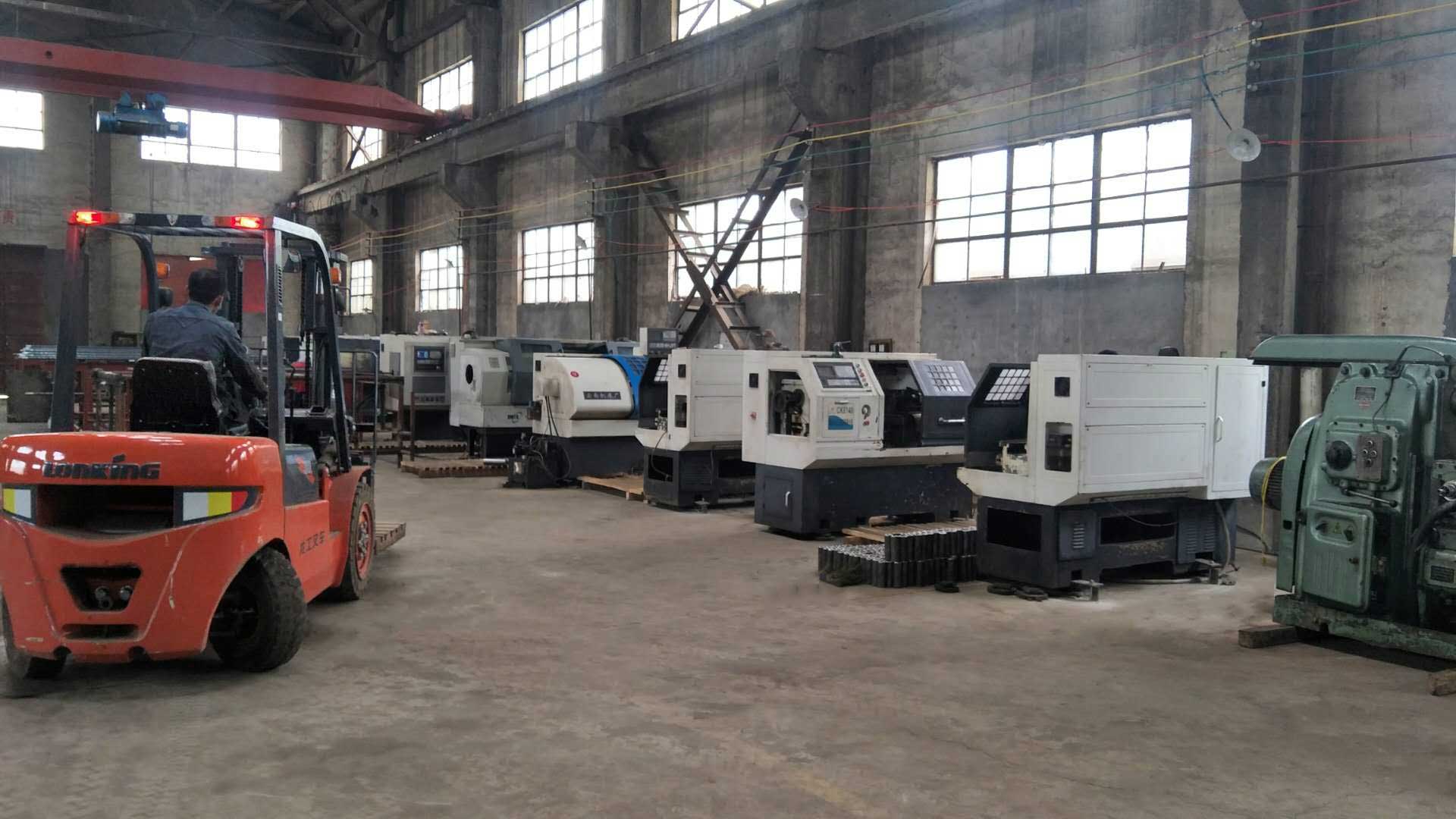
    In Shandong Feiteng’s machining workshop, CK6140 and other CNC lathes undertake precision machining of key components such as drill rods and coupling sleeves. The equipment precisely controls thread parameters, straightness, and dimensional tolerances, ensuring that every drill rod mates precisely with the drill bit, reducing energy transmission loss and improving tap-hole efficiency.

    Heat Treatment: Quenching and Tempering Guard the “Service-Life Gate”

    Inside continuous heat-treatment furnaces, glowing high-temperature bars undergo quenching and tempering under a strictly controlled temperature curve. Quenching ensures strength; tempering relieves internal stress and improves toughness. It is precisely these key processes that determine whether a drill rod “lasts” or “snaps easily,” and fundamentally guarantee the durability of the product.

    Full Chain: One-Stop Supporting Saves Effort and Worry

    From blast-furnace tap-hole drill bits and drill rods, to coupling sleeves, shank tails, and tamping rods, and further to mining drill bits and anchor rods, Shandong Feiteng has built a complete product system covering “tap-hole opener + mud gun + drill bit & rod + coupling sleeve & shank tail.” Customers can equip the full set of blast-furnace front-end drill tools in a single procurement, not only avoiding the hassle of coordinating multiple suppliers but also ensuring better fit and stability of the products.

    Rigorous Management: Safety in Production Is the Cornerstone of Quality

    Slogans such as “Safety in Production Is Everyone’s Responsibility” and “Safety First, Prevention First” can be seen everywhere in the workshop. Standardized operating procedures and strict on-site management are the strong endorsement of batch-to-batch consistency.

    From precision machining to heat treatment, from full-chain supporting to standardized management, Shandong Feiteng writes “durable, stable, and well-adapted” into every blast-furnace drill tool through its visible processes, providing trustworthy front-of-furnace assurance for steelmaking and mining engineering.

  • Foreign Customers Visit Shandong Feiteng: A New Impetus for Blast-Furnace Drill Tools “Going Global”

    Foreign Customers Visit Shandong Feiteng: A New Impetus for Blast-Furnace Drill Tools “Going Global”

    Recently, a group of overseas customers made a special trip to Shandong Feiteng Metal Products Co., Ltd., conducting on-site inspection of the factory and workshops and business negotiations, exchanging views on the procurement and customized cooperation of blast-furnace drill bits, drill rods, and supporting tools, adding new momentum to the enterprise’s export business.

    In-Depth Visit of the Workshops

    During the factory tour, the overseas customers visited the company’s production workshops and warehousing areas. From precision cutting on CNC lathes, to high-temperature tempering in heat-treatment furnaces, to stacks of drill bits, drill rods, and coupling sleeves ready for shipment, the customers showed keen interest in Shandong Feiteng’s complete product system and standardized production management. During the inspection, the customers paused to examine equipment parameters and product details, and had in-depth discussions with the company’s technical and commercial teams on product specifications, non-standard customization, delivery lead times, and after-sales support.

    Customization Capability: What Foreign Customers Value Most

    As a professional manufacturer deeply engaged in the blast-furnace drilling field, Shandong Feiteng has always taken “complete product line, source-factory direct sales, fast customization response, and outstanding cost-performance” as its core competitiveness. Facing differentiated demands such as special connection methods of imported tap-hole openers and uneven hardness of slag and iron in the furnace, the company can undertake non-standard customization thanks to its independent processing capability, producing dedicated drill bits, coupling sleeves, and drill rods tailored to drill machine models and drawings. This rapid-response and customized adaptation capability is exactly what overseas customers value most about Shandong Feiteng.

    In recent years, as domestic blast-furnace drill tools have benchmarked international first-line brands in high-temperature resistance and wear resistance, the overseas recognition of domestic-made drill tools has continued to rise. With stable quality and flexible service, Shandong Feiteng is steadily opening up the international market, bringing more “Made in China” blast-furnace drill tools to the world.

    Win Trust with Quality, Expand the Market with Service

    Shandong Feiteng will continue to embrace an open attitude, welcoming more domestic and overseas customers to visit the factory and pursue win-win cooperation.

  • Into Shandong Feiteng: The Solid Strength of a Blast-Furnace Drill Tool Source Factory

    Into Shandong Feiteng: The Solid Strength of a Blast-Furnace Drill Tool Source Factory

    In the Sunzhuang Industrial Park of Feicheng, Tai’an, Shandong Province, sits Shandong Feiteng Metal Products Co., Ltd., a professional manufacturer specializing in blast-furnace tap-hole drill tools and rock drilling tools. Walking through the factory gate, plaques such as “Provincial Advanced Enterprise,” “Creditworthy Enterprise,” and “Municipal Civilized Unit” attest to the reputation and strength this enterprise has built up over more than a decade.

    The factory is well laid out with materials neatly arranged. On one side of the road, metal pipes and profiles wrapped in protective covers are stacked in order, while heavy trucks shuttle through, reflecting a busy, order-filled production rhythm. The office area and production workshops are clearly zoned, presenting a modern enterprise managed in a standardized and institutionalized manner.

    Advanced Equipment: The Foundation of a Source Factory

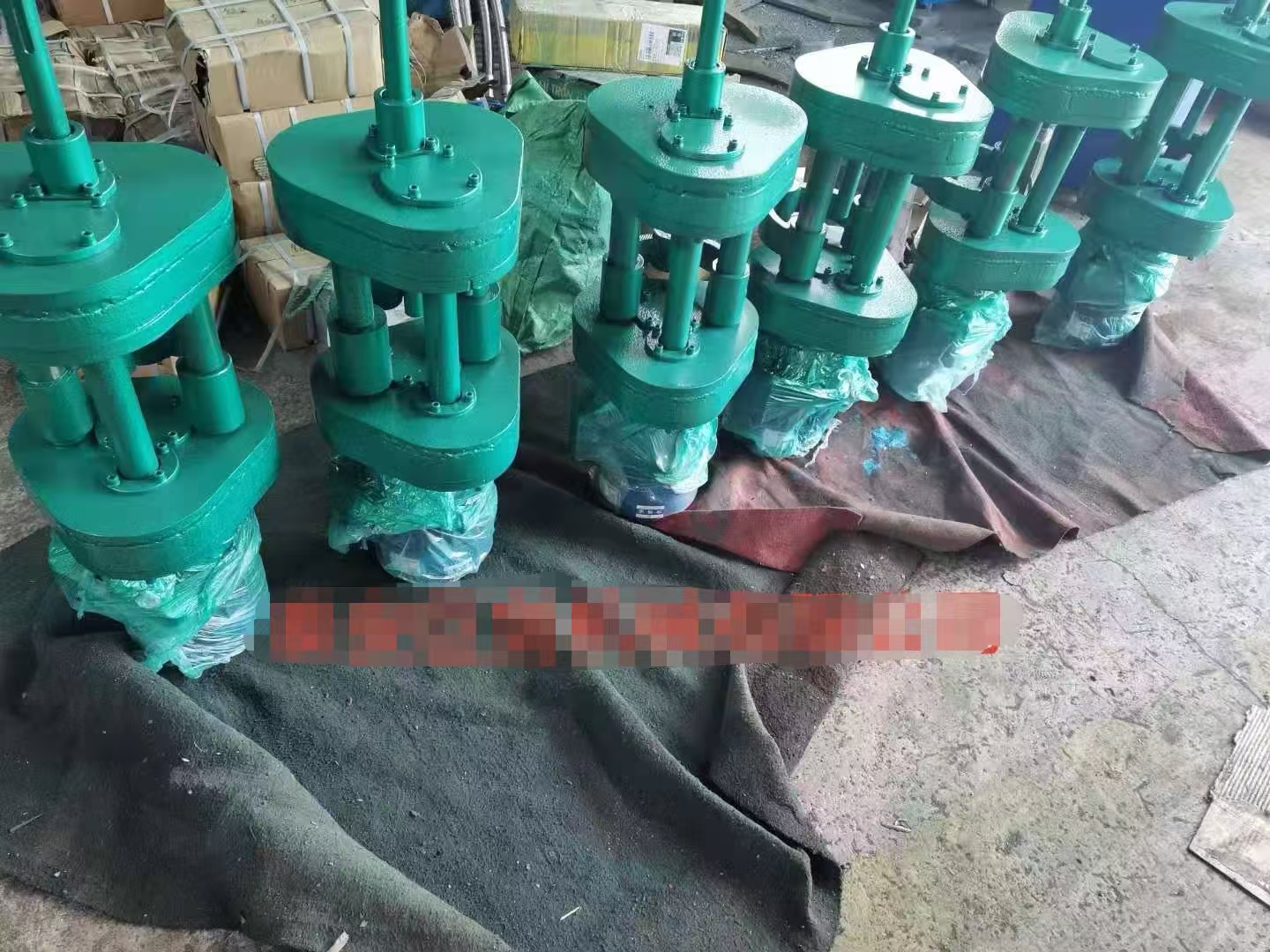
    Inside the workshops, rows of CNC lathes stand in neat formation. CK6140-series machines handle the high-precision processing of core components such as drill rods and coupling sleeves; older milling machines, Lonking forklifts, metal rolling equipment, and continuous heat-treatment furnaces each play their part, forming a complete production chain from blanking and machining to heat treatment and finished products. Overhead 3-ton and 28-ton cranes dispatch heavy parts as needed, guaranteeing supply capacity and batch-to-batch consistency for volume orders.

    A Complete Product Line: Its Greatest Advantage Over Typical Factories

    From blast-furnace tap-hole drill bits (cross-type, ball-tooth type) and drill rods, to coupling sleeves, shank tails, tamping rods, and demolition-machine bits, and further to mining drill bits and anchor rods, Shandong Feiteng has built a full-chain product system covering “tap-hole opener + mud gun + drill bit & rod + coupling sleeve & shank tail” around blast-furnace front-end tap-hole operations, enabling true one-stop procurement of drilling tools.

    Busy Production, Never Forgetting Safety

    Slogans such as “Safety in Production Is Everyone’s Responsibility” and “Safety First, Prevention First” can be seen on the workshop walls. Standardized management and rigorous operating procedures are the solid guarantee of high-quality, high-stability products.

    From source factory to full-chain supply, Shandong Feiteng provides reliable blast-furnace drilling solutions for ironworks and mining engineering customers at home and abroad with tangible production strength.

  • China Drill Bit and Drill Rod Industry Outlook: Market Growth and the Blast Furnace Segment

    China Drill Bit and Drill Rod Industry Outlook: Market Growth and the Blast Furnace Segment

    China’s drilling tools industry is moving from a volume-driven consumable business toward a technology, service, and lifecycle-cost business. This shift is especially visible in blast furnace taphole drilling, where one failed bit or rod can interrupt an entire tapping sequence.

    This outlook reviews the size and structure of China’s drill bit and drill rod market, the forces supporting demand through 2030, and the product, material, and procurement decisions shaping the blast furnace drill bit and drill rod segment.

    2025 industry size
    RMB 41.98bn
    Drill bits and drill rods combined

    Market growth
    More than 8%
    Year on year in 2025

    Fastest segment
    All-steel bits
    12.3% growth in 2025

    Blast furnace demand
    About 8%
    Average annual growth over two years

    Industry Positioning: The Essential Consumable of Underground Operations

    Drilling tools are core consumable components used in rock drilling, exploration drilling, pile foundation construction, oil and gas extraction, and blast furnace smelting. The main categories include rock drilling rods and bits, geological drilling tools, oil and gas drilling tools, rotary drilling bits for bored piles, and blast furnace taphole drilling tools.
    These products directly affect drilling efficiency, safety, and total operating cost. They support mining, infrastructure, steelmaking, and energy development, which is why they are often described as the essential consumable of underground operations.

    The Chinese industry has shifted from supplying a single consumable to providing a complete drilling solution. Market scale has continued to expand, but the more important change is structural: customers increasingly compare carbide grade, heat treatment, connection accuracy, service life, technical support, and total cost rather than unit price alone.

    Market Size: Growth Ahead of Manufacturing Overall

    According to third-party industry estimates cited in the source material, China’s combined drill bit and drill rod market reached approximately RMB 41.98 billion in 2025, growing by more than 8% year on year. That rate was significantly higher than the growth of overall manufacturing investment during the same period.

    Segment 2025 Growth 2026 forecast
    Overall drill bit industry RMB 20.00bn +10.0% RMB 22.00bn
    Heavy-duty drill rod RMB 20.05bn +7.05% RMB 21.47bn
    All-steel drill bits RMB 1.58bn +12.3% RMB 1.77bn
    Rotary drilling bits for bored piles RMB 6.90bn +7.5% RMB 7.42bn
    Diamond core drill rods RMB 195m High-barrier niche RMB 211m
    Core sampling bits and related tools RMB 14.84bn Flat, rigid demand Not specified

    In the rock drilling rods and bits segment, China’s drill steel and drilling tools industry reached approximately RMB 12.86 billion in 2025, up 6.3% year on year. That compared with 5.1% growth in general machinery manufacturing. Globally, the rock drilling tools market grew from USD 8.2 billion in 2018 to an estimated USD 12.5 billion in 2026, a compound annual growth rate of about 8.9%, with China’s share rising year by year.

    Forecast of China drill bit and drill rod market size by segment, 2025 to 2030 Line chart measured in RMB 100 million. Drill bits rise from 200 to 322.1, heavy-duty drill rods from 200.5 to 268.3, rotary drilling bits from 69 to 97.6, and all-steel drill bits from 15.8 to 25.1. Forecast Market Size by Segment RMB 100 million 0 100 200 300 2025 2026 2027 2028 2029 2030 Drill bit industry Heavy-duty rod Rotary bit All-steel bit
    Data source: Boyan Consulting, Market Research Online, and other third-party estimates cited in the source material. Forecasts are forward-looking and may vary with steel output, capex, and raw-material prices.

    A Market Led by Four Different Growth Engines

    • All-steel drill bits: 12.3% growth, fastest. Deeper mining, a larger share of hard-rock operations, and faster import substitution are helping this segment move into mid-to-high-end applications.
    • Rotary drilling bits: 7.5% growth, largest segment. Urban renewal, rail transit, and major water projects continue to support demand. The first replacement peak is also approaching for rotary drilling rigs delivered in 2019-2021. Replacement demand for matching bits rose from 38% in 2023 to 46% in 2025.
    • Heavy-duty drill rods: 7.05% growth. These rods are critical load-bearing components in oil and gas wellbore engineering and deep geothermal development.
    • Diamond core drill rods: small volume, high barriers. Long order visibility of more than three years is tied to the national strategic mineral exploration program.

    Three Drivers: Policy, Demand, and Import Substitution

    Policy support is becoming more specific. The Three-Year Action Plan for the Independent Development of Strategic Mineral Resources Exploration and Exploitation Equipment (2025-2027) lists high-performance geological drilling tools among key basic components. It sets a target of 86.3% domestic localization for core components. Advanced manufacturing tax incentives, including a higher R&D expense super-deduction ratio of 130%, also support investment.

    Downstream demand remains broad. Infrastructure, energy, and resource exploration create rigid demand on three fronts. Urban underground space, rail transit, and water conservancy hubs support construction drilling. Shale gas, tight oil, geothermal energy, and conventional oil and gas drive energy drilling. The new round of strategic mineral prospecting supports geological exploration. China’s petroleum drilling and production equipment industry was approximately RMB 159 billion in 2025, supporting demand for drilling tools.

    Import substitution is moving into harder conditions. In wells deeper than 7,000 meters, shale gas horizontal wells, and urban underground space, domestic tools are now benchmarked against leading international brands on impact toughness, heat-treatment consistency, and connection reliability. The opportunity is no longer limited to lower cost; it also includes faster customization and localized technical service.

    Technology Trends: High-End, Intelligent, and Longer-Lasting

    Materials and process upgrades

    42CrMo and 35CrMo alloy steels, cemented carbide, and polycrystalline diamond compact materials have become mainstream. All-steel drill bits now benchmark international performance on low-temperature impact energy at -40°C, hardness dispersion, and batch consistency. Heat treatment remains the dividing line between a tool that lasts and one that fails early.

    Intelligent adaptation

    Rotary drilling bits are being developed for compatibility with the CAN bus communication used by intelligent rotary drilling rigs. Single-operation life has increased to 1.8 times that of traditional products in some applications.

    Digital management

    Some high-end tools now include RFID chips for full-lifecycle tracking. Modular quick-change structures reduce on-site changeover time to within 90 seconds. The industry is moving toward an integrated hardware-plus-data-service model.

    From product supply to total solutions

    Customers increasingly request drill bits, drill rods, selection support, and lifecycle service together. Competition is shifting from price toward total lifecycle cost, technical response, and the ability to keep the complete drilling system compatible.

    Challenges Facing the Industry

    • Raw-material pressure: Special steel, tungsten carbide powder, and cobalt powder prices remain high and volatile. Overall manufacturing costs rose about 4.7% in 2025.
    • Homogeneous competition: Mid-to-low-end products remain highly similar, creating persistent price competition.
    • High-end processing gap: Deep-processing and fine-processing capacity for high-end cemented carbide is still insufficient, and some key materials and processes remain import-dependent.
    • Cyclical demand: Oil and gas and geological exploration products are affected by oil prices and fiscal appropriation cycles, making demand timing volatile.

    Despite these constraints, the next five years are expected to follow a path of steady total growth and accelerated structural upgrading. By 2030, forecasts cited in the source material show the overall drill bit industry reaching approximately RMB 29.28 billion, heavy-duty drill rods reaching RMB 26.83 billion, all-steel drill bits reaching RMB 2.51 billion, and rotary drilling bits reaching RMB 9.76 billion.

    The competitive basis will continue moving from capacity and price toward technology, service, and whole-lifecycle cost. Companies that complete high-end and intelligent layouts first are best positioned to lead.

    Blast Furnace Drill Bits and Rods: A High-Wear, High-Consequence Segment

    What the tools do

    Blast furnace drill bits and drill rods are furnace-front consumable tools used with a taphole drill, clay gun, or mud gun. They drill through the clay and refractory material plugging the taphole to create a channel for tapping molten iron.

    These tools determine tapping rhythm. If a rod snaps, a carbide tooth breaks, or penetration slows, the entire smelting process can be delayed. Their operating conditions are among the most severe in drilling: long exposure to temperatures of 300-600°C, intense friction against taphole clay and refractory material, and uneven hardness in the slag-and-iron mixture.

    The three core requirements are therefore high-temperature resistance, wear resistance, and impact resistance.

    Three mainstream drill bit types

    Type Common size Key advantage Best application Cost position
    Cross type Φ28-Φ120 mm Sturdy body and large bore-wall contact area Standard blast furnace tapping; most widely used General-purpose
    Button type Φ35-Φ80 mm Wear-resistant carbide buttons and strong impact resistance Complex furnace conditions and uneven slag-iron hardness Better overall value
    Three-jaw type Φ40-Φ75 mm Simple structure and flexible operation Shallow tapping, auxiliary work, and emergency repair Highest cost-effectiveness

    Selection should not depend on one parameter. Evaluate hearth volume, tapping frequency, and slag-and-iron hardness together. When conditions are uniform and tapping difficulty is moderate, a cross-type bit can offer better value. When temperature fluctuates widely and hard spots are common, a button-type bit can provide stronger impact and wear resistance and reduce the risk of breakage.

    Matching drill rods

    Blast furnace drill rods are mainly available in 32 mm and 38 mm specifications. Common thread types include T38, R38, T32, and R32. Typical rod models include Φ38×12/10/8 mm and Φ32×12/10 mm.

    Drill rods and bits must be precisely matched. If thread parameters, straightness, and hardness do not align with the bit, energy transfer is lost, tapping efficiency declines, and joint wear accelerates. This is one of the most frequently overlooked details during procurement.

    Materials and processes that determine service life

    Drill rods are mainly made from alloy steels such as 45#, 40Cr, 42CrMo, 16Mn, and 20CrMnTi. 42CrMo offers higher strength and hardenability than 35CrMo and suits rods that carry impact loads. Quenching at approximately 850°C in oil followed by tempering at approximately 560°C, combined with surface hardening, can produce an effective hardness-toughness balance.

    Drill bit buttons generally use tungsten carbide-cobalt alloy with 8%-12% cobalt content. The buttons are sintered at high temperature and fixed to the bit body through vacuum brazing. This combines high hardness with high-temperature resistance.

    Heat treatment is the dividing line between a rod that lasts and one that snaps. Quenching provides strength, while tempering relieves internal stress and improves toughness to reduce brittle fracture.

    Procurement is moving to total lifecycle cost

    Blast furnace drilling tool consumption has grown at an average annual rate of about 8% over the past two years, supported by larger furnaces and longer campaign lives. At the same time, steel mills are shifting from lowest-unit-price comparison to total-lifecycle cost accounting.

    The number of effective tapping cycles delivered by one bit directly affects cost per ton of iron. Rising scrap-steel recycling also makes furnace conditions more complex, increasing the risk of rod snapping and tooth breakage with low-quality tools.

    Suppliers are generally assessed across three dimensions:

    ~40%
    Capacity and equipment

    ~35%
    Quality system and process control

    ~25%
    Customization and R&D support

    Selection and Configuration Workflow

    1. Assess operating conditions.
    Record hearth volume, tapping frequency, slag-and-iron hardness, hole depth, and machine data.
    2. Select the drill bit.
    Compare cross, button, and three-jaw designs against penetration, impact, wear, and budget priorities.
    3. Configure the drill rod.
    Confirm 32 mm or 38 mm size, T38/R38/T32/R32 thread, material, length, straightness, and shoulder contact.
    4. Evaluate the supplier and lifecycle cost.
    Compare production capacity, process control, customization support, drill cost per ton of iron, batch consistency, and after-sales service.

    Competitive Landscape and a Representative Manufacturer

    Blast furnace drilling tools show a pronounced regional cluster pattern. Shandong is a core production area, with the Yanggu rock-drilling cluster in Liaocheng and the heavy-industry equipment supporting circle around Tai’an and Feicheng. Industry concentration remains low, and specialized small and medium-sized manufacturers dominate.

    The strongest suppliers are distinguished by complete product lines, large-scale processing and customization capability, and full-chain drilling tool supply.

    Shandong Feiteng Metal Products logo

    Representative manufacturer

    Shandong Feiteng Metal Products Co., Ltd.

    Professional blast furnace taphole drilling tools from Sunzhuang Industrial Park, Feicheng, Tai’an, Shandong.

    A manufacturer rooted in Tai’an

    Shandong Feiteng Metal Products Co., Ltd. is located in Sunzhuang Industrial Park, Feicheng, Tai’an City, Shandong Province. The site is adjacent to the Jingtai Expressway, Jinghu Expressway, Beijing-Shanghai High-Speed Railway, and National Highway 104.

    Registered in 2016 with registered capital of RMB 30 million, the company combines production flexibility with a focused product strategy. It has operated e-commerce channels for many years, including 10 years on the 1688 platform, building a stable supply record and customer reputation.

    Full-chain supply around the taphole

    Unlike manufacturers that produce only a single bit or rod, Shandong Feiteng builds its product system around blast furnace front-end tapping operations:

    • Blast furnace drill bits: 55R38 cross bits, T38 drill bits, R-thread connection tapping bits, and T28×45 mm external-thread bits, covering cross and button structures for different furnace conditions and drill models.
    • Blast furnace drill rods: mainstream specifications such as T38, matched with the company’s bits to control thread parameters, straightness, and hardness and reduce energy-transfer loss.
    • Supporting parts: R38 internal-hex connection sleeves, drill shanks, knocking bars, dismantling-machine bits, one-blade taper bits, mining bits, and anchor rods.

    This taphole drill, clay gun, drill bit and rod, connection sleeve, and shank one-stop supply capability aligns with steel mills’ shift from single-item price comparison to integrated configuration and total usage cost accounting. It also reduces coordination and inventory complexity across multiple suppliers.

    Customization for complex furnace conditions

    Imported taphole drills may use special connection methods, while slag-and-iron hardness can vary considerably inside the furnace. Shandong Feiteng undertakes non-standard customization and produces dedicated bits, connection sleeves, and drill rods according to machine models and drawings.

    Under high-temperature and high-wear conditions of 300-600°C, its blast furnace tools are designed for stable heat and wear resistance. This supports larger, longer-life furnaces and the more complex conditions created by a rising share of scrap-steel recycling.

    Market position

    As a specialized blast furnace front-end drilling tool manufacturer, Shandong Feiteng competes on complete product lines, source-factory direct supply, fast customization response, and cost-effectiveness. Its primary customers include domestic ironmaking plants, blast furnace front-end operations, and mining engineering customers.

    As procurement moves from low-quality price comparison to lifecycle cost accounting, manufacturers with complete matching capability and rapid customization are becoming priority partners for steel mill purchasing departments.

    Conclusion: Rigid Demand, Structural Upgrading, and a Higher Bar for Suppliers

    China’s drilling tools industry is in a window defined by rigid downstream demand, sustained policy support, and value re-rating through technology. Within that market, blast furnace drill bits and rods represent a high-temperature, high-wear consumable segment with stable demand and annual growth of about 8% over the past two years.

    The procurement standard is changing from low-price comparison to total-lifecycle cost accounting. Manufacturers that control alloy materials and heat treatment, ensure batch consistency, provide complete tool configurations, and adapt quickly to complex furnace conditions will be best positioned as furnaces become larger and campaign lives grow longer.

    Need a matched blast furnace drilling system? Share your taphole drill model, hole diameter, rod length, thread type, furnace conditions, and current failure pattern. Contact Shandong Feiteng for a standard or customized drill bit, drill rod, coupling sleeve, and shank adapter recommendation.

    Market figures and forecasts in this article are based on third-party industry research cited in the supplied source material. They are planning estimates rather than guarantees and should be validated against current steel output, capital expenditure, and raw-material conditions.

  • From Round Bar to Cross Bit: How a Blast Furnace Drill Bit Is Made

    From Round Bar to Cross Bit: How a Blast Furnace Drill Bit Is Made

    Introduction: Twelve Operations Between Bar and Bit

    A blast furnace drill bit may look like nothing more than a “four-wing cross head with a few carbide buttons”, but to make one drill through tap-hole clay for dozens of heats without chipping buttons or snapping wings takes a complete process chain, from material selection to heat treatment. Why the cross form cuts clay the way it does is a geometry question, covered in how cross-type bits chew through tap-hole clay and lining. What follows is the production sequence as it happens on the shop floor.

    Step 1. Material Selection: Grade 45 Steel Shell, Tungsten Carbide Buttons

    A bit is built from two materials, chosen on very different logic:

    • Bit shell (steel body): Grade 45 quality carbon steel (equivalent to AISI 1045 / C45). This is the most common shell material in the Chinese blast furnace bit market. At about 0.45% carbon it is cheap, readily available, easy to machine, and needs little preheat when brazing carbide. After quench and temper, yield strength exceeds 355 MPa, which is more than enough for a bit shell whose job is mainly to support, transmit torque and hold the buttons. On long rods that sit closer to furnace heat, the grade choice carries far more weight, and the reasoning is set out in 42CrMo versus 40Cr for drill rods.
    • Cutting buttons: tungsten-cobalt grade cemented carbide (YG series). Hard and wear-resistant, but brittle. These are the parts that actually chew through the clay, and they account for the lion’s share of the bit cost. Grade and grain size selection is covered in tungsten carbide tips for blast furnace drilling.

    Incoming steel is checked against mill certificates and hardness-tested; incoming carbide buttons are checked for grade and grain size – fine grain for soft rock, coarse high-toughness grain for hard tap-hole clay. Choose wrong, and bit life halves.

    Step 2. Forging the Blank: Shaping the Cross Outline from Round Bar

    The process starts by cutting a length of Grade 45 round bar to size. It is then heated and forged on an air hammer or friction press to upset the four-wing rough shape. This step matters: forging aligns the steel’s fiber flow along the bit outline, making the body far stronger than one simply milled from a plain bar. The wing angles and pocket positions this outline fixes are what decide how the finished bit cuts, and they are the subject of cross bit design for the taphole.

    The as-forged blank cannot be machined directly – it is stressed and too hard to cut. So it first goes through normalizing or annealing: heat to 840-860 deg C, then cool in still air or in the furnace, softening the body and relieving stress to make turning and milling easy.

    Step 3. Machining: Turning the Shank, Milling the Wings, Cutting the Button Pockets

    The prepared blank goes to lathes and mills for three operations:

    1. Turn the shank: turn the outer diameter, end face and central flushing hole in one setup. The shank must match the drill rod thread exactly.
    2. Turn the connecting thread: cut the trapezoidal or rectangular thread on the shank – the joint that connects to the rod. Tooth form, pitch and taper must match the opening machine and the rod, because even a small mismatch causes leaks or thread stripping. Diameter and length against the rod it will run with are set out in matching drill rods and bits, with the tolerance detail in thread matching for threaded shank bits and rods.
    3. Mill the cross wings and button pockets: mill the seats that hold the carbide buttons on each of the four wings, and drill the central flushing hole and the side-jet holes. The angle and depth of the pockets directly set the cutting geometry of the brazed buttons, and are a key setup task for the machinist.

    Step 4. Brazing the Carbide Buttons: The Step That Decides Bit Life

    This is the core step and the riskiest one. Grade 45 steel brazes more easily than alloy steel, but the process still has to be followed:

    • Before brazing, sandblast the pockets and the carbide buttons to remove oil and expose fresh metal;
    • Pre-place a silver-based brazing foil (common grade BAg45CuZn, about 45% silver) in each pocket;
    • Seat the carbide button in the pocket and hold it with a dedicated fixture;
    • Use high-frequency induction heating to bring the joint zone quickly to 780-820 deg C so the filler melts and wets the seam;
    • Cool slowly under insulation after brazing – never quench, or the carbide will crack.

    Joint quality decides whether the buttons stay on: slag inclusions and incomplete fusion mean buttons fly off after a few strokes, while a full, uniform braze fuses the buttons to the shell.

    Step 5. Heat Treatment: Quench and Temper the Grade 45 Shell Hard but Not Brittle

    After the buttons are on, the Grade 45 shell receives a final quench and temper:

    • Quench at about 840 deg C, then water- or oil-quench to build surface hardness;
    • Temper at around 500 deg C to relieve quench stress, leaving the shell hard on the outside and tough in the core – a wear-resistant surface over a shock-absorbing core.

    Temperature control is critical here. Grade 45 steel is sensitive to overheating: too hot and the grains coarsen and the shell turns brittle, too cold and hardness is low and the wings distort. Experienced operators judge the temper by the temper colour. On large bits, the thread zone can be given an additional surface induction hardening to improve thread wear resistance. What heat treatment and precision machining contribute to tool life overall is covered in heat treatment and precision machining of blast furnace tools.

    Step 6. Finishing and Grinding

    Heat treatment leaves slight distortion, so the bit goes to the grinder:

    • Grind the outer diameter of the four wings so the cross is symmetric and the hole stays straight;
    • Grind the button cutting edges to remove brazing flash;
    • Re-check that the flushing holes are open and that the thread is not choked by heat-treat scale.

    A bit that leaves the shop with an off-centre button or a tramp wing shows up as uneven wear within a few heats, which is the same set of signs described in when to regrind a button bit.

    Step 7. Surface Finish and Identification

    Finished bits are sandblasted to remove scale, then coated with anti-rust primer. Factories commonly use red, orange and white topcoats as identification – different colours mark different carbide grades, bit diameters or service conditions. Operators on the casthouse floor know at a glance which bit to grab, which is why bits come off the line in rows of different colours. The colour system itself is explained in drill bit colour codes.

    Step 8. Final Inspection Before Shipping

    Every bit passes several checks:

    • Visual: braze seams full, no slag holes, no cracks on the wings;
    • Dimensions: outer diameter and thread checked with ring and plug gauges;
    • Hardness: shell surface hardness spot-checked, typically HB 220-260;
    • Flushing hole: air- or water-tested for leaks;
    • Thread: trial-mated with the matching rod, running smooth with no wobble or binding.

    What to measure, on what sample size, and what documentation should accompany the shipment is set out in the quality control checklist for blast furnace drill bits and rods, and how the parts are protected afterwards in export packing for drill bits and rods.

    Conclusion

    From a round bar to a finished bit, a Grade 45 shell blast furnace drill bit passes through material selection, forging, normalizing, turning, milling, induction brazing, quench and temper, grinding, painting and inspection – a dozen or more operations. What really separates one bit from another is not the shape, but three details: the right carbide grade, a sound braze, and accurate quench and temper of the Grade 45 shell. Get these three right and a Grade 45 shell with good buttons delivers real value and long life; cut corners and on site you get chipped buttons, broken wings and snapped bits. The failure modes to watch for once the bit is in service are set out in five common on-site causes of broken bits, and how to write the same three details into an enquiry in price advantage without quality risk.

  • Russian Blast Furnace Drilling Tools: Suppliers and the Import Gap

    Russian Blast Furnace Drilling Tools: Suppliers and the Import Gap

    Why Taphole Drilling Tools Are Their Own Category

    Russia’s steel sector has spent four years re-routing exports and slowing capital programmes, and crude steel output fell to a fifteen-year low of 67.8 million tonnes in 2025, as we set out in our review of the Russian steel industry. Underneath that headline sits a narrower question, and for a plant it matters more than it does for an analyst: who actually supplies the tools that open the taphole every few hours, and can they keep supplying them.

    The naming is confusing. Search for Russian drill bit plants and most results are roller cone and down-the-hole manufacturers serving oil, gas and open-pit mining. Blast furnace drilling tools are a different product family, separated by three working conditions:

    • They work close to the furnace shell at high ambient temperature, so body heat resistance and carbide brazing quality decide tool life.
    • The material being drilled is taphole clay, refractory mud gun material and solidified lining, not rock. The failure mode is different: the bit is asked to shear a plastic-to-brittle plug without losing gauge.
    • Bit and rod are joined by a special trapezoidal thread, and the assembly has to match the taphole opener interface on that particular furnace.

    Small volumes, high customisation and unforgiving conditions are why very few Russian plants specialise in this segment. The market is assembled from four kinds of supplier instead.

    The Domestic Manufacturing Base

    Uralburmash (UBM) is the oldest name in Russian bit production. The plant describes itself as the founder of the Russian bit industry, with 90 years in the market and more than 16.5 million bits manufactured in sizes from 3 to 20 inches (ubm.ru). Its core lines are roller cone and cutter bits for oil and gas and for mining, but the metallurgical engineering base behind them also supports custom cutting tools for ferrous metallurgy.

    Volgaburmash (VBM) in Samara is the other volume producer: 75 years of experience, more than 600 roller cone bit designs from 3 3/4 to 26 inches, and goods used or exported in more than 75 countries, with the company positioning itself as the largest bit manufacturer in Russia (vbm.ru). As with UBM, oilfield and mining bits are the core business and taphole tooling sits inside a custom line rather than a catalogue.

    Machine-building groups such as AO Mashinostroitelny Holding cover down-the-hole hammers, button bits, extension rods and drill rods for open-pit and underground drilling. The technical route overlaps with taphole tooling and some specifications can be adapted to metallurgical use, but it is not a product line the group markets to steel plants.

    Regional drilling tool plants build for piling, geotechnical work and mine drilling rather than for ironmaking. Burmash in Yekaterinburg (zavod-burmash.ru), the Geomash group in St Petersburg (geomash.ru) and Zavod Burovykh Tekhnologiy with its URB rig and tool range all sit in this group.

    Steel plant tool shops are the part that is easiest to overlook and probably the largest by volume. MMK, Severstal, NLMK, NTMK and Mechel all run their own machine shops and tool divisions, and a significant share of taphole rods and bits are machined or reconditioned in-house to plant drawings. That capability sits inside the same works as the big capital projects: when the President visited MMK in July 2025 the programme covered the new coke battery No. 12 complex and the associated metallurgical upgrades (kremlin.ru).

    Where the Supply Chain Falls Short

    Russian bit manufacturing is strong in general mining and oilfield tools and thin in the consumables specific to the taphole: ironmaking cross bits, heavy-wall drill rods and trapezoidal thread connectors. These are produced in small batches, to plant-specific drawings, for punishing conditions, and that shapes the wider supply picture. Three consequences stand out.

    • Historic dependence on Ukrainian and European supply. DHM GROUP in Dnipro builds equipment for blast furnace, ferroalloy and agglomeration plants, including machines for opening and closing tapholes, and was developing hydraulic clay guns for the Nikopol ferroalloy plant in the 1990s (dhmgroup.com). Since 2022 that route has become unreliable for Russian buyers.
    • Chinese tooling moving in quickly. Chinese drilling tool makers have kept a presence at Metal-Expo in Moscow, taking hollow anchor bars and drilling tools into the Russian and CIS market (Metal-Expo). That also means more competition, from suppliers working the same channels you would.
    • Import substitution creating custom demand. Since 2015 the state import substitution programme has prioritised machinery, refractories and special tooling. Plants increasingly place orders of the make-it-to-this-drawing kind, but limited heat treatment capacity, carbide insert supply and small batch sizes make lead times and batch-to-batch consistency hard to guarantee.

    What This Means for Taphole Tool Suppliers

    1. The customer list is short and knowable. MMK, Severstal, NLMK, Evraz, Mechel and NTMK, plus reconstruction projects in Ukraine such as Makiivka and Yenakiieve, form the core buying group for taphole tooling in the region. Six plants and a handful of projects is a market you can call on directly rather than through distributors.
    2. The entry point is consumables, not machines. A complete taphole opener is expensive to ship and service, and plants generally prefer to keep the machine already installed on the casthouse floor. Wear items – cross bits, extension rods, thread connectors – are where an outside supplier wins volume first, and where the wear parts that decide drilling cost are concentrated.
    3. Compliance and payment are set up before the first order, not after. Establish which goods are subject to restrictions, how payment is routed and which bank handles it, and which overland corridor the shipment uses – then price landed cost, not FOB, into the quote. The measures that apply in 2026 are summarised in the trade rules for plant buyers, and the commercial cost of the same decisions in lead time as a cost.
    4. Samples and site service decide the account. Steel plants judge tooling by life, not by catalogue. A first order means sending samples, standing in the casthouse, and running a like-for-like life comparison on the same furnace. Once a bit outlasts the locally reconditioned alternative by a clear margin, repeat orders follow. The two measurements that make that argument are matching bit design to taphole clay and drilling cost per metre.

    Conclusion

    Russia does not lack a drill bit industry. It lacks a complete one covering the taphole. Western equipment has withdrawn, the Ukrainian supply route is unstable, and the furnaces still have to be tapped on schedule, which leaves a gap for whoever can deliver a full range of taphole rods and bits: threads that match the machines already installed, diameters that cover the installed openers, and life that holds from batch to batch. The technical side of that argument is covered in R32 left-hand thread taphole drilling and the outlook for taphole drilling tools, and the maintenance calendar it has to fit in consumable planning around a reline.