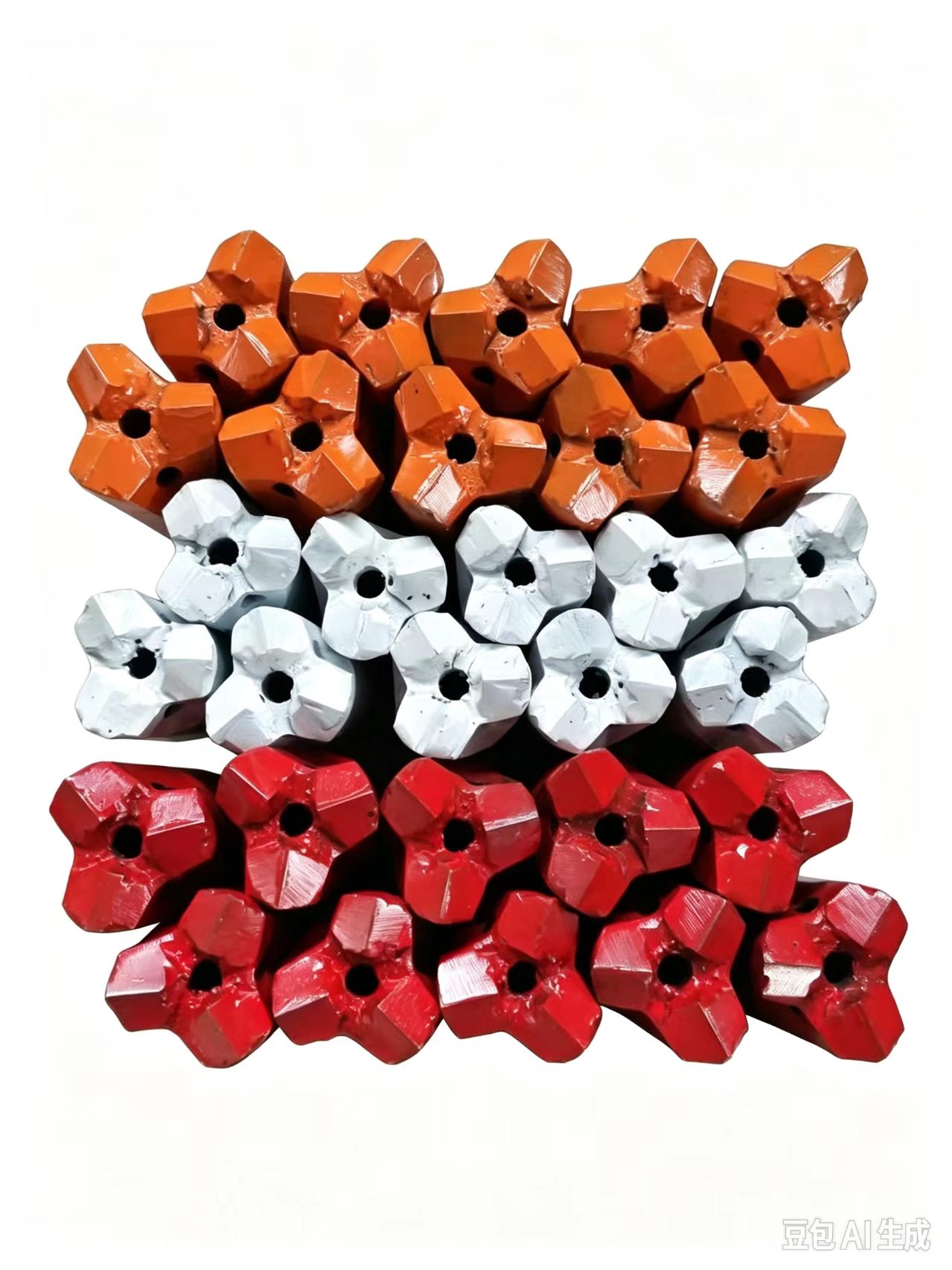
A common on-site complaint is: the rod is new, the bit is new, yet the opening machine shakes, strips threads and will not cut through. The problem is often not quality but mismatch. Selecting BF rods and bits is about closing the loop among power end, string and cutting head in torque, rotation speed, hole diameter and length.
First check the thread. Rod-to-bit and rod-to-rod joints use special trapezoidal threads. You must match the outer diameter, pitch, tooth form, and internal/external thread type; they are not interchangeable between manufacturers or opening-machine models. Forcing a mismatched joint leads to leaks, or worse, the bit unscrews and drops down the hole—an accident that costs hours of hot repair.
Second, match diameter and hole size. The bit diameter sets the tap-hole channel, common sizes being 50, 55, 60, 65, 70 and 75 mm. The rod OD should be slightly smaller than the bit diameter to leave an annulus for cuttings. If the rod is too thick, cuttings cannot escape, hole temperature rises and the rod can stick. As a rule of thumb, rod OD should be 8 to 15 mm smaller than bit diameter, adjusted for clay viscosity and flushing air volume.
Third, match length and number of rods. Deeper tap holes need longer strings and more rods. On site, operators stack single rods and add a short sub at the front to fine-tune total length. Rods that are too long increase bending and vibration; too short means frequent stops to add rods, slowing the opening cycle.
Finally, match conditions. Hard clay and dense lining call for thicker, more wear-resistant buttons; high temperature and heavy slag call for unobstructed, side-ported flushing. Align these items and the rod-and-bit string will truly work as one.