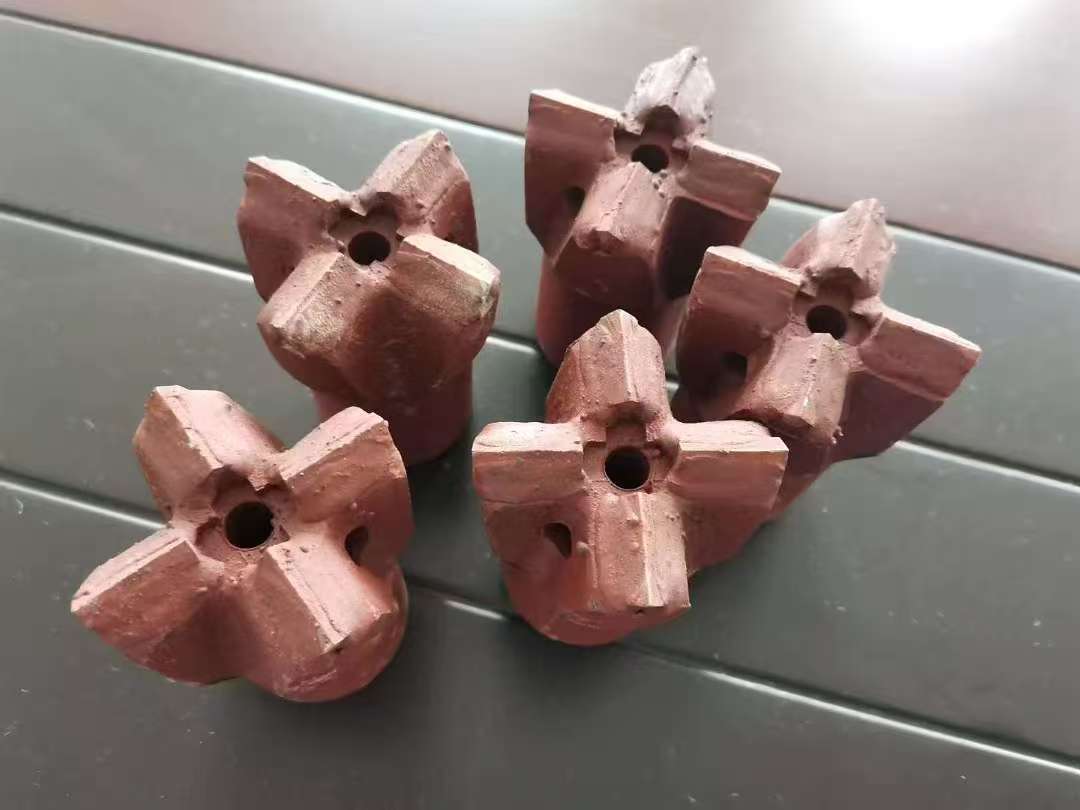
Drill rods and bits are consumables in tap-hole work. Used well, one bit can drill dozens of tap-hole openings; used poorly, it may be scrapped after just a few. Recognizing the common wear forms is the first step to extending service life.
For bits, four failure modes dominate: worn-down buttons whose cutting edges turn from sharp to rounded, so penetration rate drops; chipped or lost buttons, usually from hitting hard lumps, accreted iron or sudden shock; eccentric wear where one wing wears much faster than the others, usually caused by a bent rod or crooked hole; and eroded or clogged flushing holes, where long-term high-pressure flow enlarges and distorts the orifice, reducing cooling.
For rods, typical issues include: the outer body being scored and locally thinned by the hole wall; threads galling, seizing or deforming after repeated make-and-break; permanent bending from long-term cyclic loading; and the central bore being blocked by mud scale and oxide scale. Missing any of these in daily inspection leads to the next drilling incident.
Life-extension methods are not complicated; they lie in the details: clean and lubricate threads before make-up and torque to spec, never hammer; feed steadily and pull back immediately on sudden resistance; guarantee water or air flow and never drill with a blocked hole; after the shift, check every rod for straightness and thread condition, and retire bent or damaged rods; when buttons wear down to a certain stage, re-tip them proactively rather than waiting for breakage. Doing these small things well usually raises bit life by more than 30 percent and prevents early rod retirement.