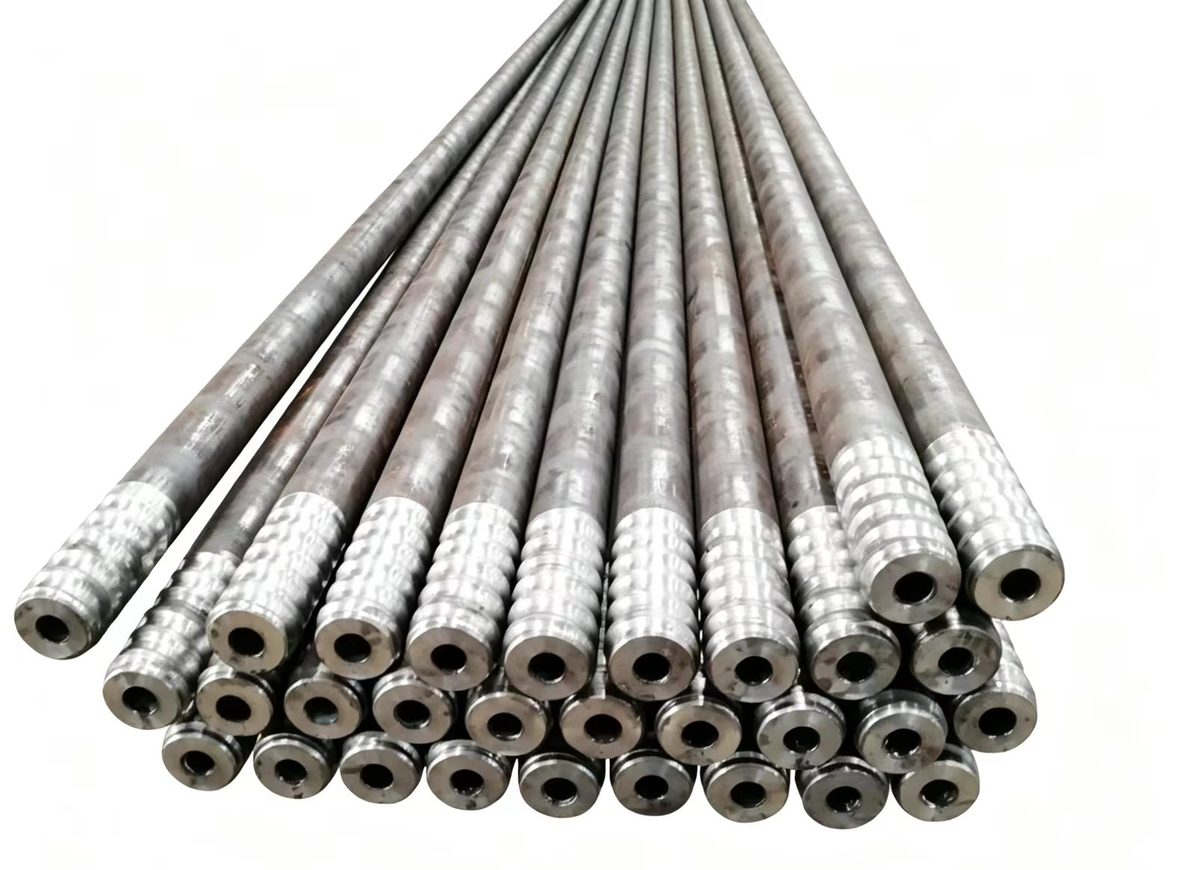
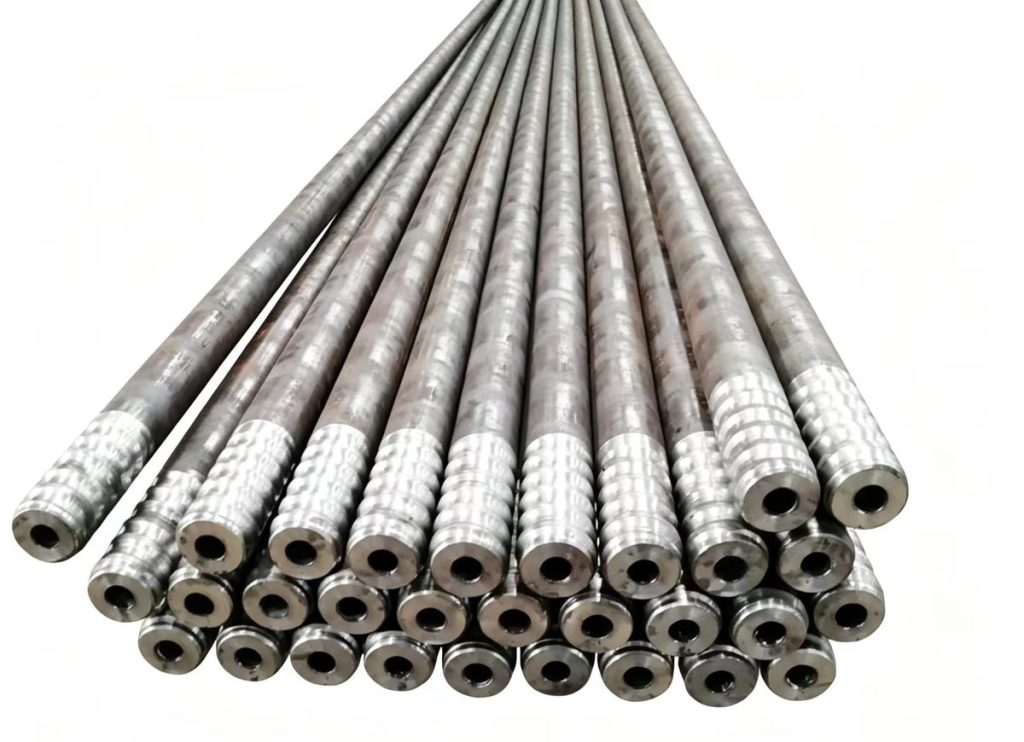
The service life and on-site reliability of blast furnace drill rods fundamentally depend on the selection of pipe base material and heat treatment process. Blast furnace opening works under harsh conditions: the front end faces high-temperature radiation from the blast furnace and endures continuous impact energy, while the rotation of the opening machine brings huge torque. Once the material and heat treatment of the drill rod fail to meet standards, rod torsion fracture and thread collapse are highly likely to occur, directly leading to blast furnace shutdown and heavy economic losses. Therefore, selecting drill rod material scientifically according to blast furnace working conditions is the most important part of procurement.
Our two mainstream material solutions for blast furnace drill rods are 45# high-quality carbon structural steel and high-strength alloy structural steel. 45# steel is the most widely used base material for blast furnace drill rods in the market. Raw materials adopt seamless steel pipes from large steel mills. After rough machining, the blanks are subject to overall quenching and tempering heat treatment. Quenching and tempering includes quenching and high-temperature tempering procedures, enabling steel to obtain good comprehensive mechanical properties with balanced strength, plasticity and toughness, and significantly improved resistance to alternating impact. The quenched and tempered drill rod is not prone to brittle fracture with controllable cost, suitable for daily tapping hole opening of conventional blast furnaces, and it is the most common model purchased by steel mills at home and abroad.
For large blast furnaces with harsh working conditions or high-frequency deep hole opening scenarios, we recommend upgrading to high-strength alloy steel drill rods. Alloy steel contains alloy elements such as chromium and molybdenum. After heat treatment, it achieves higher yield strength, high temperature resistance and anti-fatigue life. Under continuous heavy impact and high-temperature radiation, alloy steel drill rods have smaller deformation and much better torsion fracture resistance than 45# steel. They are suitable for heavy-load and continuous blast furnace production lines. However, alloy steel raw materials and processing costs are higher, generally used for core blast furnaces of large steel groups.
For either material, the thread part will undergo local strengthening treatment. Threads are the position with the most serious stress concentration on drill rods. We adopt precision machining combined with surface strengthening technology to improve thread hardness and wear resistance. The threads resist tooth collapse and wear after repeated screwing and disassembly. During production, each batch of raw materials comes with material certificates to eliminate inferior pipes from the source. At the finished product stage, in addition to conventional dimension and straightness inspection, ultrasonic flaw detection is added for high-end orders to detect hidden defects such as pores, slag inclusions and cracks inside the pipe.
Many buyers confuse geological drill rods with blast furnace drill rods. Geological drill rods focus on rock drilling, and their high temperature resistance and impact resistance cannot match the harsh environment at the front of blast furnaces and cannot replace special blast furnace drill rods. Our technical team can recommend the most suitable material solution according to customers’ blast furnace model, opener parameters, drilling depth and daily opening frequency, balancing service life and procurement budget, and providing cost-effective drilling tool solutions for metallurgical customers.