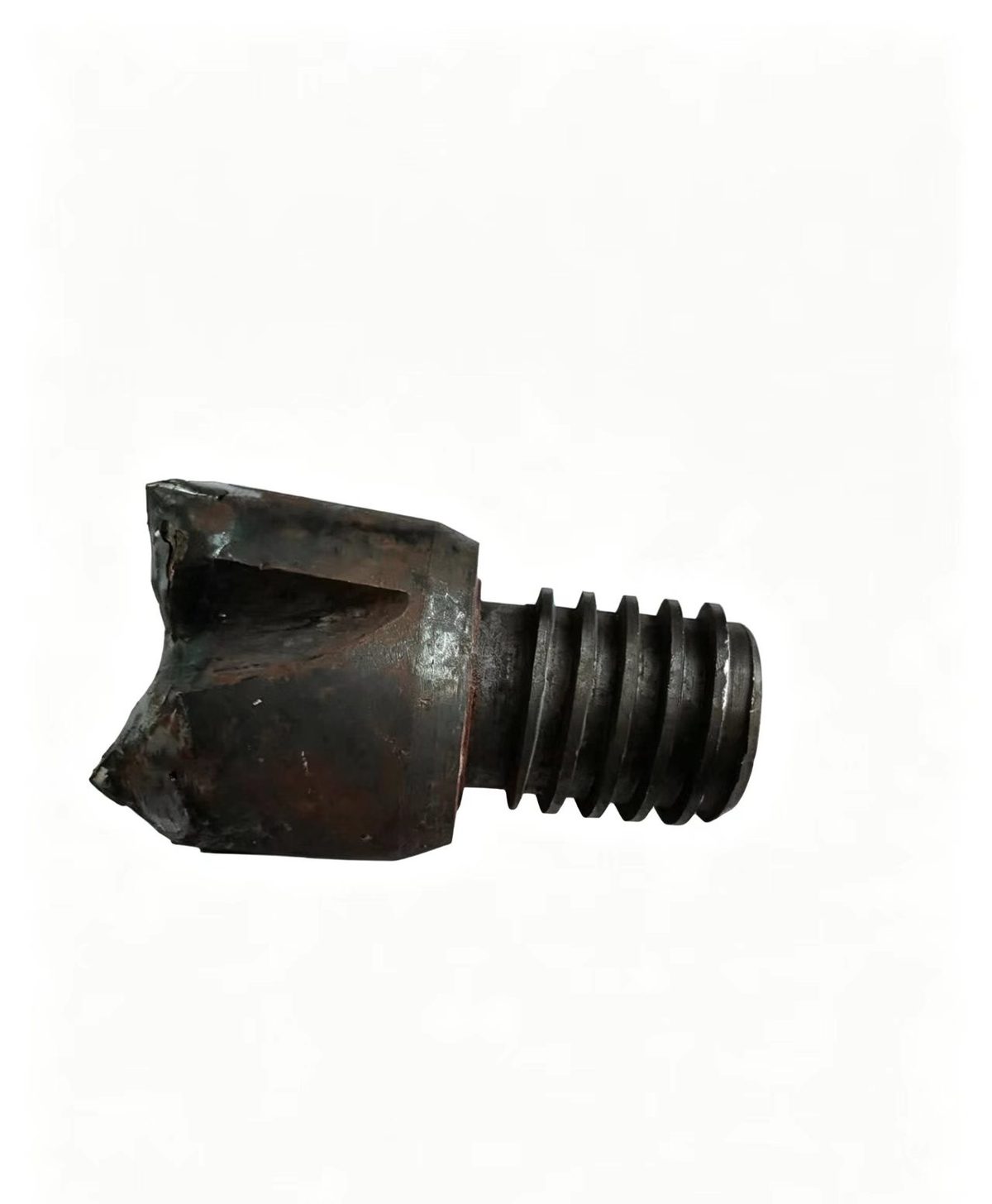
When a threaded joint fails, it rarely fails dramatically. It loosens a little, heats up a little, and then one day the bit is gone down the hole and the shift is over. Almost every one of those failures starts with a thread that never matched properly in the first place.
Why threads fail before the bit does
A threaded shank carries the entire drilling load through a few square centimetres of contact. Four things go wrong:
- Cross-threading during a hurried change on a dusty rig floor. The first turn decides the life of the joint.
- Under-tightening so the faces never seat. The joint then works, frets and wears.
- Bottoming on the thread instead of on the shoulder, which leaves the load on the thread flanks rather than the machined faces.
- Galling and corrosion, especially when a hot, wet joint is left assembled overnight.
The three thread families you will meet
Most bits and rods on the market fall into one of three groups:
- Taphole threads. Short, deep trapezoidal threads designed for blast furnace opening machines, where the joint must be made and broken many times a day under high temperature.
- Drifting and tunnelling threads. The familiar R and T families – R32, R38, T38, T45, T51 – used on long-hole and face drilling equipment. They are larger, with a distinct shoulder that carries the impact.
- General machine threads. Metric or inch threads found on light rotary rigs, augers and specialist machines. These are dimensioned by the machine builder, not by a drilling standard, so they must be measured rather than assumed.
Two threads can look identical on a rig floor and still be incompatible. Never match by eye and never match by name alone – R38 from one supplier and R38 from another can differ in shoulder geometry.
Measure these five things before you order
- Pitch and major diameter – measured with a thread gauge or pitch gauge, not with a ruler.
- Shoulder angle and form – the machined face that takes the thrust.
- Usable thread length – too long and the joint bottoms on the thread; too short and there is not enough engagement.
- Hand of thread – most drilling joints are right hand, but left-hand joints exist on some machines and reverse-rotation applications.
- Taper of the seating face – some designs seal and centre on a cone behind the thread.
If you cannot measure, borrow the drawing. Our rod and bit matching guide shows which dimensions to photograph and send to a supplier so the parts are made to match, first time.
Assembly practice that doubles joint life
Clean both threads with a wire brush, wipe them dry and apply a light film of thread lubricant or copper-based grease. Start the joint by hand until it runs freely, then tighten with the correct wrench – firm, not brutal. Mark the joint with a paint stripe so you can see at a glance whether it has backed off. Break the joint while it is still warm rather than leaving it overnight, and never use a stillson wrench on a drilling thread.
Warning signs of a thread about to let go
- A polished, shiny band across the thread flanks where metal has fretted.
- A joint that needs noticeably less torque to break than it did last week.
- Thread crests rolled over or flattened instead of sharp.
- Rust staining or pitting inside the female thread, a sign of water sitting in the joint.
Frequently asked questions
Can I repair a damaged drill thread?
Only by re-machining to the original drawing and re-heat-treating the affected zone, which is rarely economic for a consumable. A dressed-up thread that no longer matches the standard is more dangerous than a worn one, because it will pass a visual check.
Do I need a torque wrench?
For small hand-held equipment, no. For larger drifting joints, a torque spec from the manufacturer is worth following: too little damages by fretting, too much damages by cracking the shoulder.
Should bits and rods come from the same supplier?
It removes an entire class of problem. Threaded joints are a system, and a supplier who makes both ends can guarantee the fit – see our drill rod selection guide for what to specify.
Send us a photo of your thread profile next to a rule, and we will identify it from the pitch and shoulder form and quote bits and rods that fit together as one system.