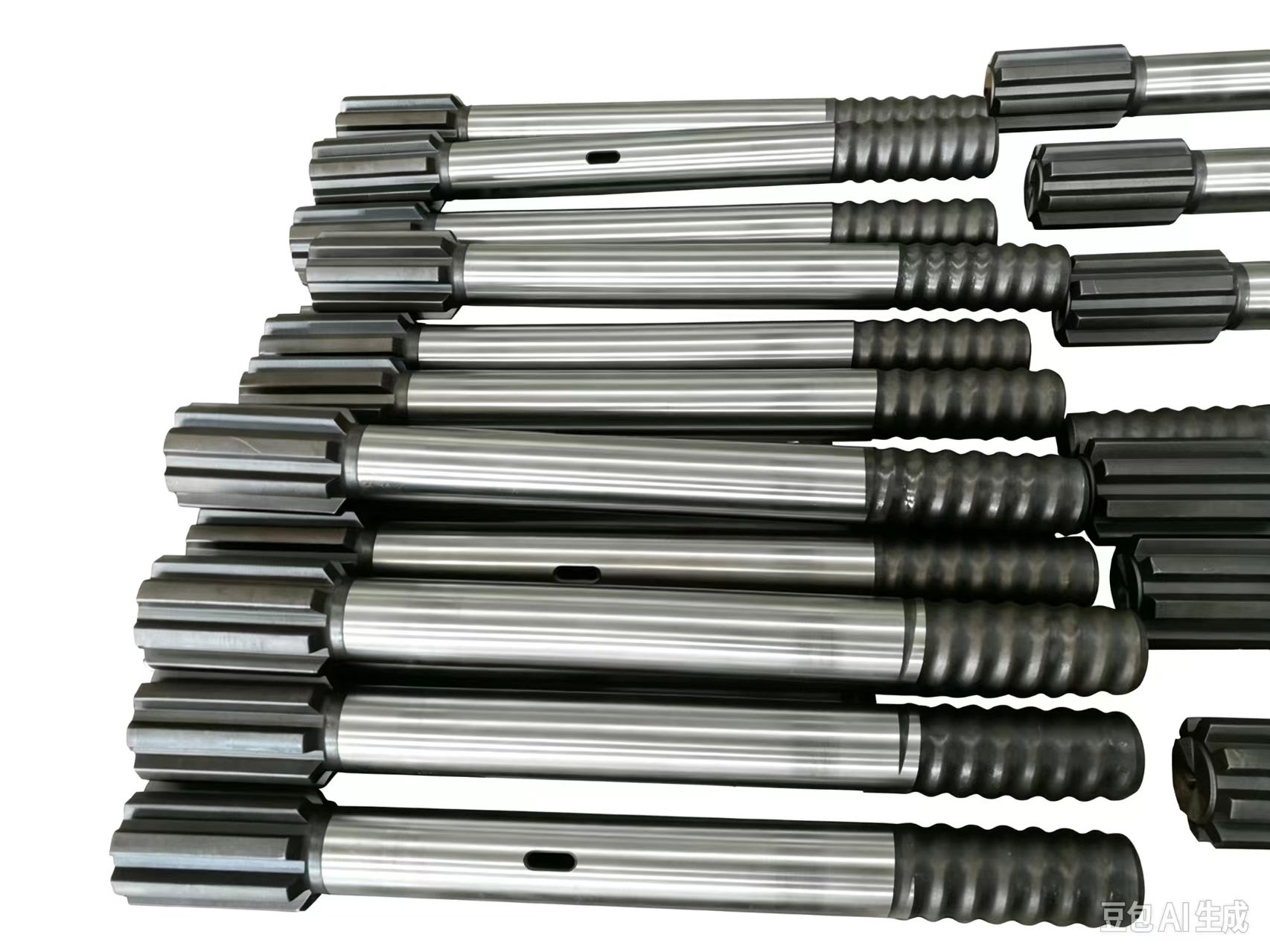
A blast furnace drill rod connects the drilling machine to the drill bit and transmits rotation, feed force, and impact through a hot and abrasive working environment. A rod that is undersized, poorly aligned, or incompatible with the coupling system can reduce drilling speed and increase the risk of thread damage or breakage. Selecting the correct rod is therefore an important part of a stable taphole drilling program.
Confirm Diameter and Length Requirements
Drill rod diameter and length must match the machine, taphole depth, drilling angle, and required bit size. Common rod diameters range from 32 mm to 76 mm, while special lengths can be produced for non-standard equipment. The selected rod should provide enough stiffness to resist bending without making the drilling assembly unnecessarily heavy or difficult to handle.
Match the Thread and Coupling System
Thread form, pitch, shoulder, and coupling-sleeve dimensions must be checked together. A rod that threads onto a coupling but does not seat correctly may loosen under vibration. Loose connections can damage the thread, reduce energy transfer, and create irregular loading on the drill bit. Before ordering, confirm the complete connection chain: shank adapter, rod, coupling sleeve, and bit.
Choose Steel for Strength and Toughness
High-strength alloy steel is used to provide tensile strength, toughness, and resistance to bending under heavy impact. Material selection should consider the drilling machine’s energy output and the severity of the taphole. In demanding applications, a stronger steel grade may improve reliability, but the heat treatment and machining quality remain equally important.
Inspect These Features Before Installation
- Thread cleanliness, profile, and damage-free appearance.
- Straightness over the full rod length.
- Correct shoulder contact and coupling fit.
- Clear flushing passages where applicable.
- Consistent diameter and surface finish.
- No cracks, deep marks, or deformation at the ends.
Operating Practices That Extend Rod Life
Keep rods aligned with the drilling direction, tighten connections to the recommended level, and stop operation if vibration increases suddenly. Clean and lubricate threads according to site practice. Store rods on supports rather than on bare ground, and separate damaged rods from service-ready stock to avoid accidental installation.
Use the Complete Tool Set as a System
The best rod cannot compensate for a mismatched bit, worn coupling, or incorrect machine setting. Shandong Feiteng supplies blast furnace drill rods, alloy drill bits, coupling sleeves, and shank adapters as a compatible tool system. Provide your dimensions, thread details, and operating conditions so the complete assembly can be reviewed before production.