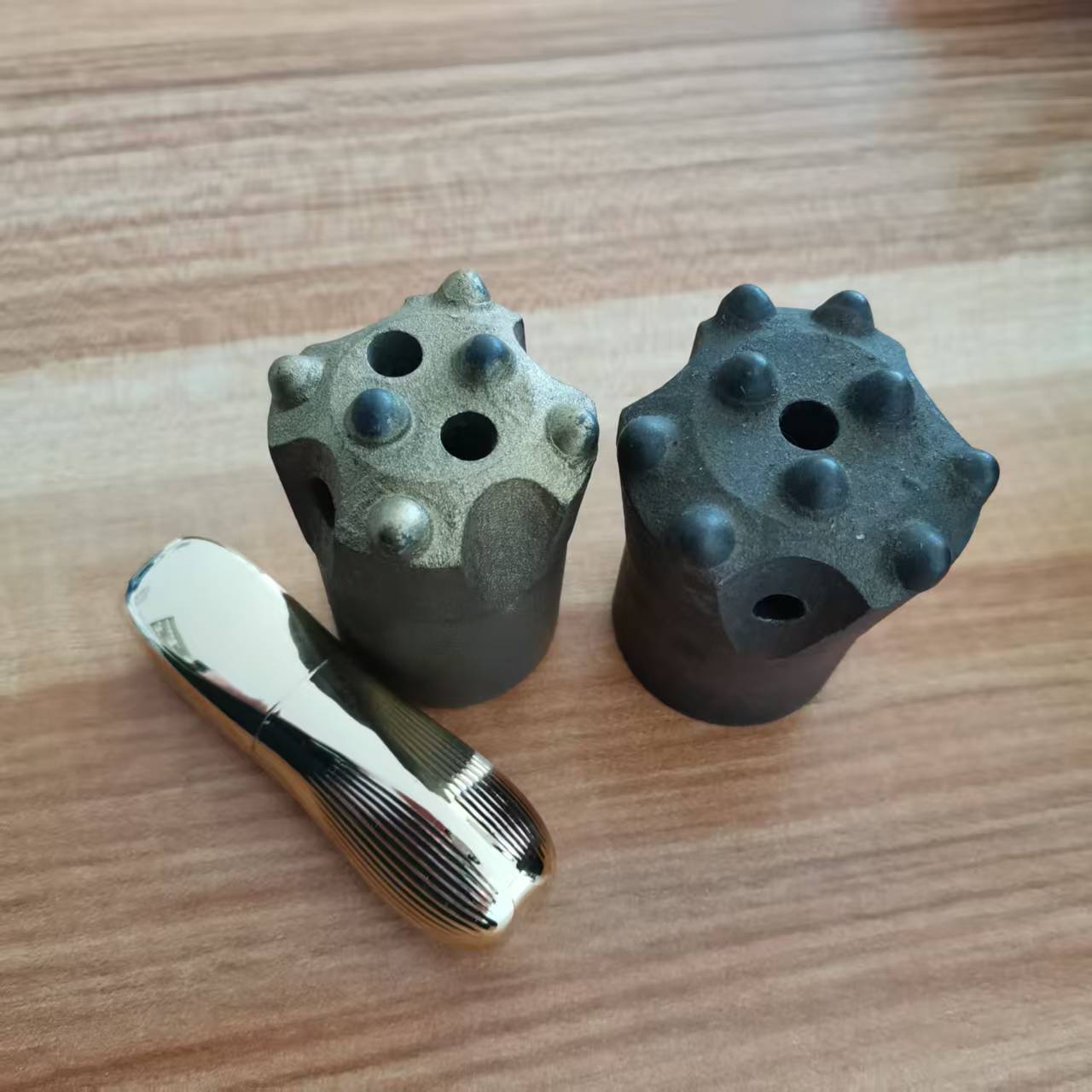
Blast furnace drilling tools operate under a combination of heat, impact, friction, and bending load. The material specification therefore has a direct effect on reliability. A high-strength steel body and a wear-resistant carbide cutting element are essential, but each material must be matched to the way the complete tool will work in service.
High-Strength Alloy Steel for the Rod Body
The rod body must carry tensile load, transmit impact energy, and resist bending without becoming brittle. Alloy steel provides a useful balance of strength and toughness when the grade and heat treatment are controlled. Material quality also affects thread durability, because damaged threads can make an otherwise sound rod unusable.
Tungsten Carbide for the Cutting Face
YG8 tungsten carbide is commonly used in hard-material cutting applications because it combines high hardness with useful impact resistance. The optimum grade depends on the taphole material. More abrasive conditions may require greater wear resistance, while uneven material and impact may require a grade that resists chipping.
Heat Affects the Whole Tool
High temperature can reduce strength, accelerate oxidation, and change the way materials respond to load. The steel body should maintain useful mechanical properties during the drilling cycle, while the carbide must resist thermal cycling at the cutting edge. Stable machine operation and effective dust removal help limit the time each component spends at peak temperature.
Material Selection Needs Real Operating Data
- Taphole diameter, depth, and drilling angle.
- Typical refractory hardness and the presence of slag or iron skull.
- Drilling-machine impact energy and rotation speed.
- Expected number of holes per shift.
- Observed failure mode: bending, thread damage, carbide loss, or abrasive wear.
Do Not Use One Material Specification for Every Site
A design that performs well in one furnace may not be optimal in another. Differences in taphole practice can change the balance between wear and impact. Custom material selection allows the supplier to adjust steel grade, carbide grade, tip layout, and dimensions for the actual working condition.
A Balanced Tool Lasts Longer
Reliability comes from the full system: strong steel, durable carbide, accurate machining, compatible connections, and correct operation. Shandong Feiteng manufactures custom blast furnace drill bits and drill rods using selected raw materials and controlled production processes. Send your operating parameters and failure history when requesting a material recommendation.