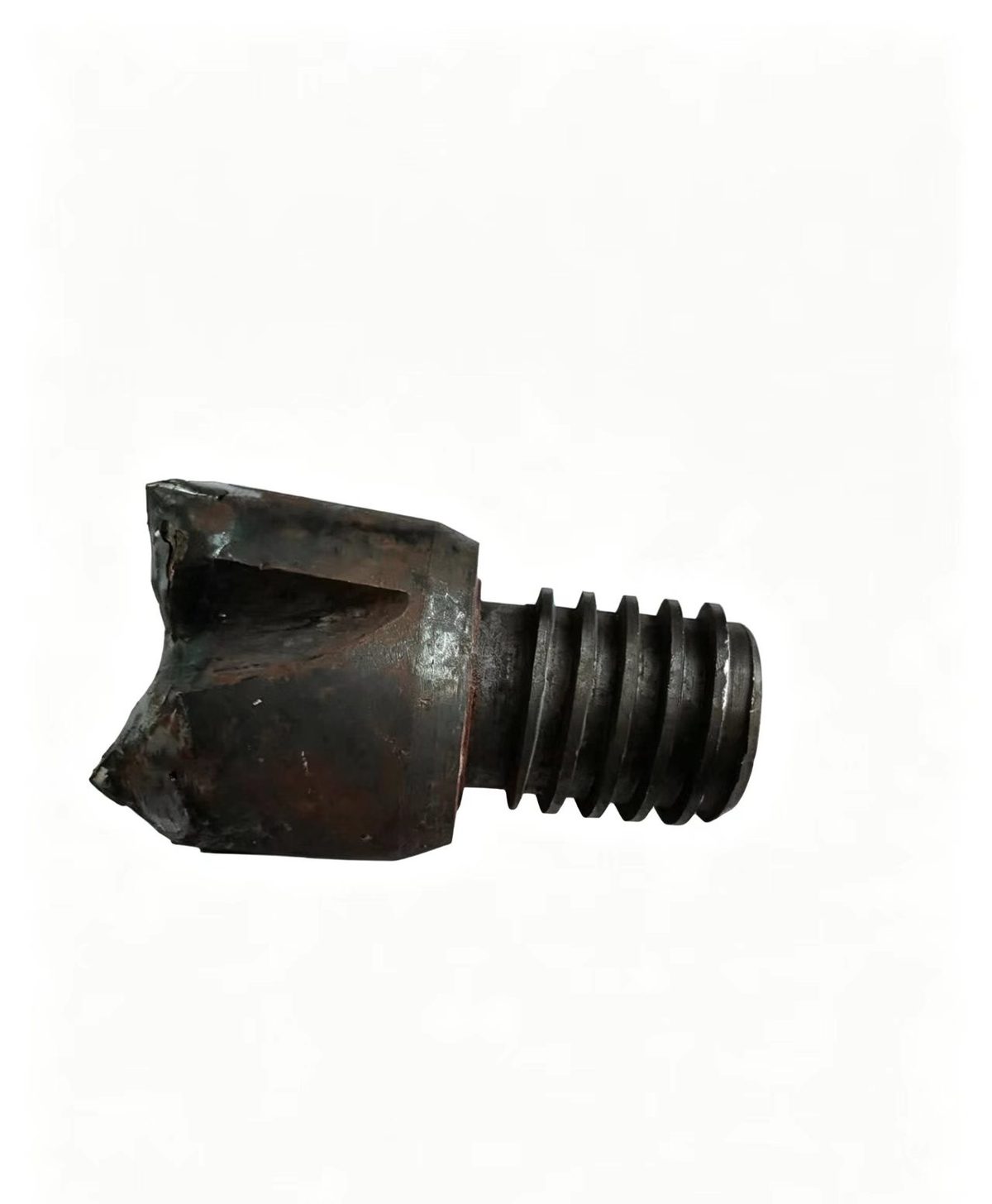
Order a taphole bit from a standard catalogue and it will frequently arrive with an R32 left-hand thread – and if your drilling machine turns the other way, that bit is useless to you. The left hand thread is not a quirk of one supplier. It is a design consequence of how taphole drilling machines work, and understanding it is the difference between a tool string that tightens under load and one that walks itself apart inside a furnace.
What R32 means
R32 is a rope thread profile – a rounded, metric thread widely used on small to medium drilling equipment, including taphole drills and ferroalloy furnace tapping machines. It is specified by profile and pitch, not by diameter alone, and it appears on both drill bits and adapter rods. In the taphole tooling world, common bit diameters sit in the 70 to 75 mm band, with R32 connections at the shank end.
Two properties travel with every R32 connection:
- Hand. Left or right. The thread either tightens or loosens when the machine turns.
- Tolerance class. How much clearance the joint has. A loose joint in a high vibration application is a failure waiting for a deadline.
Why left hand exists
On many taphole drilling machines the spindle rotates counter-clockwise when viewed from the machine, and the tool string is designed so that this rotation tightens the joints rather than unscrewing them. A left-hand thread does exactly that in a counter-clockwise rotation. The result is a self-tightening string: torque from the cut works with the thread instead of against it, and the bit stays seated while it is under load.
Reverse the logic and the failure mode is obvious. A right-hand bit on a counter-clockwise machine is tightened by nothing and loosened by everything. The first symptom is usually a bit left behind in the taphole, followed by thread damage and, in the worst case, a rod that cannot be withdrawn without a long stoppage.
How to check what your machine needs
- Read the machine documents. Rotation direction and connection type are specified on the machine data sheet, not inferred from the tool you happen to have in the rack.
- Look at the old tool. A used bit that has been run on the machine will show a witness mark where it seated. The thread direction can be read directly from it.
- Use a thread gauge and a caliper. Profile, pitch and major diameter should all be checked before an order, especially when switching suppliers.
- Write the hand into the purchase order. This is the single most common omission we see in taphole tool enquiries.
Thread condition is the second half of the story. Even the right hand will not save a joint that is worn, dirty or cross-threaded, which is why thread matching deserves its own procedure: see matching rods and bits by thread, diameter and length, and the list of five on-site causes of breakage for the failure patterns that follow a bad joint.
Ordering the thread you actually need
Most taphole tooling is produced to a drawing, which means the machine’s requirements come first and the catalogue comes second. A supplier who can machine R32 left and right hand, in the diameters and lengths the machine needs, is worth more than one who can only ship what is in stock. When you place the order, specify the connection, the diameter of the bit, the rod length, and the material and hardness range expected. If a supplier cannot accept those four lines as a specification, that supplier is selling you a commodity, not a tool.
Frequently asked questions
Can a left-hand threaded bit be used on a right-hand machine?
Not safely. The joint will loosen under load. Match the hand to the machine rotation before ordering anything.
Are all taphole drills left hand?
No. Left hand is common, but the machine decides. Confirm from the equipment documentation rather than from the last supplier’s delivery note.
Send us a photo of your machine’s spindle or a used bit and the connection you need, and we will confirm the thread hand, diameter and length before anything is machined.