This steel market analysis is aimed at the people who buy the wear parts rather than the coils. If you run a cast house, the numbers that decide your next budget are not the headline price of hot rolled coil. They are the ones that settle whether the maintenance line gets squeezed when mill margins tighten – and the fourth quarter of 2026 has tightened them.
The October 2026 short range outlook from worldsteel splits the difference between collapse and recovery. Global steel demand is now expected to be flat in 2026 at 1,722 Mt, with growth of only 1.7% to 1,752 Mt arriving in 2027. Both years were revised down, and almost the whole revision is China. Chinese demand is now forecast to contract by 2.0% in 2026, while demand outside China still grows 1.5% this year and 4.0% next year. Developing economies excluding China are put at 1.9% growth in 2026 and 5.1% in 2027, once Middle East demand recovers from the conflict that reversed one of the strongest growth stories in the market.
What the Q4 numbers actually say
Output tells the same story as demand. World crude steel production in August 2026 was 144.2 Mt, down 1.2% year on year. China produced 74.6 Mt, down 3.7% on August 2025. India produced 14.8 Mt, up 4.6%. Viet Nam was up 36.4% on a small base, the United States rose 3.0% with utilisation back around 80%, and North America as a whole added 3.9%. Against that, the EU 27 slipped 1.0% to 8.9 Mt, the Middle East fell 4.6% and Russia with other CIS countries and Ukraine dropped 5.6%.
Read together, those figures describe a market where volume is not coming back from the top of the table. It is coming from India, South East Asia, Africa, and from the Middle East when the conflict cycle allows. A supplier whose order book depends on one mature blast furnace market is now exposed to that arithmetic, and so is a plant that has to justify every consumable purchase against a management account that is not growing.
Cost, price and margin: the floor moved lower
Iron ore has done what it usually does in a soft market. The 62% Fe benchmark was quoted near 90.7 USD per tonne on 13 October 2026, roughly 7% lower than a month earlier and close to 14% below the same week last year, with forward views pointing to the high 80s rather than a bounce. Scrap moved the other way in Europe’s neighbourhood, where average Turkish import prices rose 28 USD per tonne in September – the normal outcome when electric furnace capacity has to compete for a limited pool of material.
Flat product has been no livelier. Chinese hot rolled coil has been trading in a 3,000 to 3,400 RMB per tonne band with export offers around 430 to 480 USD FOB. That is a cost-driven floor rather than a demand-driven one. When mills cannot push price, they defend margin on the cost line, and the cost line runs through coke rate, ore quality, yield and consumables per tonne of hot metal.
Trade rules have become a cost line of their own
The trade environment hardened on both sides of the Atlantic during 2026. The European Union’s new safeguard regime cuts tariff-free steel import volume to 18.3 Mt a year, about 47% below the 2024 quota, spreads it over 26 product categories by quarter with no carryover, and applies a 50% duty above the quota instead of the old 25%. In the United States, the Section 232 regime has kept 50% duties on steel and aluminium in place while widening the definition of a derivative article. Carbon border adjustment has entered its definitive phase, and the argument in Brussels has moved on to how far the scope should reach.
None of this stops a furnace from tapping, but it changes where spare parts can come from, how long they take to arrive and how much paperwork travels with them. That is why landed cost, not list price, is the only honest comparison for imported consumables – a point we set out in what the 2026 trade rules mean for plant buyers.
Where a flat market bites first: the maintenance line
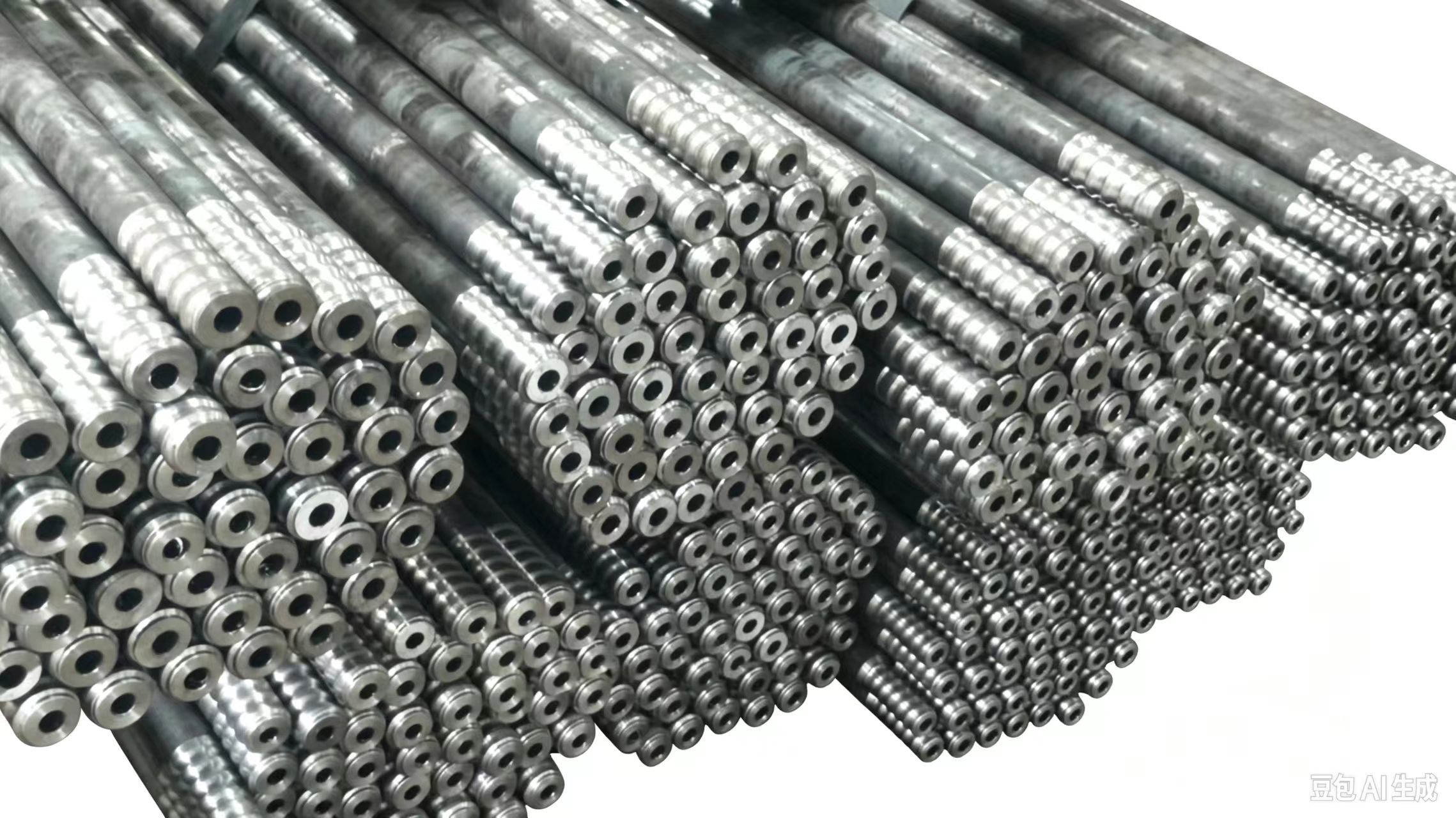
In a year when nobody’s selling price rises, the only lever left is cost per tonne of iron, and the cast house is where a lot of it is decided. Taphole drilling consumables are a small line in the maintenance budget, but they govern whether a taphole opens on the first attempt, how much time the crew spends in front of the runner, and whether a delayed tap pushes the cast sequence into the next shift. Cheap consumables that fail early are the most expensive way to buy them, which is exactly the argument behind the four wear parts that decide cast house drilling cost.
The arithmetic is not complicated. Take the number of tapholes drilled per furnace per day, multiply by the number of furnaces, then divide the annual spend on bits and rods by that figure. What comes out is a cost per hole, and it is the only number that behaves sensibly when you change supplier. A tool that costs 20% less but drills 30% fewer holes has made the plant poorer. The same logic scales to a full year of tapping in the consumable volume arithmetic for a cast house and to the benchmarking method in cost per metre against drill bit prices.
What to do with the drill bit line before the year ends
- Switch the conversation from unit price to cost per hole, and insist that suppliers quote on that basis. It removes the argument and exposes the tools that only look cheap.
- Match the bit to the clay, not to the catalogue. A harder clay and a colder taphole change how much of the drilling is cutting and how much is impact, which is why bit design has to follow clay specification.
- Check thread and shank standards before ordering anything. A left-hand R32 connection that arrives as a right-hand thread is scrap metal with a shipping invoice, as set out in the R32 left-hand thread explainer.
- Buy the reline window forward. Relines are still being scheduled through the current margin cycle, and rods, bits and adapters ordered late cost more than they save – see consumable planning around a reline.
- Put lead time into the price. In a market stacked with trade measures, the same part can take three weeks or three months to arrive, and lead time is a real cost that never appears on the quotation.
Signals to watch into the first quarter of 2027
- Chinese output discipline: whether 2026 production controls carry into 2027, and with how much force, decides how much export volume rolls into the rest of Asia.
- Iron ore in the high 80s: a range-bound ore price keeps the floor under mill costs, but any sustained rally would squeeze exactly the maintenance budgets that are already thin.
- Quota exhaustion in Europe: with tariff-free volume cut and divided by quarter, the timing of category-level exhaustion is now a purchasing question, not a trade policy one.
- Reline and life extension announcements: the decision to extend a campaign rather than rebuild one moves consumable demand forward by quarters, as covered in blast furnace life extension economics.
- Electric furnace share: every point of share that moves to EAF changes the mix of cast house work, and with it the tooling demand described in rising EAF share and cast house tooling.
The practical conclusion for a flat market is short. Expect no help from price, expect the cost line to be audited harder, and expect the difference between a good and a poor consumable year to be decided by boring measurements – holes per bit, taps per crew, minutes per taphole. Buyers who can produce those numbers will keep their budgets. The wider view of where this demand comes from is set out in the market prospect of blast furnace taphole drilling tools, and the supply side of the same picture in the 2026 overcapacity buyer market.