Category: News

Blast Furnace Drill Rod Manufacturer News Center, providing real-time updates on factory dynamics, new blast furnace opening tools, metallurgical industry news, foreign trade orders, and exhibition information. Share technical upgrades of blast furnace drilling tools and product cases, learn about our latest production progress and overseas cooperation projects. Welcome steel mill customers to consult and negotiate.

  • Structure, Materials and Load Characteristics of BF Drill Rods

    Structure, Materials and Load Characteristics of BF Drill Rods

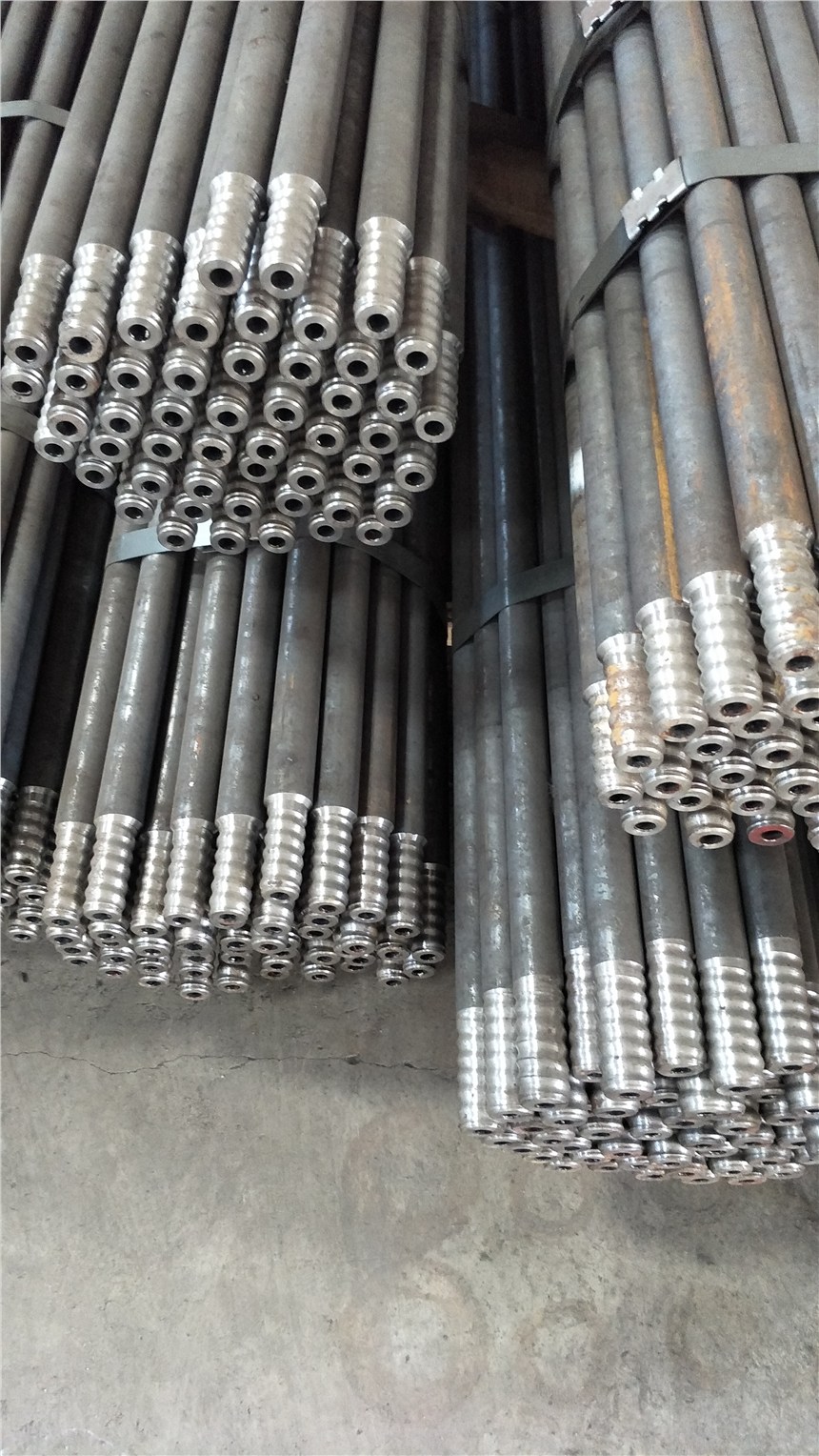
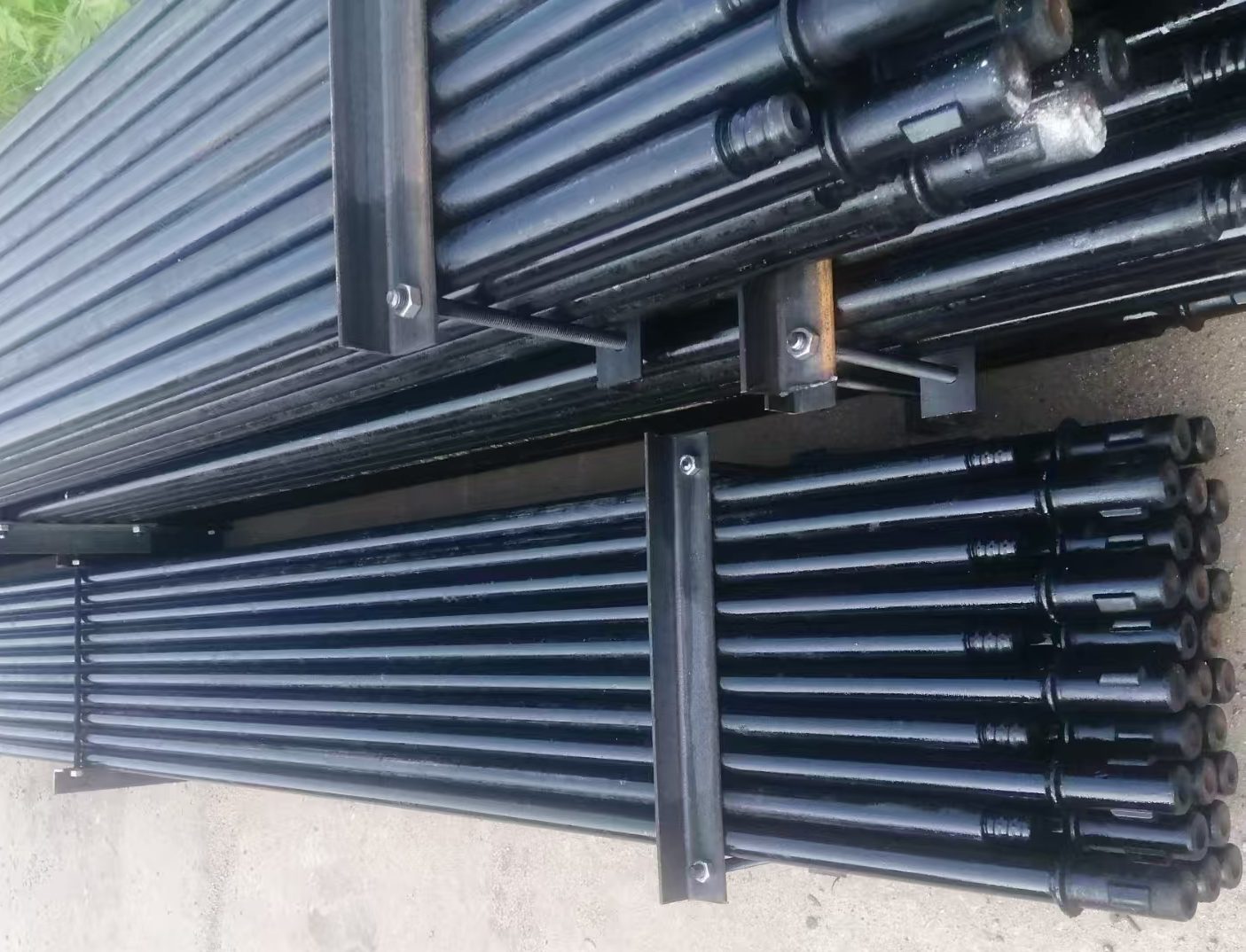
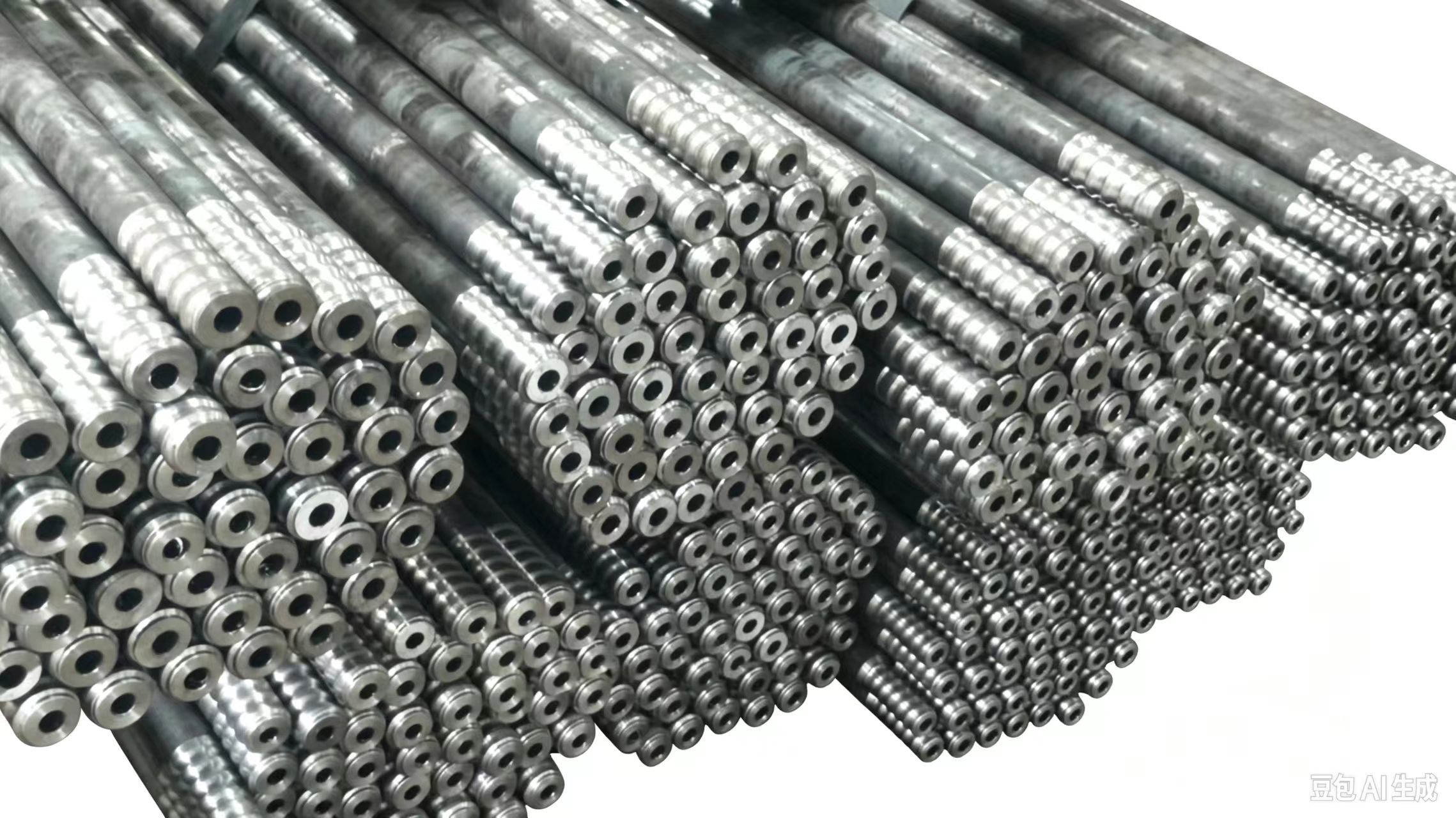
    To choose the right drill rod, first understand its structure. A typical BF drill rod consists of three parts: the tube body, the end upset section and the connecting thread. The body is a thick-walled seamless steel tube; both ends are upset or machined to form upset sections, then turned with trapezoidal or rectangular threads matching the opening machine and the bit. A through central bore runs the whole length, carrying high-pressure water or air to cool the bit and flush cuttings out of the hole.

    In terms of material, medium-carbon alloy steel is the mainstream choice. Common grades include 42CrMo, 40Cr and 35CrMo; more severe service may call for 40CrNiMo. After quenching and tempering, these steels offer high tensile and yield strength to transmit torque and withstand compression, together with enough toughness to absorb impact vibration. Wall thickness typically ranges from 8 to 16 mm, and common outer diameters are 32, 38, 42 and 50 mm, chosen to match the opening machine torque and tap-hole depth.

    From a load perspective, a BF drill rod simultaneously carries four loads: torque from the opening machine that rotates the string; axial feed force pressing the bit into the clay; high-frequency vibration and shock from the bit striking hard material; and high-temperature strength degradation near the furnace shell. Any weak link shows up as shaft bending, thread stripping, end cracking or even rod breakage.

    That is why finished rods are usually inspected by ultrasonic and magnetic particle testing for straightness. On site, joints must be torqued to specification and never hammered, so that the string stays reliable through repeated run-in and run-out cycles.
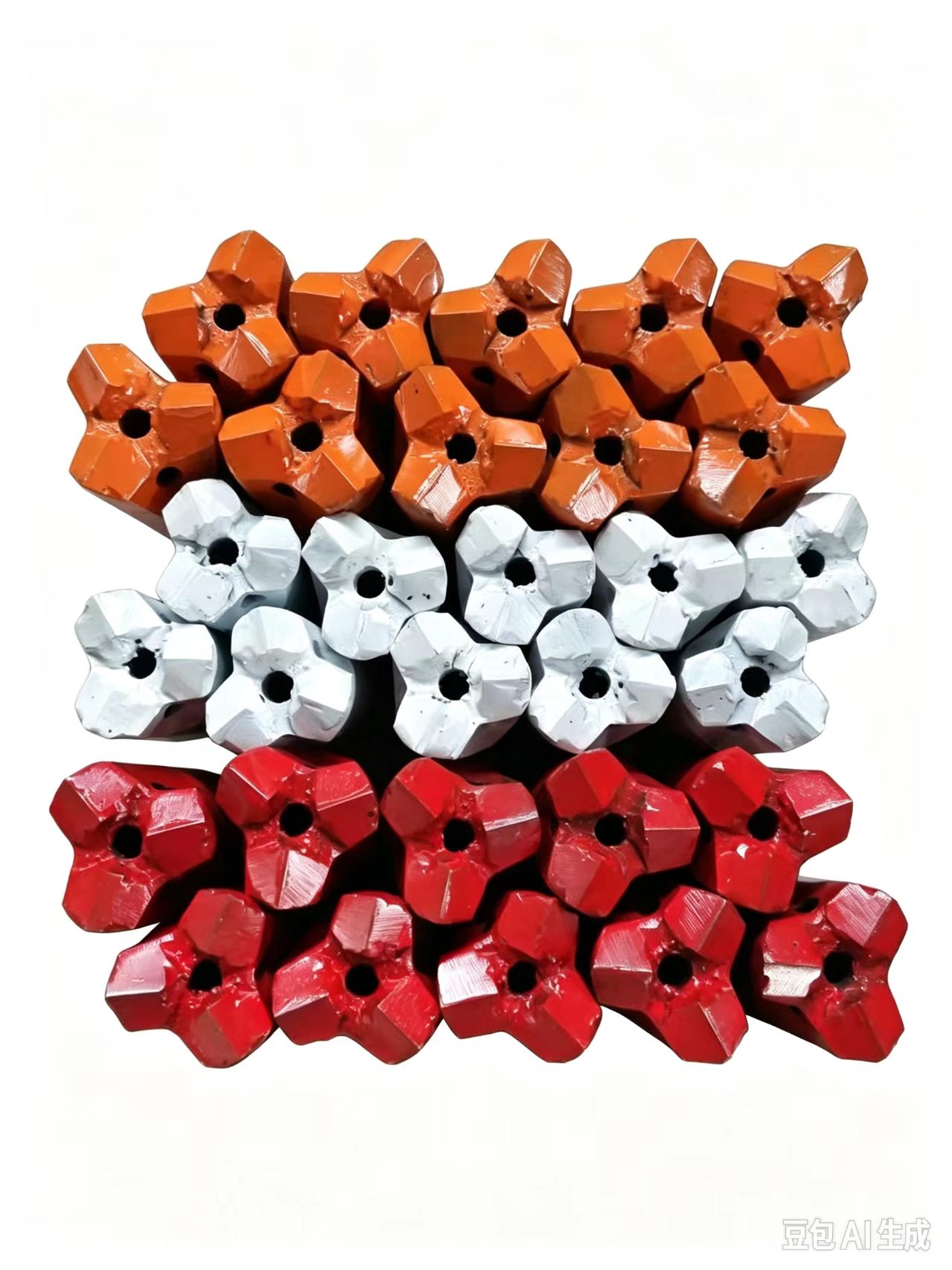
  • How Cross-Type BF Drill Bits “Chew Through” Tap-Hole Clay and Lining

    How Cross-Type BF Drill Bits “Chew Through” Tap-Hole Clay and Lining

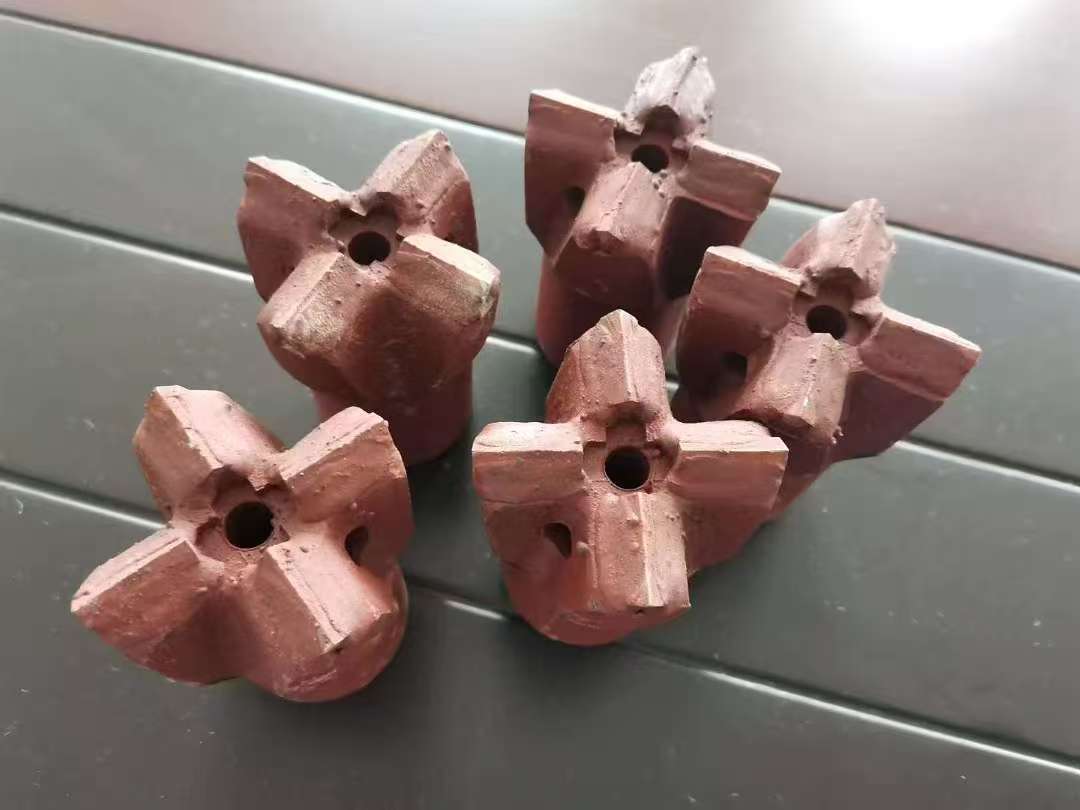
    Standing in front of a blast furnace tap hole, the most eye-catching part is not the long drill rod but the bit at its tip. The most widely used bit in BF tapping is the cross-type (or four-wing) bit. It looks like a symmetric four-wing cross, with a central flushing hole and tungsten-carbide buttons inserted on each wing.

    Its working principle is straightforward: as the opening machine rotates the rod and feeds forward, the carbide buttons on the four wings crush and scrape the tap-hole clay, mud-gun mix and solidified lining layer by layer. Because the cross shape provides cutting edges in all 360 degrees, the bit does not drift sideways, producing a straight, stable-diameter hole—ideal for tap-hole drilling where one clean pass is required.

    The central flushing hole is a key design. High-pressure water or air flows through the rod bore to this point, directly cooling the button tips and carrying crushed cuttings back through the annular gap between rod and hole wall. If the flushing hole clogs, bit temperature rises quickly and wear accelerates dramatically.

    The red, orange or white paint on the bit is not decoration: it is anti-rust and identification paint. Different colors usually mark different carbide grades, bit diameters or service conditions. When replacing a bit on site, check not only the thread size but also the color code, to avoid using a soft-rock bit on hard tap-hole clay, which would chip the buttons in a few strokes.

  • Matching Drill Rods and Bits: Thread, Diameter and Length Guide

    Matching Drill Rods and Bits: Thread, Diameter and Length Guide

    A common on-site complaint is: the rod is new, the bit is new, yet the opening machine shakes, strips threads and will not cut through. The problem is often not quality but mismatch. Selecting BF rods and bits is about closing the loop among power end, string and cutting head in torque, rotation speed, hole diameter and length.

    First check the thread. Rod-to-bit and rod-to-rod joints use special trapezoidal threads. You must match the outer diameter, pitch, tooth form, and internal/external thread type; they are not interchangeable between manufacturers or opening-machine models. Forcing a mismatched joint leads to leaks, or worse, the bit unscrews and drops down the hole—an accident that costs hours of hot repair.

    Second, match diameter and hole size. The bit diameter sets the tap-hole channel, common sizes being 50, 55, 60, 65, 70 and 75 mm. The rod OD should be slightly smaller than the bit diameter to leave an annulus for cuttings. If the rod is too thick, cuttings cannot escape, hole temperature rises and the rod can stick. As a rule of thumb, rod OD should be 8 to 15 mm smaller than bit diameter, adjusted for clay viscosity and flushing air volume.

    Third, match length and number of rods. Deeper tap holes need longer strings and more rods. On site, operators stack single rods and add a short sub at the front to fine-tune total length. Rods that are too long increase bending and vibration; too short means frequent stops to add rods, slowing the opening cycle.

    Finally, match conditions. Hard clay and dense lining call for thicker, more wear-resistant buttons; high temperature and heavy slag call for unobstructed, side-ported flushing. Align these items and the rod-and-bit string will truly work as one.

  • Common Wear Forms of BF Rods and Bits, and Practical Ways to Extend Life

    Common Wear Forms of BF Rods and Bits, and Practical Ways to Extend Life

    Drill rods and bits are consumables in tap-hole work. Used well, one bit can drill dozens of tap-hole openings; used poorly, it may be scrapped after just a few. Recognizing the common wear forms is the first step to extending service life.

    For bits, four failure modes dominate: worn-down buttons whose cutting edges turn from sharp to rounded, so penetration rate drops; chipped or lost buttons, usually from hitting hard lumps, accreted iron or sudden shock; eccentric wear where one wing wears much faster than the others, usually caused by a bent rod or crooked hole; and eroded or clogged flushing holes, where long-term high-pressure flow enlarges and distorts the orifice, reducing cooling.

    For rods, typical issues include: the outer body being scored and locally thinned by the hole wall; threads galling, seizing or deforming after repeated make-and-break; permanent bending from long-term cyclic loading; and the central bore being blocked by mud scale and oxide scale. Missing any of these in daily inspection leads to the next drilling incident.

    Life-extension methods are not complicated; they lie in the details: clean and lubricate threads before make-up and torque to spec, never hammer; feed steadily and pull back immediately on sudden resistance; guarantee water or air flow and never drill with a blocked hole; after the shift, check every rod for straightness and thread condition, and retire bent or damaged rods; when buttons wear down to a certain stage, re-tip them proactively rather than waiting for breakage. Doing these small things well usually raises bit life by more than 30 percent and prevents early rod retirement.

  • From Alignment to Breakthrough: Standard Operating Procedure for Tap-Hole Drilling

    From Alignment to Breakthrough: Standard Operating Procedure for Tap-Hole Drilling

    Tap-hole drilling is a fast-paced, high-risk operation. Every step matters. A standard procedure not only improves efficiency but also protects the operators.

    Step one, preparation. Check the opening machine rotation, feed and hydraulic system; confirm the tap-hole position, depth and residual condition from the previous heat; stage rods of the required length and one new bit, clean and oil the threads; make sure the area in front of the tap hole is clear of people and flammables, and that the mud gun has plugged the hole to sufficient strength.

    Step two, alignment and test drill. Aim the bit at the tap-hole center. Start at low pressure and low rotation to cut a shallow starter hole. Confirm the hole is straight and not drifting before ramping up feed force and speed. This first segment is critical; once the hole angles off, correcting it later is very difficult.

    Step three, normal drilling. Feed steadily and watch the rotation pressure gauge and flushing pressure. A sudden pressure rise usually means a hard layer or jamming—pull back slightly and advance again. A sudden pressure drop may mean broken buttons or an unscrewed rod—stop and inspect. Direct cuttings away from walkways and equipment.

    Step four, break-through and withdrawal. When the bit approaches the furnace interior and sparks or gas appear at the hole, control feed force and do not shove through. Once through, stop rotation first, then withdraw the rod slowly, maintaining flushing to prevent hot iron or slag backflow.

    Step five, post-job inspection. Return rods and bits to their racks, flush and oil them one by one; inspect threads and shaft condition; examine bit button wear and record bit life as a basis for future selection. The whole process is a chain: skipping a quick check now costs more later.

  • Buying BF Drill Rods and Bits: Three Traps Behind Low Prices

    Buying BF Drill Rods and Bits: Three Traps Behind Low Prices

    With steel and carbide prices fairly transparent, quotes for BF drill rods and bits can still vary dramatically. A rod of the same size may be quoted anywhere from 100 to 200 yuan; a cross bit may differ by double. Buyers who look only at unit price easily fall into the traps behind the low price.

    The first trap is material substitution. The drawing says 42CrMo, but what actually arrives may be ordinary Q345B or even inferior welded pipe. Such rods look the same, but without proper quench-and-temper hardness or impact toughness, they bend or crack the threads after just a few heats. The fix: require mill certificates and heat-treatment reports, sample-check hardness on arrival, inspect fracture surfaces, and run a spectrometer when in doubt.

    The second trap is wall-thickness trimming. A nominal 12 mm wall may actually measure only 9–10 mm. Thin walls make the shaft flexible, causing vibration, bending and loss of flushing pressure. On receipt, measure OD and wall thickness at both ends and mid-body with calipers; never trust the label alone.

    The third trap is inferior carbide. A bit's value lies largely in its carbide buttons. Cheap bits use ordinary or reclaimed carbide with coarse grains and poor wear resistance; they look identical but flatten or chip after a few holes. Truly wear-resistant carbide shows a dense fracture and even color, with clean, slag-free brazing.

    Buying BF rods and bits is essentially buying "tapping without unplanned downtime." A few thousand yuan saved on one cheap purchase may cost far more after a tap-hole accident or a hot repair. Holding the line on material certs, wall thickness and carbide grade is the real way to save money.

  • Bits Keep Breaking? Five Common On-Site Causes to Check

    Bits Keep Breaking? Five Common On-Site Causes to Check

    "The bit broke again" is one of the most frequent complaints at a tap-hole crew. A broken bit not only wastes money but, worse, leaves a piece in the hole; if it cannot be retrieved, the whole tap hole is affected. When this happens, do not just fit a new bit—first work through the following five causes.

    Cause one: bent rod or poor alignment. After long service, a rod bends permanently; as it drills, the bit sees alternating bending stress and the wing root fatigues and cracks. Fix: check rod straightness every shift and retire rods that exceed the tolerance.

    Cause two: excessive feed. Operators in a hurry push too hard, the buttons bite too deep, and the bending moment at the wing root spikes until it fractures. The right approach is light feed with fast rotation, letting the bit cut naturally rather than forcing it.

    Cause three: insufficient cooling air or water. A clogged port or low pump pressure lets bit temperature soar, softening the carbide and body, and the next shock snaps it. Always start water and air first and confirm return flow at the hole before drilling.

    Cause four: improper thread make-up. Dirty, under-torqued or over-torqued joints all cause the bit to wobble in the hole and see extra bending moment. Torque to specification; do not rely on feel.

    Cause five: hitting metal accretions or residual iron. Over long campaigns, accretions and residual iron form on the lining; when a bit hits such a hard lump, it is metal on metal, and the wing chips off. In that case, pull back, drill a pilot hole with a smaller bit, then ream out to full size.

    Run through these five points and most "mysterious breakages" will have a cause. What remains is a genuine bit quality problem.

  • 42CrMo vs 40Cr Drill Rod: Which Grade Suits Your Conditions?

    42CrMo vs 40Cr Drill Rod: Which Grade Suits Your Conditions?

    42CrMo and 40Cr are the two most common grades in the BF drill rod market. Buyers often ask: what is the actual difference, and which should my furnace use? Here is a plain comparison across chemistry, mechanical properties and service conditions.

    In chemistry, both are medium-carbon alloy steels. 40Cr contains about 0.37–0.44% C and 0.8–1.1% Cr; 42CrMo adds roughly 0.15–0.25% Mo on top. The molybdenum improves hardenability and high-temperature strength, giving 42CrMo a more uniform microstructure and better overall mechanical properties after quench and temper.

    In properties, properly heat-treated 42CrMo typically reaches yield strength above 835 MPa and tensile strength above 1080 MPa, with notably better impact toughness than 40Cr. More importantly, 42CrMo retains strength at 350–500 °C and resists temper embrittlement—practical advantages for rods working near the hot shell. 40Cr is cheaper, but under heavy load, high shock and elevated temperature it tends to deform and fatigue-crack earlier.

    In application: small blast furnaces with shallow tap holes and soft clay can use 40Cr rods at a cost advantage, with acceptable life. But large and medium furnaces, deep tap holes, hard clay and high tap frequency should specify 42CrMo, or even 40CrNiMo. A good rod costs a few dozen yuan more, but it breaks less, needs fewer changes and causes fewer incidents, lowering total cost.

    Material choice is not simply "the pricier the better"; it is matching material properties to the actual loading. List your tap-hole depth, clay hardness and heats per shift, then pick the grade accordingly.

  • From Wear Resistance to Intelligence: How BF Rod and Bit Technology Is Changing

    From Wear Resistance to Intelligence: How BF Rod and Bit Technology Is Changing

    BF drill rods and bits look like "old iron"—one tube, one head, a few carbide buttons—yet improvements have been quietly happening. Knowing these changes helps steel mills and suppliers choose better value in the next purchase.

    The first trend is upgraded carbide and brazing. Conventional carbide grades are moving toward coarser grains and higher toughness; brazing is shifting from ordinary silver-base brazing to high-frequency induction brazing under protective gas, cutting button fall-out. Some makers add hardfacing layers on the wings so the body itself resists wear better.

    The second trend is optimized joint design. Conventional single trapezoidal threads tend to gall after repeated make-and-break; new joints use multi-start trapezoidal threads with end-face piloting for faster make-up, better alignment and fewer leaks. Finite-element analysis also optimizes wall thickness, cutting weight without losing strength and easing the operator's load.

    The third trend is better flushing and cuttings evacuation. Newer bits add side jet holes beside the central bore, aiming high-pressure water directly at the back of the buttons for more effective cooling; the port shape has evolved from simple round holes to slotted, flow-guided openings that flush the bottom cleaner.

    The fourth trend is digital coordination with the opening machine. Some mills are fitting identification chips in rod joints to record usage count, torque curve and cumulative drilled length, forcing retirement by life; bits are also being instrumented to record drilling current curves and predict button wear. These small changes are steadily cutting unplanned furnace downtime.

    For end users, there is no need to chase every novelty. But when the next tender or price comparison comes around, writing "carbide grade, brazing method, joint design, flushing arrangement" into the technical specification will let the manufacturers who actually engineer their products stand out.

  • Market Prospect of Blast Furnace Taphole Drilling Tools

    Market Prospect of Blast Furnace Taphole Drilling Tools

    Blast furnace taphole drilling tools, including blast furnace drill bits, drill rods and couplings, are consumable spare parts for iron smelting. As long as blast furnaces keep running, there will be continuous and repeat replacement orders, forming rigid market demand.

    For domestic market: China’s steel industry focuses on cost reduction, efficiency improvement and regular blast furnace maintenance. Daily taphole opening and furnace overhaul create steady consumption of carbide drill bits and drill rods. Steel mills pay more attention to service life, high-temperature resistance, failure rate and total cost instead of merely low price. High-quality and customizable taphole drilling tools gain more market share. Revamp projects of small & medium steel plants also bring stable orders.

    Overseas market shows strong growth potential. Steel plants in Russia, Central Asia and Southeast Asia have huge demand. Metallurgical enterprises in the Ural and Siberian regions of Russia lack sufficient local high-end drilling tool production. Chinese blast furnace taphole drilling tools enjoy obvious advantages in cost performance, delivery time and non-standard customization compared with European and American brands, which is ideal for foreign trade promotion.

    Industry trends:

    1. Product upgrading: Complex furnace conditions require better heat resistance, impact resistance and longer service life. Low-end cheap products will be gradually phased out.
    2. Demand transformation: Customers prefer complete drilling solutions with technical support rather than separate drill bits.
    3. Export opportunity: Overseas buyers tend to source directly from manufacturers. Independent website, VK, Yandex and B2B platforms help you connect with steel mill purchasers directly.

    Risks: Fierce low-price competition, fluctuating prices of tungsten carbide and alloy steel raw materials. Steel industry cyclical depression may reduce spare parts procurement budget.

    Conclusion: Blast furnace taphole drilling tools belong to a stable consumable segment. Domestic maintenance demand serves as solid foundation, while overseas metallurgical markets such as Russia bring great incremental opportunities. Manufacturers with stable heat treatment, customization capacity and professional technical service will capture more market share in the future.