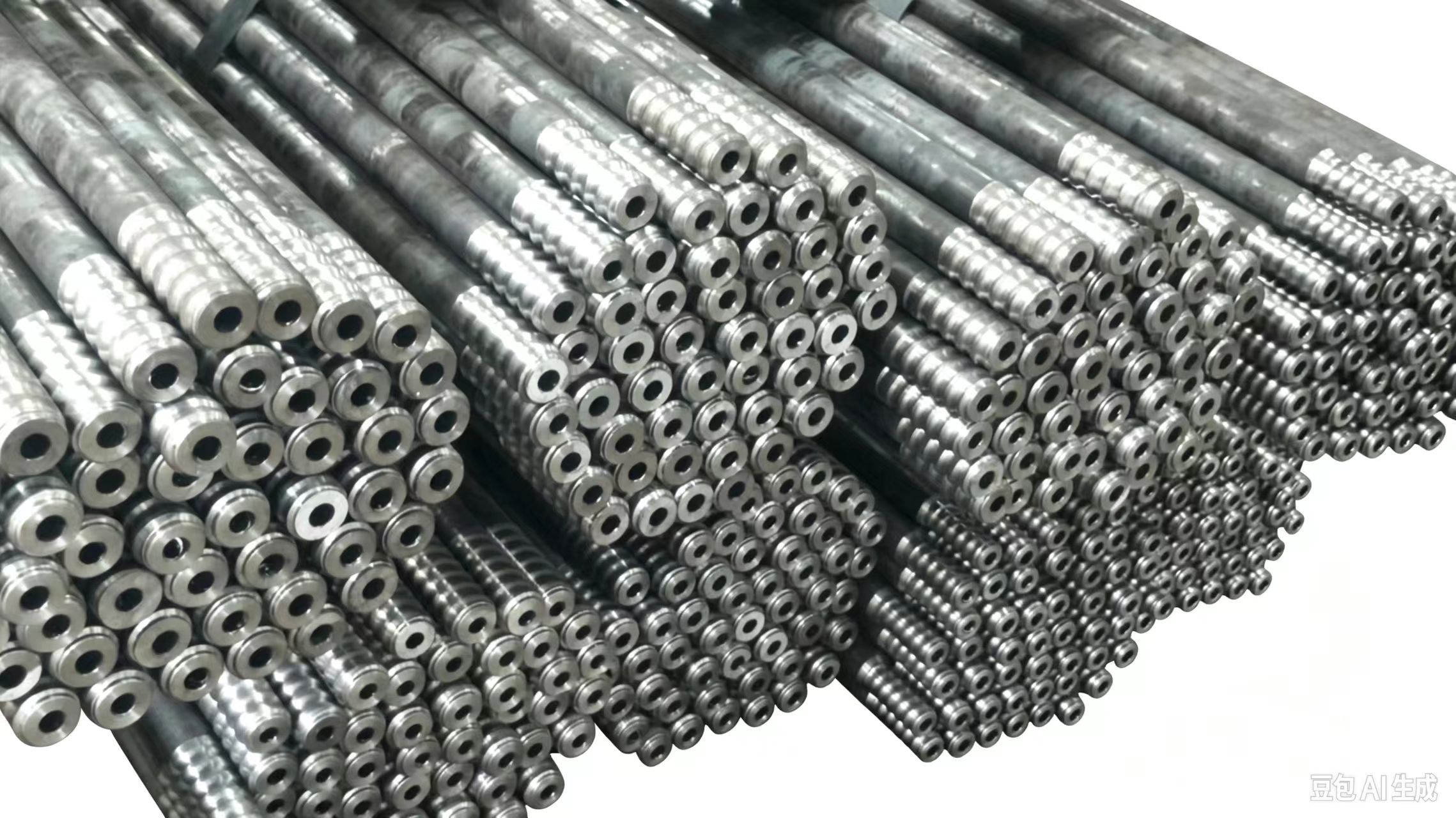
To choose the right drill rod, first understand its structure. A typical BF drill rod consists of three parts: the tube body, the end upset section and the connecting thread. The body is a thick-walled seamless steel tube; both ends are upset or machined to form upset sections, then turned with trapezoidal or rectangular threads matching the opening machine and the bit. A through central bore runs the whole length, carrying high-pressure water or air to cool the bit and flush cuttings out of the hole.
In terms of material, medium-carbon alloy steel is the mainstream choice. Common grades include 42CrMo, 40Cr and 35CrMo; more severe service may call for 40CrNiMo. After quenching and tempering, these steels offer high tensile and yield strength to transmit torque and withstand compression, together with enough toughness to absorb impact vibration. Wall thickness typically ranges from 8 to 16 mm, and common outer diameters are 32, 38, 42 and 50 mm, chosen to match the opening machine torque and tap-hole depth.
From a load perspective, a BF drill rod simultaneously carries four loads: torque from the opening machine that rotates the string; axial feed force pressing the bit into the clay; high-frequency vibration and shock from the bit striking hard material; and high-temperature strength degradation near the furnace shell. Any weak link shows up as shaft bending, thread stripping, end cracking or even rod breakage.
That is why finished rods are usually inspected by ultrasonic and magnetic particle testing for straightness. On site, joints must be torqued to specification and never hammered, so that the string stays reliable through repeated run-in and run-out cycles.