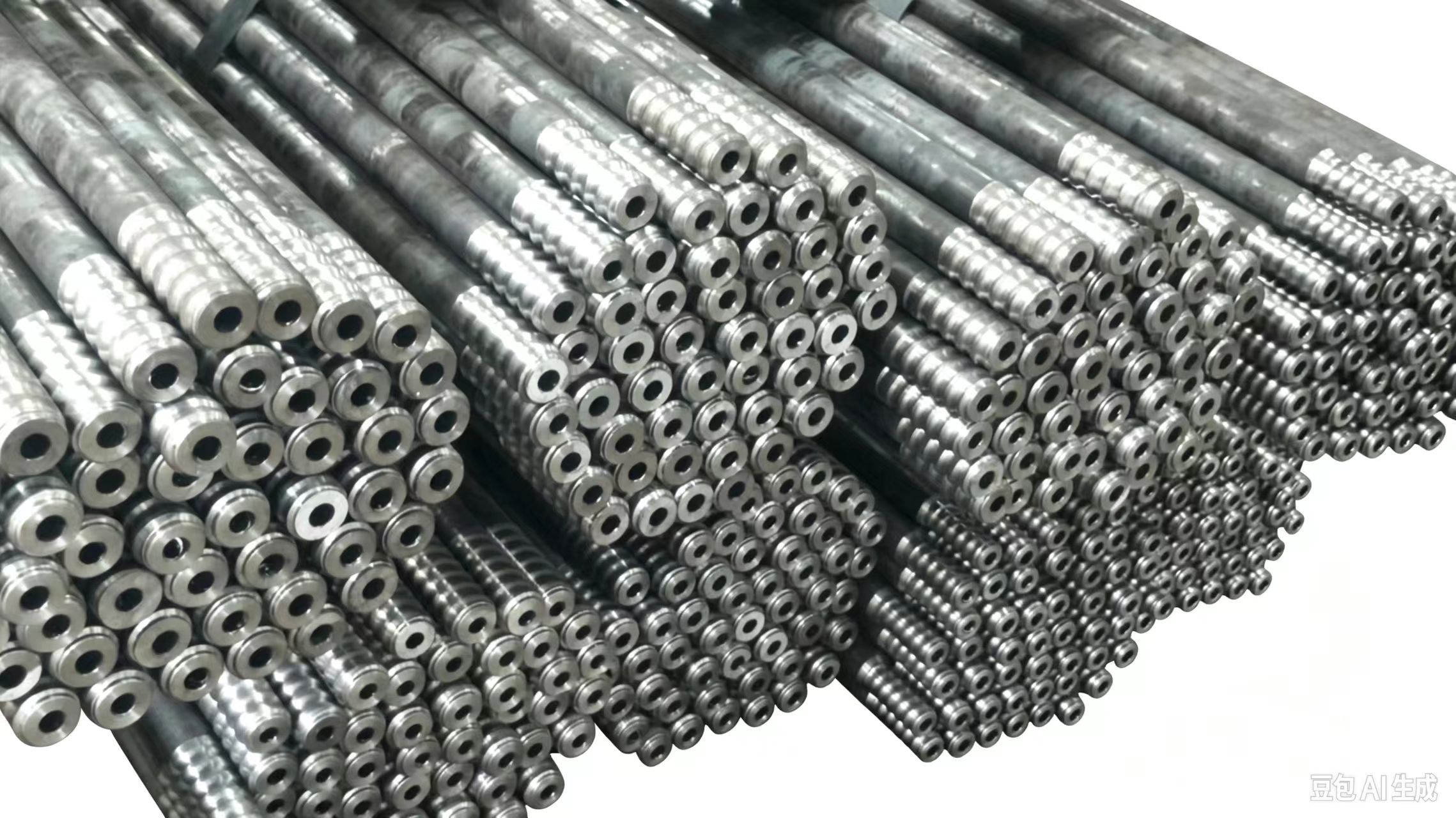
In blast furnace ironmaking, a channel must be drilled through the blast furnace tap hole before each tapping to let the hot iron flow out. The tools that perform this job are the blast furnace drill rod and the blast furnace drill bit. Many new operators and buyers only see them as "a steel pipe with a tungsten-carbide head," yet they directly determine tapping time, smooth iron flow and work safety.
The drill rod connects the opening machine's power end to the bit. It usually has a central bore for high-pressure cooling water or compressed air, and its ends are joined to the next rod or to the bit by special trapezoidal threads. The bit sits at the very front of the string, directly crushing the tap-hole clay, refractory material and a certain depth of solidified lining. It is the most severely worn and highest-impact part of the whole string.
Compared with water-well or geological drill rods, BF drill rods and bits work under far harsher conditions: the drilling point sits close to the steel shell with high ambient temperature; vibration and shock are severe; and once a bit sticks in the tap hole, removal is difficult and may disrupt the tapping schedule. That is why BF drill rods use dedicated steel grades, wall thicknesses, thread precision and heat treatment, while the bit's carbide grade and brazing process must match the clay hardness and lining material.
A qualified BF drill rod should be straight, free of obvious bends, with clean crack-free threads. A qualified bit should have symmetric cross wings, firmly seated carbide buttons and an open flushing hole. Choosing and using these two tools well is what every BF operator and buyer cares about most.