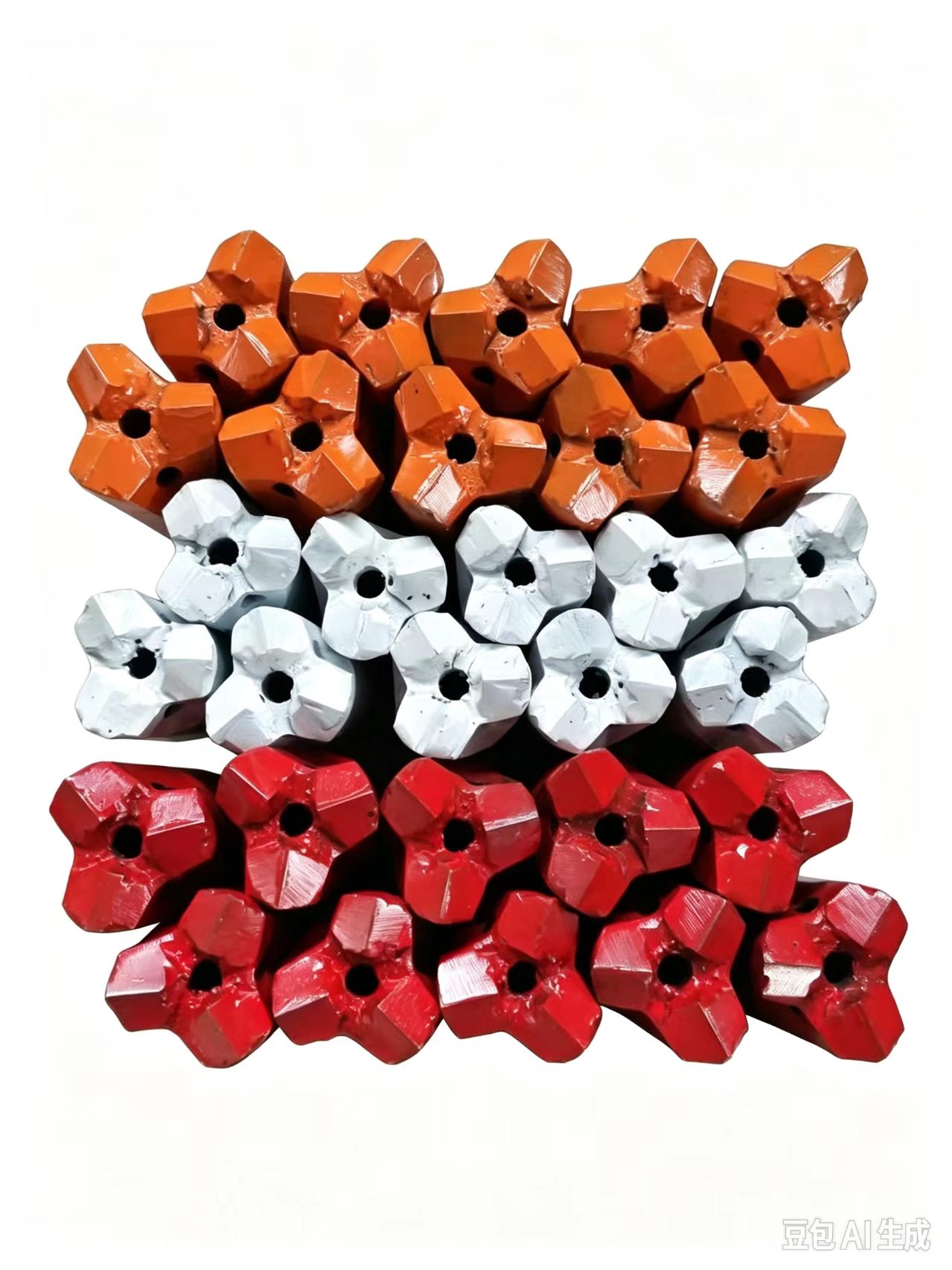
BF drill rods and bits look like "old iron"—one tube, one head, a few carbide buttons—yet improvements have been quietly happening. Knowing these changes helps steel mills and suppliers choose better value in the next purchase.
The first trend is upgraded carbide and brazing. Conventional carbide grades are moving toward coarser grains and higher toughness; brazing is shifting from ordinary silver-base brazing to high-frequency induction brazing under protective gas, cutting button fall-out. Some makers add hardfacing layers on the wings so the body itself resists wear better.
The second trend is optimized joint design. Conventional single trapezoidal threads tend to gall after repeated make-and-break; new joints use multi-start trapezoidal threads with end-face piloting for faster make-up, better alignment and fewer leaks. Finite-element analysis also optimizes wall thickness, cutting weight without losing strength and easing the operator's load.
The third trend is better flushing and cuttings evacuation. Newer bits add side jet holes beside the central bore, aiming high-pressure water directly at the back of the buttons for more effective cooling; the port shape has evolved from simple round holes to slotted, flow-guided openings that flush the bottom cleaner.
The fourth trend is digital coordination with the opening machine. Some mills are fitting identification chips in rod joints to record usage count, torque curve and cumulative drilled length, forcing retirement by life; bits are also being instrumented to record drilling current curves and predict button wear. These small changes are steadily cutting unplanned furnace downtime.
For end users, there is no need to chase every novelty. But when the next tender or price comparison comes around, writing "carbide grade, brazing method, joint design, flushing arrangement" into the technical specification will let the manufacturers who actually engineer their products stand out.