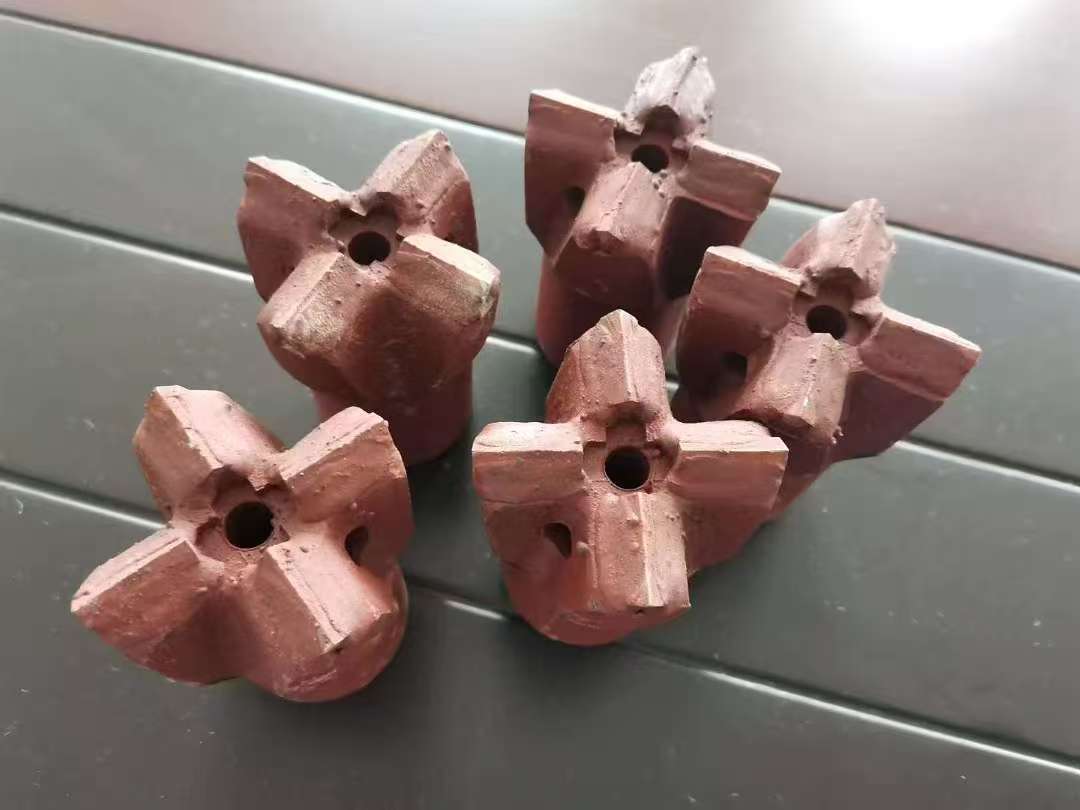
Why Taphole Drilling Tools Are Their Own Category
Russia’s steel sector has spent four years re-routing exports and slowing capital programmes, and crude steel output fell to a fifteen-year low of 67.8 million tonnes in 2025, as we set out in our review of the Russian steel industry. Underneath that headline sits a narrower question, and for a plant it matters more than it does for an analyst: who actually supplies the tools that open the taphole every few hours, and can they keep supplying them.
The naming is confusing. Search for Russian drill bit plants and most results are roller cone and down-the-hole manufacturers serving oil, gas and open-pit mining. Blast furnace drilling tools are a different product family, separated by three working conditions:
- They work close to the furnace shell at high ambient temperature, so body heat resistance and carbide brazing quality decide tool life.
- The material being drilled is taphole clay, refractory mud gun material and solidified lining, not rock. The failure mode is different: the bit is asked to shear a plastic-to-brittle plug without losing gauge.
- Bit and rod are joined by a special trapezoidal thread, and the assembly has to match the taphole opener interface on that particular furnace.
Small volumes, high customisation and unforgiving conditions are why very few Russian plants specialise in this segment. The market is assembled from four kinds of supplier instead.
The Domestic Manufacturing Base
Uralburmash (UBM) is the oldest name in Russian bit production. The plant describes itself as the founder of the Russian bit industry, with 90 years in the market and more than 16.5 million bits manufactured in sizes from 3 to 20 inches (ubm.ru). Its core lines are roller cone and cutter bits for oil and gas and for mining, but the metallurgical engineering base behind them also supports custom cutting tools for ferrous metallurgy.
Volgaburmash (VBM) in Samara is the other volume producer: 75 years of experience, more than 600 roller cone bit designs from 3 3/4 to 26 inches, and goods used or exported in more than 75 countries, with the company positioning itself as the largest bit manufacturer in Russia (vbm.ru). As with UBM, oilfield and mining bits are the core business and taphole tooling sits inside a custom line rather than a catalogue.
Machine-building groups such as AO Mashinostroitelny Holding cover down-the-hole hammers, button bits, extension rods and drill rods for open-pit and underground drilling. The technical route overlaps with taphole tooling and some specifications can be adapted to metallurgical use, but it is not a product line the group markets to steel plants.
Regional drilling tool plants build for piling, geotechnical work and mine drilling rather than for ironmaking. Burmash in Yekaterinburg (zavod-burmash.ru), the Geomash group in St Petersburg (geomash.ru) and Zavod Burovykh Tekhnologiy with its URB rig and tool range all sit in this group.
Steel plant tool shops are the part that is easiest to overlook and probably the largest by volume. MMK, Severstal, NLMK, NTMK and Mechel all run their own machine shops and tool divisions, and a significant share of taphole rods and bits are machined or reconditioned in-house to plant drawings. That capability sits inside the same works as the big capital projects: when the President visited MMK in July 2025 the programme covered the new coke battery No. 12 complex and the associated metallurgical upgrades (kremlin.ru).
Where the Supply Chain Falls Short
Russian bit manufacturing is strong in general mining and oilfield tools and thin in the consumables specific to the taphole: ironmaking cross bits, heavy-wall drill rods and trapezoidal thread connectors. These are produced in small batches, to plant-specific drawings, for punishing conditions, and that shapes the wider supply picture. Three consequences stand out.
- Historic dependence on Ukrainian and European supply. DHM GROUP in Dnipro builds equipment for blast furnace, ferroalloy and agglomeration plants, including machines for opening and closing tapholes, and was developing hydraulic clay guns for the Nikopol ferroalloy plant in the 1990s (dhmgroup.com). Since 2022 that route has become unreliable for Russian buyers.
- Chinese tooling moving in quickly. Chinese drilling tool makers have kept a presence at Metal-Expo in Moscow, taking hollow anchor bars and drilling tools into the Russian and CIS market (Metal-Expo). That also means more competition, from suppliers working the same channels you would.
- Import substitution creating custom demand. Since 2015 the state import substitution programme has prioritised machinery, refractories and special tooling. Plants increasingly place orders of the make-it-to-this-drawing kind, but limited heat treatment capacity, carbide insert supply and small batch sizes make lead times and batch-to-batch consistency hard to guarantee.
What This Means for Taphole Tool Suppliers
- The customer list is short and knowable. MMK, Severstal, NLMK, Evraz, Mechel and NTMK, plus reconstruction projects in Ukraine such as Makiivka and Yenakiieve, form the core buying group for taphole tooling in the region. Six plants and a handful of projects is a market you can call on directly rather than through distributors.
- The entry point is consumables, not machines. A complete taphole opener is expensive to ship and service, and plants generally prefer to keep the machine already installed on the casthouse floor. Wear items – cross bits, extension rods, thread connectors – are where an outside supplier wins volume first, and where the wear parts that decide drilling cost are concentrated.
- Compliance and payment are set up before the first order, not after. Establish which goods are subject to restrictions, how payment is routed and which bank handles it, and which overland corridor the shipment uses – then price landed cost, not FOB, into the quote. The measures that apply in 2026 are summarised in the trade rules for plant buyers, and the commercial cost of the same decisions in lead time as a cost.
- Samples and site service decide the account. Steel plants judge tooling by life, not by catalogue. A first order means sending samples, standing in the casthouse, and running a like-for-like life comparison on the same furnace. Once a bit outlasts the locally reconditioned alternative by a clear margin, repeat orders follow. The two measurements that make that argument are matching bit design to taphole clay and drilling cost per metre.
Conclusion
Russia does not lack a drill bit industry. It lacks a complete one covering the taphole. Western equipment has withdrawn, the Ukrainian supply route is unstable, and the furnaces still have to be tapped on schedule, which leaves a gap for whoever can deliver a full range of taphole rods and bits: threads that match the machines already installed, diameters that cover the installed openers, and life that holds from batch to batch. The technical side of that argument is covered in R32 left-hand thread taphole drilling and the outlook for taphole drilling tools, and the maintenance calendar it has to fit in consumable planning around a reline.