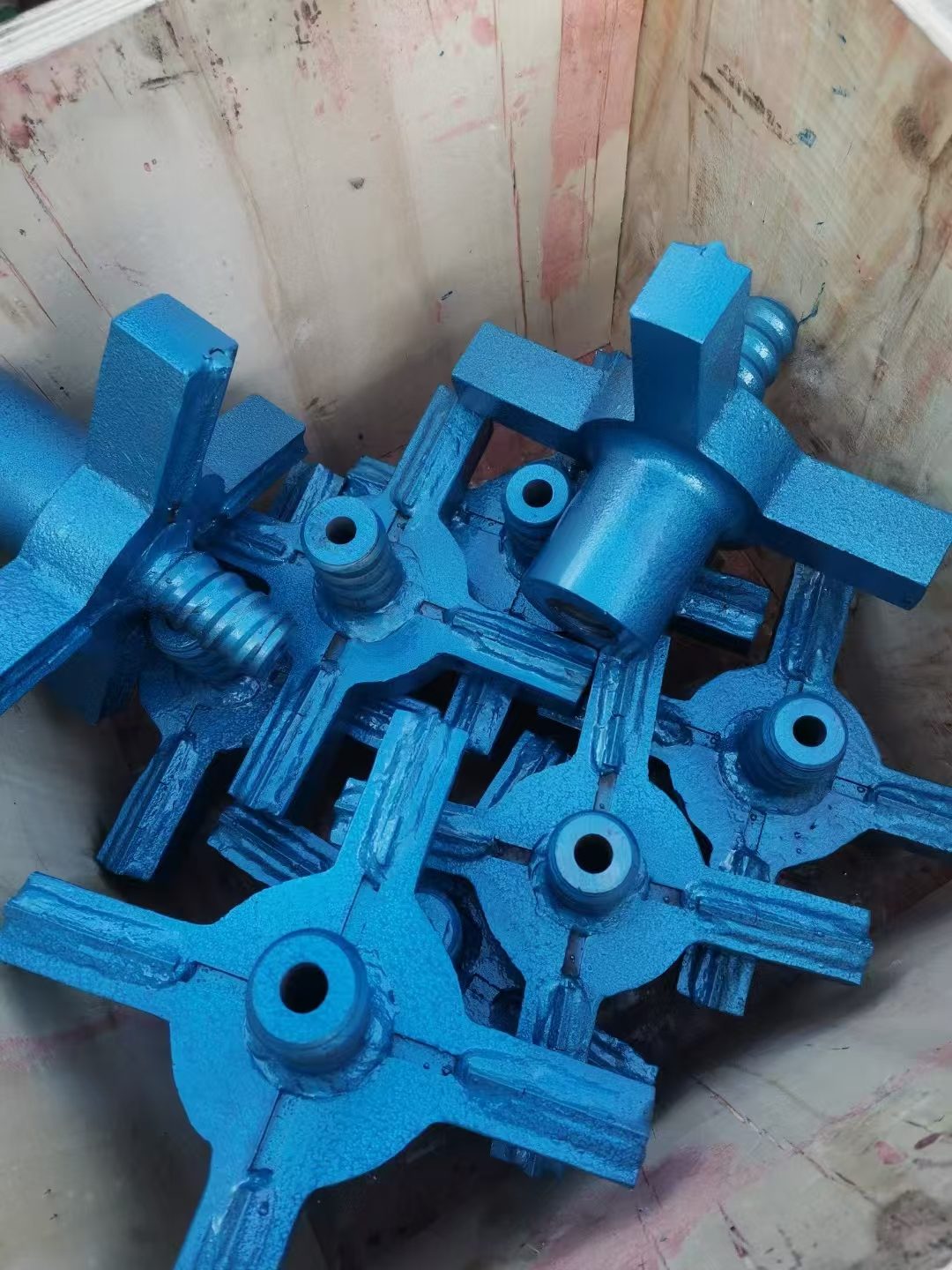
The Chinese manufacturing advantage in steel plant tooling used to be summarised in one word: price. That summary is now out of date. For taphole drilling tools – bits, rods, adapters and connectors – the advantage has three layers, and buyers who understand all three get better tooling rather than merely cheaper tooling.
Layer 1: cost structure
The structural reasons for a lower price are real and durable: bar, cemented carbide, forging, heat treatment and precision machining sit in the same industrial cluster, so inventory is lean and handovers are short. A workshop specialising in drilling tools runs the same operations repeatedly, which reduces setup cost per part. This is the layer that shows up first in a quotation, and the mechanics are set out in why Chinese taphole tools cost less.
Layer 2: engineering and process control
The second layer is less visible and more interesting. Chinese tool makers now invest in the processes that decide tool life: controlled atmosphere heat treatment, calibrated hardness testing, thread gauges, run out measurement and brazing control for carbide tips. The technology is not proprietary – but the habit of documenting it is what turns a workshop into a supplier. Compare a quotation that names a hardness range and a test method against one that names only a price, and you are looking at the difference between the two layers.
This is also the layer where the industry’s own technical evolution shows. The move from wear resistance alone toward tools designed around real operating data – covered in how rod and bit technology is changing – has been driven by customers asking better questions, and Chinese producers have answered them with drawings rather than with adjectives.
Layer 3: production to drawing, at speed
The third layer is flexibility. A specialist factory can take a taphole drawing – a diameter, a length, an R32 left-hand connection, a tip geometry – and turn it into a machined and heat treated part quickly, because tooling changes are small and the equipment is already set up for the family. For a steel plant, that means a tool matched to its own taphole instead of the nearest catalogue equivalent. It also means faster problem solving: when a bit starts wearing unevenly, a new geometry can be trialled in weeks.
How a buyer turns this into an advantage
- Bring your working conditions to the table. Taphole diameter and depth, clay type, drilling machine and connection, cast rate. The more specific the input, the more of the advantage you keep – see custom tools built to working conditions.
- Specify to a document. Hardness range, thread tolerance, material certificate, inspection record.
- Plan the pipeline. Match shipment size to consumption so that price and delivery both work.
- Verify with the first batch. Measure, cut, compare against the sample – then decide.
What to ask before you commit
Ask for the drawing behind the part, the hardness range and its test method, the thread tolerance class and the inspection record. Ask how a change of material source or heat treatment would be communicated before it happens. Then measure the first delivery yourself. Those four questions separate a manufacturer with process control from a trading desk with a catalogue, and the answers cost nothing to obtain at the quotation stage.
Frequently asked questions
Is the cost advantage disappearing?
It is narrowing on labour and energy, and holding on supply chain density and scale. For specialised parts, cost is still a real advantage – but it is no longer the only one.
What is the biggest risk when buying from China?
An unwritten specification. The manufacturing capability is there; ambiguity is what turns a good supplier into an unpredictable one.
If you are reviewing taphole tooling this year, send us one part you buy today and the conditions it works in. We will return a drawing, a specification and a quote – and you can judge the manufacturing advantage on your own measurements.