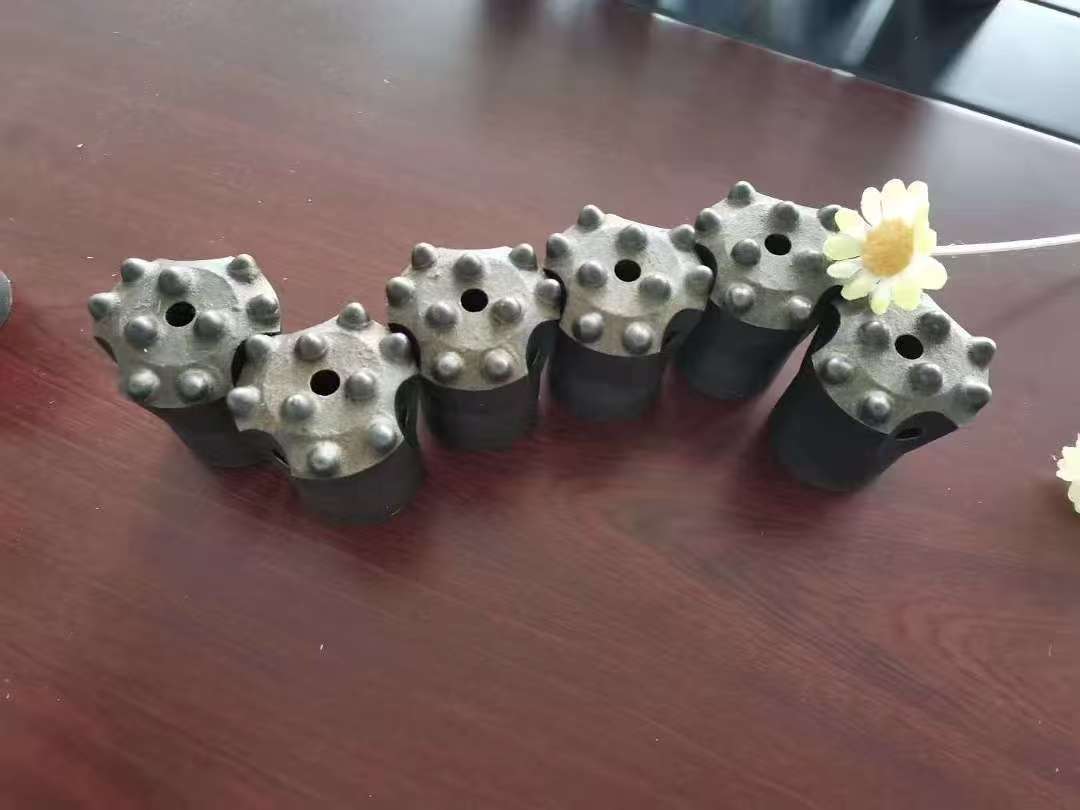
Standard tools cover many blast furnace applications, but some operations require a customized size, thread, material, or button layout. Successful customization begins with accurate information from the working site. The goal is not to create the most complex tool, but to match the complete drilling assembly to the actual machine and taphole conditions.
Provide the Complete Equipment Information
Start with the drilling-machine model, shank type, rotation speed, impact energy, and feed method. Include the diameter and length of the current drill rod, bit diameter, thread specification, and the dimensions of any coupling sleeves or adapters. Photographs and dimensional drawings can prevent misunderstandings that are difficult to detect from text alone.
Describe the Taphole Conditions
Record the usual hole depth and diameter, drilling angle, and the type of material encountered. Note whether drilling is affected by hard slag, iron skull, excessive dust, high temperature, or sudden changes in resistance. If possible, include the number of holes completed by the current tool and how it usually fails.
Define the Improvement Target
- Increase penetration speed.
- Extend bit or rod service life.
- Improve hole diameter accuracy.
- Reduce vibration and connection loosening.
- Replace an obsolete or difficult-to-source size.
- Simplify the number of components used across a workshop.
What Can Be Customized
Custom work may include drill-bit diameter, shank dimensions, body length, carbide grade, button count, button spacing, flushing passages, rod diameter, rod length, and thread connection. The exact scope depends on the machine and safety requirements. Any change to one part should be reviewed against the full assembly to ensure alignment and compatibility.
Review the Drawing Before Production
A production drawing should show critical dimensions, tolerances, material specification, thread details, surface requirements, and identification marks. Confirm the drawing before manufacturing begins and ask how inspection will be performed. For a new design, a sample trial can reveal practical issues that are difficult to see in a technical review.
Evaluate the Trial with Measurable Results
Compare the custom tool with the existing product under similar conditions. Track drilling time, holes completed, wear pattern, vibration, connection condition, and operator feedback. This data shows whether the design met the intended objective and whether a second iteration is justified.
Custom Manufacturing Support
Shandong Feiteng produces customized blast furnace alloy drill bits, drill rods, coupling sleeves, and shank adapters. We review dimensions, materials, and application details before production, then inspect the finished parts before shipment. Send your drawings and operating data to discuss a suitable configuration.