The green steel transition has moved from press release to steelworks. Stegra is commissioning its plant in northern Sweden – roughly 6.5 billion euros, 2.5 million tonnes of capacity and a 700 megawatt electrolyser behind it – starting on an electric arc furnace with the direct reduction shaft to follow. Salzgitter is converting its works in stages. Thyssenkrupp has committed around 2.2 billion euros to a first phase. In Australia, public money to the tune of 2.4 billion Australian dollars is supporting the Whyalla transition from blast furnace steelmaking to direct reduction and electric arc melting.
And yet, on the same continent where those projects are being built, blast furnaces keep being relined. Both things are true, and anyone selling or buying taphole drilling tools needs to hold them together.
Why the transition does not switch off ironmaking
- Green projects are replacements, not additions. When a direct reduction and EAF route comes on line, the blast furnace it replaces is shut – but only after the new route proves it can deliver the tonnage and the grades.
- The capital is enormous and staged. A 6.5 billion euro project absorbs a decade. In the meantime every existing furnace must be kept reliable.
- Flat products still need virgin iron. Automotive and packaging steel made from scrap alone is limited by residual elements, which is why hydrogen reduced iron is the feedstock of choice and blast furnace iron is still in demand.
- Furnaces get relined rather than retired. A reline buys another campaign, and a campaign means two to four tapholes drilled several times a day.
What changes for the cast house while the transition runs
As the number of blast furnaces falls, the ones that remain carry more of the load. That has direct consequences for taphole consumables:
- More casts per day. A furnace asked to deliver more hot metal drills more often, often with shorter repair windows.
- Hotter, harder drilling. Higher hot metal rates and deeper tapholes put more heat into the rod, which is where material selection starts to matter – see our notes on materials for high temperature drill rods.
- Bigger consequence of failure. On a plant with one furnace instead of three, a stuck or broken tool is not an inconvenience, it is a lost cast.
- Tighter specification. Transition era budgets fund the new route first, so the old route has to run on better tools rather than more tools.
The direct reduction plant is a new customer, not a lost one
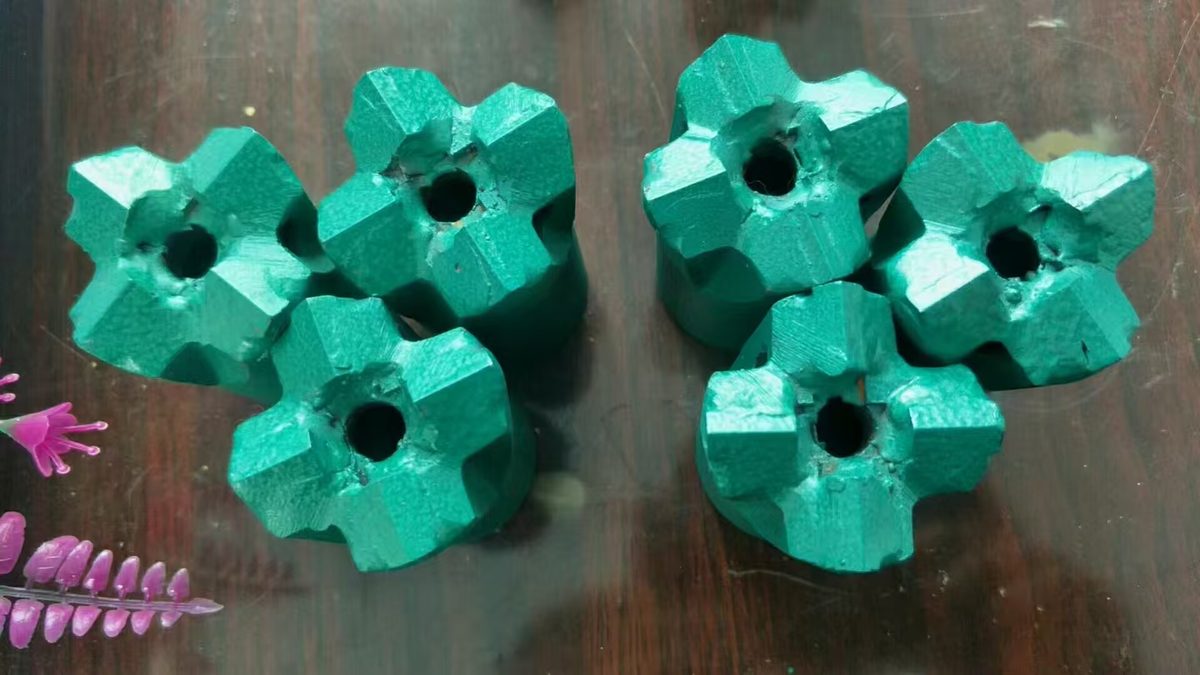
Direct reduction and electric arc routes tap metal too, just not through a clay taphole. Their casting and tapping equipment, ladle practices and refractory tools are a different product family, and suppliers who understand ironmaking refractories and drilling will find the conversation familiar. Meanwhile the blast furnace and ferroalloy furnaces that remain need precisely what they always needed: cross bits, button bits, rods, adapters and connectors that match the drilling machine and the clay.
If your plant is still on the blast furnace route, this is the moment to protect the asset rather than postpone maintenance. That is why the fundamentals in wear forms and life extension for rods and bits are worth more than ever: a plant that cannot afford a new furnace certainly cannot afford a damaged hearth.
Frequently asked questions
When will blast furnace taphole drilling disappear?
Not on any schedule that affects a purchasing decision being made in 2026. The world still makes the large majority of its steel through the blast furnace and basic oxygen route, and every replacement project is measured in years.
Should a steel plant stop investing in taphole tooling?
No. The taphole is a safety and productivity boundary. Preserving it protects a campaign that still has to deliver while the transition is funded.
Running a furnace through a transition programme? Tell us the taphole diameter, the clay you use and the drilling machine, and we will match a tool set that keeps the cast schedule honest.