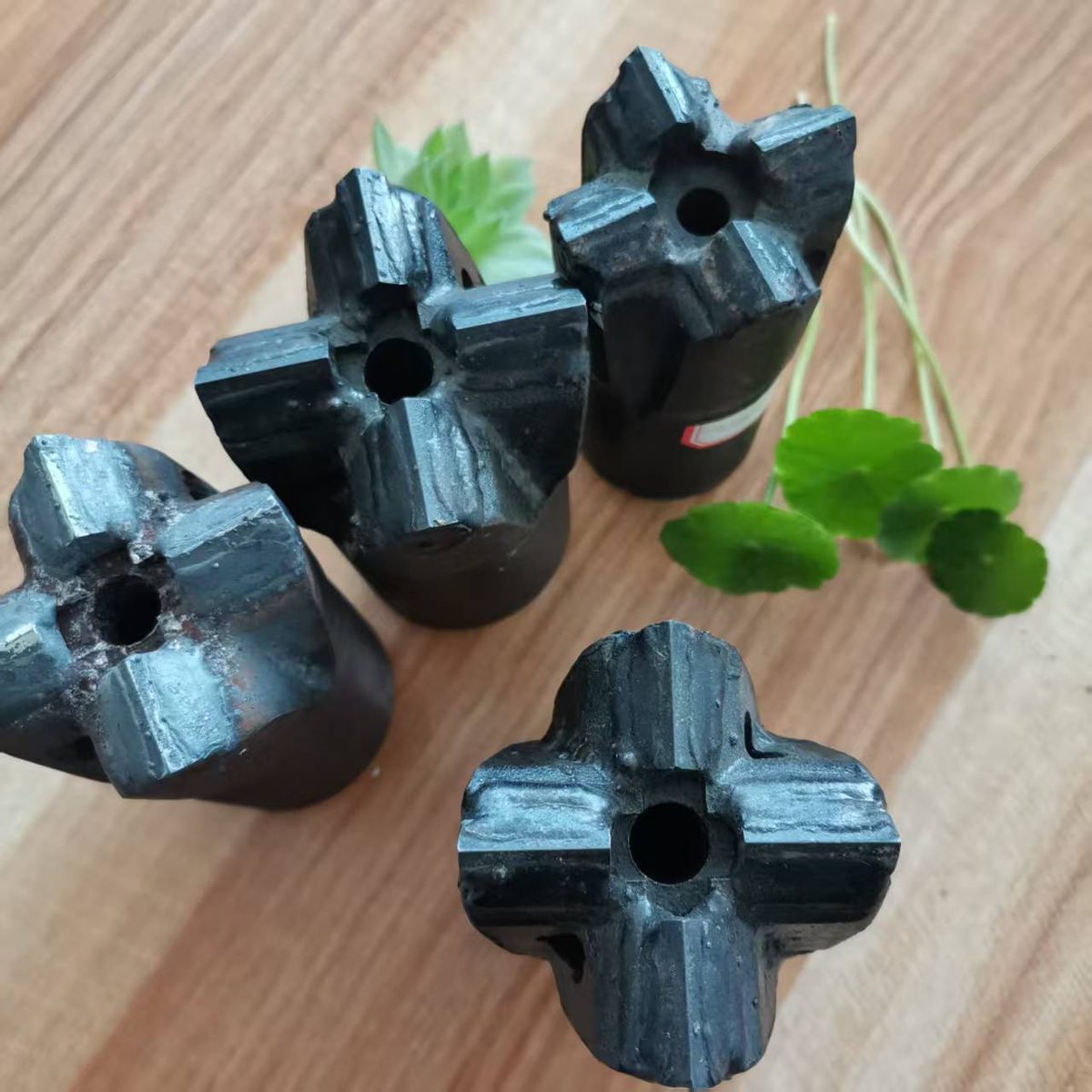
Dimension stone is the one branch of drilling where nobody wants the hole for its own sake. The hole exists to guide a wire, take a wedge or hold a fixing – and the granite drilling bit or marble bit you choose decides whether that hole stays on line and leaves the face unmarked. Drilling granite for aggregate is a volume business; drilling granite for a slab is a precision business.
Three stones, three different problems
Granite and other hard igneous stone. Highly abrasive and brittle. The bit has to resist abrasion rather than impact, and it needs continuous flushing because the cutting edge will not survive dry heat. Penetration rates are modest and predictable, and the gauge wears steadily – which is critical, because line drilling for a wire saw depends on holes of consistent diameter.
Marble and softer crystalline stone. Cuts much faster, with less bit wear, and the risk shifts from tool life to finish. Rust, dirty water and hot cuttings can stain a pale stone; a chipped edge is expensive and permanent. Clean water and clean tooling matter more than carbide grade here.
Sandstone and other sedimentary stone. Variable. Hard bands alternate with soft, drillable layers, so bits experience alternating load and the hole tends to wander at the transitions. A four-wing bit holds line better than a chisel in this ground.
Which bits suit which job
- Line drilling for wire sawing: closely spaced, accurately sized vertical holes. Consistency of diameter and straightness over the whole hole length matters more than speed, so a four-wing cross bit with controlled gauge wear is the usual choice.
- Wedge and plug holes: the hole must be straight, clean and to size for the plug to work. Any ovality means the wedge bottoms out or the split runs off line.
- Dowels, fixings and anchors in finished stone: hole roundness and an accurate annulus matter for the fixing, and the hole walls must not be stained. These are usually small-diameter holes in the workshop or on site.
- Chisel bits: useful in soft stone and for quick removal work, but too prone to wander for precision lines.
Rods, shanks and flushing
Stone drilling is mostly done with tapered or threaded rods on hand-held or light wagon drills, and with specialised rigs for line drilling. Three practical points:
- Keep rod straightness high. A bowed rod in a deep line-drilling pattern translates directly into a bowed row of holes, and the wire saw then cuts badly or not at all.
- Water, not air, in most stone operations. Water clears cuttings and cools the bit, and it also controls dust, which matters when the dust is crystalline silica.
- Watch the return water. Clear return means the hole is being cleaned; milky return means you are grinding, not cutting, and the bit is heating up.
Care points that protect the block
Do not start a hole with a worn bit – a worn gauge means the first centimetres are under size and the rest of the hole has to open itself out. Keep bits and rods off the ground and away from the slurry pits, because grit on a taper or thread is the fastest way to lose accuracy. And in pale stone, check the tool: a rusty shank or flaking paint will leave marks that polishing will not always remove.
If you are running line drilling alongside wire cutting, it is worth understanding where the rest of the string actually fails – our notes on wear patterns and coupling sleeves apply to stone just as much as to mining.
Frequently asked questions
Carbide or diamond for stone drilling?
Carbide tips for production holes – line drilling, wedge holes and anchors – because they are fast and can be reground. Diamond core bits for precise, clean-edged holes in finished stone and for sampling. Most quarries use both.
How do I stop a hole wandering in a bedded stone?
Use a four-wing bit, reduce feed through the transition bands, and keep the rod as short and as straight as the depth allows.
Can worn bits be reground for stone work?
The carbide can be re-profiled, but the gauge is what your line drilling depends on. Retire bits by gauge measurement, not by appearance – see when to regrind.
Tell us the stone, the hole pattern and your rig, and we will specify bit geometry, gauge and carbide grade for stone that has to look as good as it drills.