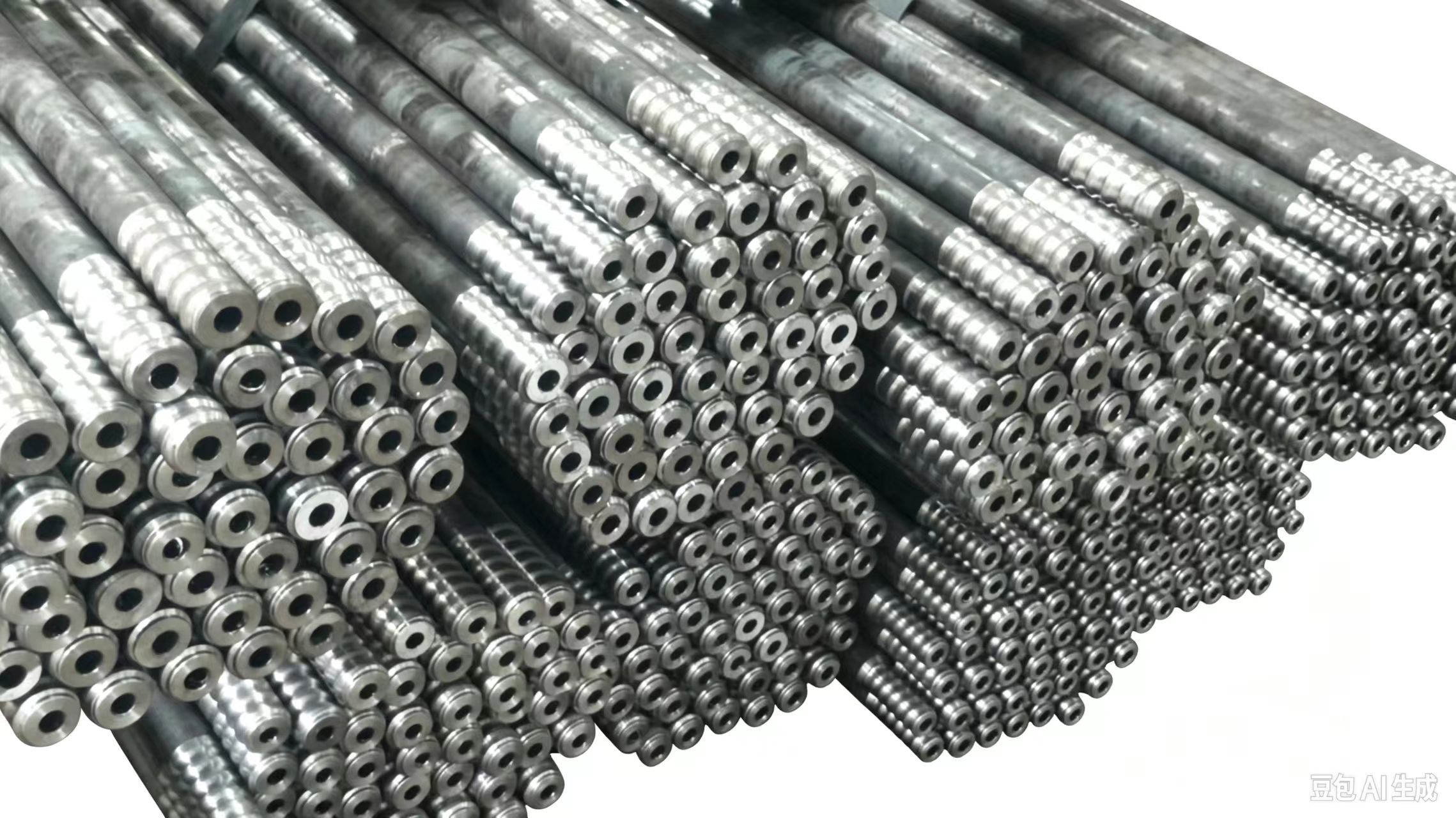
42CrMo and 40Cr are the two most common grades in the BF drill rod market. Buyers often ask: what is the actual difference, and which should my furnace use? Here is a plain comparison across chemistry, mechanical properties and service conditions.
In chemistry, both are medium-carbon alloy steels. 40Cr contains about 0.37–0.44% C and 0.8–1.1% Cr; 42CrMo adds roughly 0.15–0.25% Mo on top. The molybdenum improves hardenability and high-temperature strength, giving 42CrMo a more uniform microstructure and better overall mechanical properties after quench and temper.
In properties, properly heat-treated 42CrMo typically reaches yield strength above 835 MPa and tensile strength above 1080 MPa, with notably better impact toughness than 40Cr. More importantly, 42CrMo retains strength at 350–500 °C and resists temper embrittlement—practical advantages for rods working near the hot shell. 40Cr is cheaper, but under heavy load, high shock and elevated temperature it tends to deform and fatigue-crack earlier.
In application: small blast furnaces with shallow tap holes and soft clay can use 40Cr rods at a cost advantage, with acceptable life. But large and medium furnaces, deep tap holes, hard clay and high tap frequency should specify 42CrMo, or even 40CrNiMo. A good rod costs a few dozen yuan more, but it breaks less, needs fewer changes and causes fewer incidents, lowering total cost.
Material choice is not simply "the pricier the better"; it is matching material properties to the actual loading. List your tap-hole depth, clay hardness and heats per shift, then pick the grade accordingly.