Hand-held drilling is where most people meet rock bits for the first time, and where most of them are bought badly. The jobs are small – a dowel hole, a fence post, an anchor for a sign, a row of holes along a kerb line – so the instinct is to grab whatever bit is nearest. In practice these are the jobs where a wandering hole is most visible and most expensive to fix.
Match the shank first, always
Before tip shape, before diameter, before price: the shank has to fit the machine you own. Hand-held rock drills almost always use a hexagonal shank, either 22 mm across the flats with a 108 mm shank length, or 25 mm with a 159 mm length. Smaller hammers take smaller versions.
Two habits save money here. Measure your chuck rather than trusting the label on the old rod, and keep shanks of different sizes in separate boxes – mixing a 25 mm rod into a 22 mm machine is a two-part failure, because the chuck jaws get hammered as well.
Pick the tip shape for the material
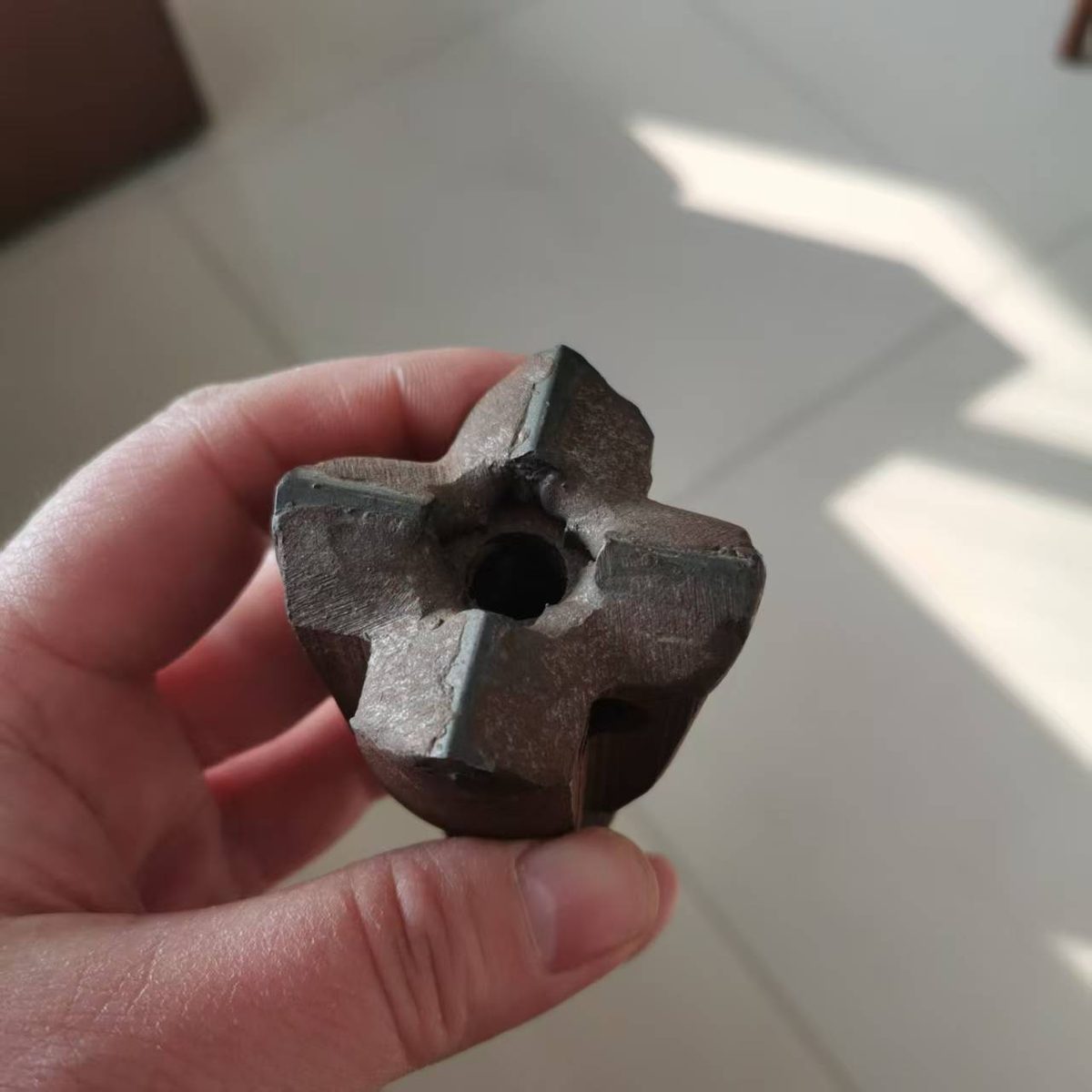
- Cross or four-wing bits are the general-purpose choice for aggregate, granite setts, kerbs, concrete and mixed ground. Four cutting edges hold the hole on line and leave a rounder hole for dowels and anchors.
- Chisel bits cut fast in soft stone, slate, soft sandstone and clay, and are cheaper to buy. They wander more, so use them for holes where position matters less than speed.
- Button bits bring the crushing action of larger equipment to hard, abrasive rock, and can be reground – worth having where a crew drills hard stone every day.
For visible work – stone paving, facings, bricks – the roundness of the hole matters as much as the speed. A four-wing bit costs a little more and produces a hole that takes a dowel or anchor without packing.
Choosing the diameter
Work back from the fixing, not forward from the drill. A dowel or resin anchor needs a controlled annulus around it; a hole drilled two sizes too large makes the fixing depend on how much resin or grout someone happens to use. If you are drilling for a mechanical anchor, take the manufacturer’s hole diameter as the target and choose the bit to hit it – remembering that the gauge of a worn bit is smaller than its marked size.
Practical habits that improve the hole
- Collar slowly. Start the hole with light feed until the bit is fully engaged. Almost every wandering hole in paving is a collaring problem, not a bit problem.
- Hold the machine square. A hand-held drill held off-axis drills an off-axis hole. Check the angle twice: once at the start, once at half depth.
- Flush properly. Even small hammers need water or air to clear cuttings, or the bit grinds its own dust. On stone and concrete this also controls the silica dust that makes this work unhealthy.
- Do not lean on it. Hand-held drills cut fastest at the feed the machine was designed for. Extra body weight bends the rod, wears the shank and slows you down.
- Retire worn bits. A cross bit with worn wings drills under size and has to be forced. Regrinding or replacement is cheaper than the extra minute on every hole.
Buying bits for a site
Small jobs consume bits slowly, so buy for the material you meet most often and keep one spare of each diameter on the van. Bulk packs are cheaper per piece and worth it if the work is repetitive, but only if the sizes match your fixings. If you are unsure what to standardise on, our note on colour coding and identification will at least stop you sorting the box by sight.
Frequently asked questions
How deep can I drill with a hand-held rock drill?
In hard stone, a few hundred millimetres per rod is realistic; the limit is flushing and how straight you can hold the machine, not the bit. For deep holes, use extension rods and accept slower progress.
Can I use a rock bit on reinforced concrete?
On aggregate and unreinforced concrete, yes. On reinforcement you need a different tool: a carbide-tipped rock bit will not cut steel, and forcing it damages the wing tips.
Do I need a different bit for marble and soft stone?
Softer stone cuts quickly with a chisel or light cross bit, but the hole walls mark easily. Use clean water, keep the machine square and, in pale stone, avoid bits with loose rust or flaking paint. See drilling dimensional stone.
Tell us the material, the fixing you are installing and the drill you use, and we will send the shank size, diameter and tip shape that produces the hole in one pass.