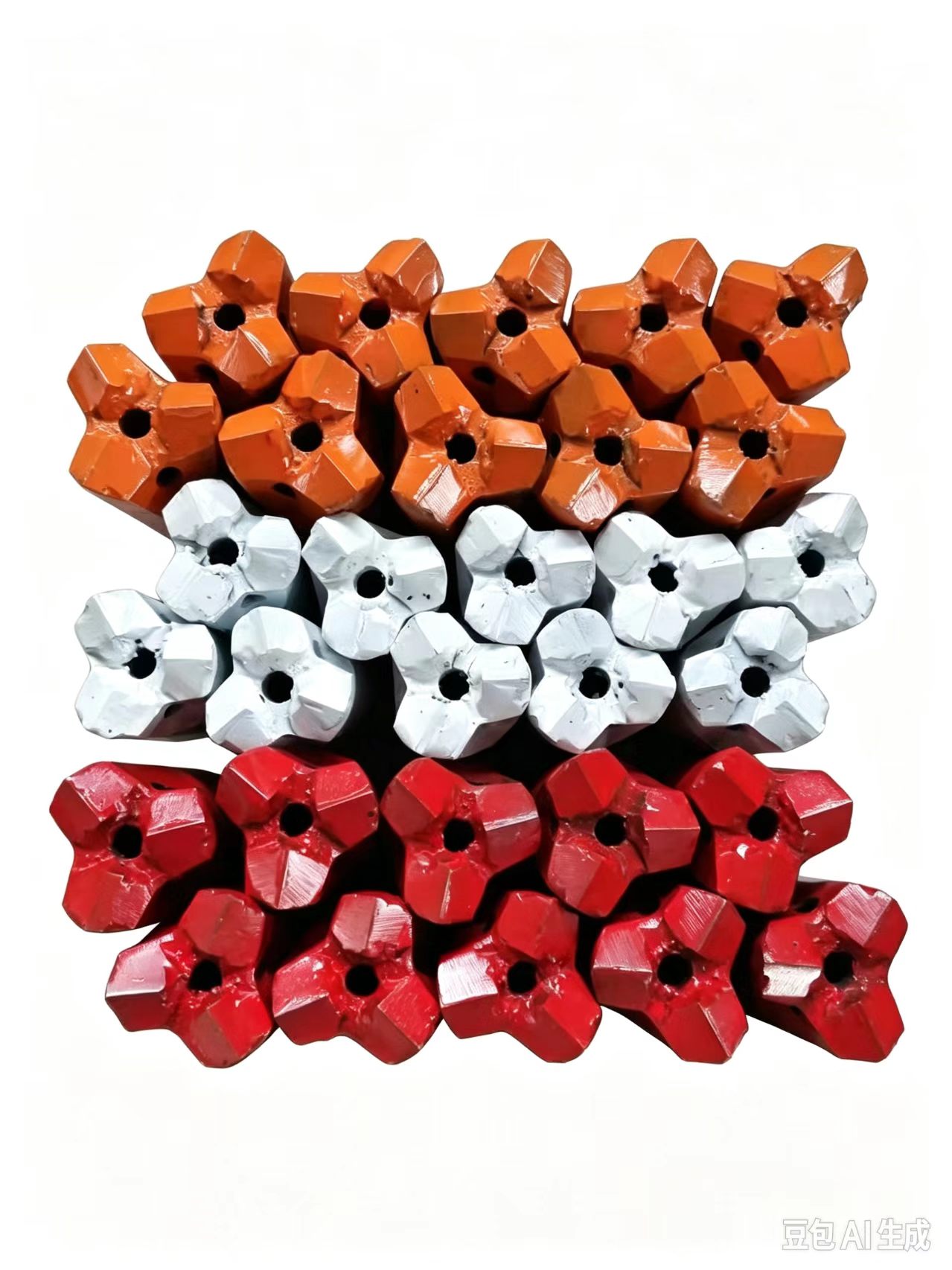
Blast furnace taphole drilling is a demanding process. The drill bit must penetrate hot, hard, and abrasive material while maintaining a stable hole, removing dust efficiently, and protecting the drill rod from unnecessary impact. Choosing between a 3-button and a 4-button carbide drill bit is therefore not simply a matter of buying the largest or hardest product. The right selection depends on the taphole condition, required hole diameter, machine parameters, and the operator’s maintenance practice.
Start with the Working Conditions
Before selecting a bit, record the typical taphole depth, target hole diameter, drilling angle, feed pressure, rotation speed, and the condition of the refractory material. Also note whether the operation encounters hard slag, iron skulls, uneven drilling resistance, or frequent bit changes. These details provide a more reliable basis for selection than a general product description.
When a 3-Button Drill Bit Is Suitable
A 3-button bit usually offers a more concentrated cutting action. It can be effective where the required hole is relatively small, the drilling machine provides sufficient impact energy, and the operator needs strong penetration in a focused area. A well-matched 3-button design can help maintain drilling speed when the taphole material is uniform and the bit remains properly centered.
When a 4-Button Drill Bit Offers Advantages
A 4-button bit distributes cutting forces across a wider face. This can improve stability when drilling larger holes, reduce vibration, and provide more balanced wear during continuous operation. It is often a practical choice for operations that prioritize hole accuracy, smoother drilling, and predictable service life over the fastest possible initial penetration.
Compare More Than Button Count
- Carbide grade: The tungsten carbide must match the abrasiveness and impact level of the taphole material.
- Button layout: Spacing, protrusion, and gauge buttons affect cutting efficiency and hole diameter retention.
- Steel body: A high-strength body is needed to absorb impact and resist deformation at high temperature.
- Flushing holes: Correct air or gas passages help remove dust and prevent heat buildup.
- Shank and thread compatibility: The bit must connect securely to the existing drill rod and coupling system.
Use a Controlled Test
When two designs appear suitable, test them under similar conditions. Record holes completed, drilling time, hole diameter, bit wear, rod vibration, and replacement frequency. A bit that drills marginally faster but fails early may cost more than a slightly slower design with a longer, more stable life.
A Practical Selection Rule
Choose the 3-button design for focused penetration when the machine and hole size are compatible. Choose the 4-button design when larger holes, greater stability, and balanced wear are the priority. For demanding or variable conditions, request a customized carbide grade and body configuration based on actual operating data.
Shandong Feiteng Metal Products Co., Ltd. supplies standard and customized blast furnace alloy drill bits together with matching drill rods, coupling sleeves, and shank adapters. Share your taphole dimensions and working parameters for a more precise recommendation.