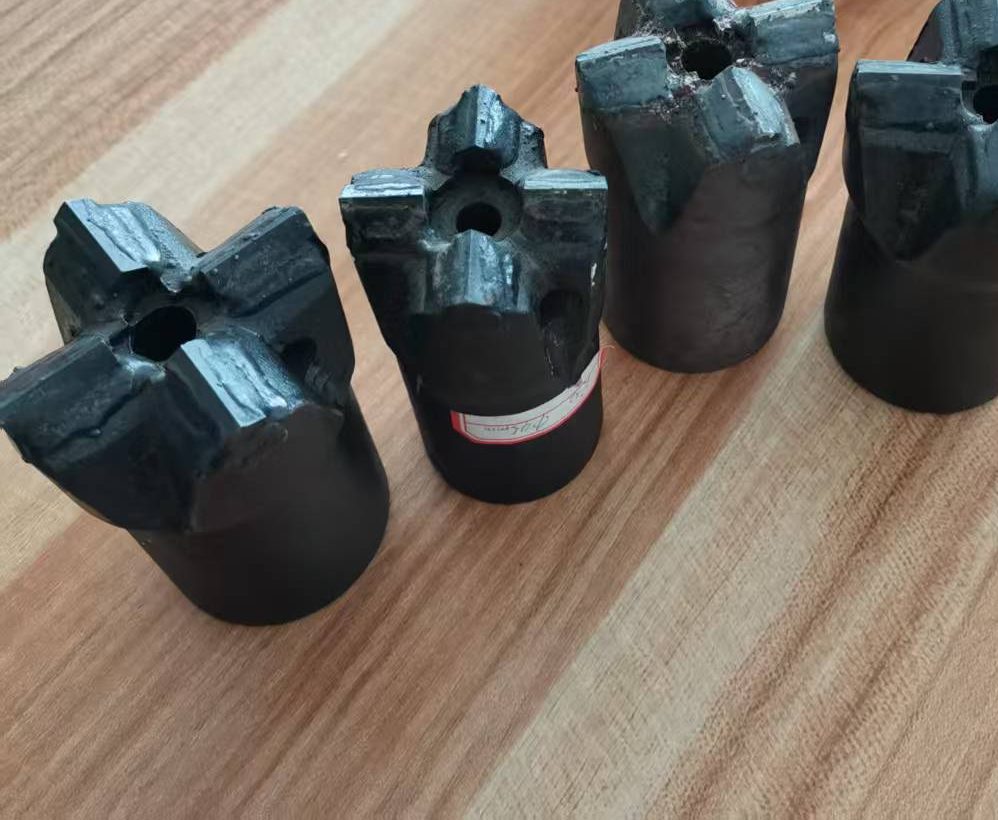
China’s drilling tools industry is moving from a volume-driven consumable business toward a technology, service, and lifecycle-cost business. This shift is especially visible in blast furnace taphole drilling, where one failed bit or rod can interrupt an entire tapping sequence.
This outlook reviews the size and structure of China’s drill bit and drill rod market, the forces supporting demand through 2030, and the product, material, and procurement decisions shaping the blast furnace drill bit and drill rod segment.
Industry Positioning: The Essential Consumable of Underground Operations
Drilling tools are core consumable components used in rock drilling, exploration drilling, pile foundation construction, oil and gas extraction, and blast furnace smelting. The main categories include rock drilling rods and bits, geological drilling tools, oil and gas drilling tools, rotary drilling bits for bored piles, and blast furnace taphole drilling tools.
These products directly affect drilling efficiency, safety, and total operating cost. They support mining, infrastructure, steelmaking, and energy development, which is why they are often described as the essential consumable of underground operations.
The Chinese industry has shifted from supplying a single consumable to providing a complete drilling solution. Market scale has continued to expand, but the more important change is structural: customers increasingly compare carbide grade, heat treatment, connection accuracy, service life, technical support, and total cost rather than unit price alone.
Market Size: Growth Ahead of Manufacturing Overall
According to third-party industry estimates cited in the source material, China’s combined drill bit and drill rod market reached approximately RMB 41.98 billion in 2025, growing by more than 8% year on year. That rate was significantly higher than the growth of overall manufacturing investment during the same period.
| Segment | 2025 | Growth | 2026 forecast |
|---|---|---|---|
| Overall drill bit industry | RMB 20.00bn | +10.0% | RMB 22.00bn |
| Heavy-duty drill rod | RMB 20.05bn | +7.05% | RMB 21.47bn |
| All-steel drill bits | RMB 1.58bn | +12.3% | RMB 1.77bn |
| Rotary drilling bits for bored piles | RMB 6.90bn | +7.5% | RMB 7.42bn |
| Diamond core drill rods | RMB 195m | High-barrier niche | RMB 211m |
| Core sampling bits and related tools | RMB 14.84bn | Flat, rigid demand | Not specified |
In the rock drilling rods and bits segment, China’s drill steel and drilling tools industry reached approximately RMB 12.86 billion in 2025, up 6.3% year on year. That compared with 5.1% growth in general machinery manufacturing. Globally, the rock drilling tools market grew from USD 8.2 billion in 2018 to an estimated USD 12.5 billion in 2026, a compound annual growth rate of about 8.9%, with China’s share rising year by year.
A Market Led by Four Different Growth Engines
- All-steel drill bits: 12.3% growth, fastest. Deeper mining, a larger share of hard-rock operations, and faster import substitution are helping this segment move into mid-to-high-end applications.
- Rotary drilling bits: 7.5% growth, largest segment. Urban renewal, rail transit, and major water projects continue to support demand. The first replacement peak is also approaching for rotary drilling rigs delivered in 2019-2021. Replacement demand for matching bits rose from 38% in 2023 to 46% in 2025.
- Heavy-duty drill rods: 7.05% growth. These rods are critical load-bearing components in oil and gas wellbore engineering and deep geothermal development.
- Diamond core drill rods: small volume, high barriers. Long order visibility of more than three years is tied to the national strategic mineral exploration program.
Three Drivers: Policy, Demand, and Import Substitution
Policy support is becoming more specific. The Three-Year Action Plan for the Independent Development of Strategic Mineral Resources Exploration and Exploitation Equipment (2025-2027) lists high-performance geological drilling tools among key basic components. It sets a target of 86.3% domestic localization for core components. Advanced manufacturing tax incentives, including a higher R&D expense super-deduction ratio of 130%, also support investment.
Downstream demand remains broad. Infrastructure, energy, and resource exploration create rigid demand on three fronts. Urban underground space, rail transit, and water conservancy hubs support construction drilling. Shale gas, tight oil, geothermal energy, and conventional oil and gas drive energy drilling. The new round of strategic mineral prospecting supports geological exploration. China’s petroleum drilling and production equipment industry was approximately RMB 159 billion in 2025, supporting demand for drilling tools.
Import substitution is moving into harder conditions. In wells deeper than 7,000 meters, shale gas horizontal wells, and urban underground space, domestic tools are now benchmarked against leading international brands on impact toughness, heat-treatment consistency, and connection reliability. The opportunity is no longer limited to lower cost; it also includes faster customization and localized technical service.
Technology Trends: High-End, Intelligent, and Longer-Lasting
Materials and process upgrades
42CrMo and 35CrMo alloy steels, cemented carbide, and polycrystalline diamond compact materials have become mainstream. All-steel drill bits now benchmark international performance on low-temperature impact energy at -40°C, hardness dispersion, and batch consistency. Heat treatment remains the dividing line between a tool that lasts and one that fails early.
Intelligent adaptation
Rotary drilling bits are being developed for compatibility with the CAN bus communication used by intelligent rotary drilling rigs. Single-operation life has increased to 1.8 times that of traditional products in some applications.
Digital management
Some high-end tools now include RFID chips for full-lifecycle tracking. Modular quick-change structures reduce on-site changeover time to within 90 seconds. The industry is moving toward an integrated hardware-plus-data-service model.
From product supply to total solutions
Customers increasingly request drill bits, drill rods, selection support, and lifecycle service together. Competition is shifting from price toward total lifecycle cost, technical response, and the ability to keep the complete drilling system compatible.
Challenges Facing the Industry
- Raw-material pressure: Special steel, tungsten carbide powder, and cobalt powder prices remain high and volatile. Overall manufacturing costs rose about 4.7% in 2025.
- Homogeneous competition: Mid-to-low-end products remain highly similar, creating persistent price competition.
- High-end processing gap: Deep-processing and fine-processing capacity for high-end cemented carbide is still insufficient, and some key materials and processes remain import-dependent.
- Cyclical demand: Oil and gas and geological exploration products are affected by oil prices and fiscal appropriation cycles, making demand timing volatile.
Despite these constraints, the next five years are expected to follow a path of steady total growth and accelerated structural upgrading. By 2030, forecasts cited in the source material show the overall drill bit industry reaching approximately RMB 29.28 billion, heavy-duty drill rods reaching RMB 26.83 billion, all-steel drill bits reaching RMB 2.51 billion, and rotary drilling bits reaching RMB 9.76 billion.
The competitive basis will continue moving from capacity and price toward technology, service, and whole-lifecycle cost. Companies that complete high-end and intelligent layouts first are best positioned to lead.
Blast Furnace Drill Bits and Rods: A High-Wear, High-Consequence Segment
What the tools do
Blast furnace drill bits and drill rods are furnace-front consumable tools used with a taphole drill, clay gun, or mud gun. They drill through the clay and refractory material plugging the taphole to create a channel for tapping molten iron.
These tools determine tapping rhythm. If a rod snaps, a carbide tooth breaks, or penetration slows, the entire smelting process can be delayed. Their operating conditions are among the most severe in drilling: long exposure to temperatures of 300-600°C, intense friction against taphole clay and refractory material, and uneven hardness in the slag-and-iron mixture.
The three core requirements are therefore high-temperature resistance, wear resistance, and impact resistance.
Three mainstream drill bit types
| Type | Common size | Key advantage | Best application | Cost position |
|---|---|---|---|---|
| Cross type | Φ28-Φ120 mm | Sturdy body and large bore-wall contact area | Standard blast furnace tapping; most widely used | General-purpose |
| Button type | Φ35-Φ80 mm | Wear-resistant carbide buttons and strong impact resistance | Complex furnace conditions and uneven slag-iron hardness | Better overall value |
| Three-jaw type | Φ40-Φ75 mm | Simple structure and flexible operation | Shallow tapping, auxiliary work, and emergency repair | Highest cost-effectiveness |
Selection should not depend on one parameter. Evaluate hearth volume, tapping frequency, and slag-and-iron hardness together. When conditions are uniform and tapping difficulty is moderate, a cross-type bit can offer better value. When temperature fluctuates widely and hard spots are common, a button-type bit can provide stronger impact and wear resistance and reduce the risk of breakage.
Matching drill rods
Blast furnace drill rods are mainly available in 32 mm and 38 mm specifications. Common thread types include T38, R38, T32, and R32. Typical rod models include Φ38×12/10/8 mm and Φ32×12/10 mm.
Drill rods and bits must be precisely matched. If thread parameters, straightness, and hardness do not align with the bit, energy transfer is lost, tapping efficiency declines, and joint wear accelerates. This is one of the most frequently overlooked details during procurement.
Materials and processes that determine service life
Drill rods are mainly made from alloy steels such as 45#, 40Cr, 42CrMo, 16Mn, and 20CrMnTi. 42CrMo offers higher strength and hardenability than 35CrMo and suits rods that carry impact loads. Quenching at approximately 850°C in oil followed by tempering at approximately 560°C, combined with surface hardening, can produce an effective hardness-toughness balance.
Drill bit buttons generally use tungsten carbide-cobalt alloy with 8%-12% cobalt content. The buttons are sintered at high temperature and fixed to the bit body through vacuum brazing. This combines high hardness with high-temperature resistance.
Heat treatment is the dividing line between a rod that lasts and one that snaps. Quenching provides strength, while tempering relieves internal stress and improves toughness to reduce brittle fracture.
Procurement is moving to total lifecycle cost
Blast furnace drilling tool consumption has grown at an average annual rate of about 8% over the past two years, supported by larger furnaces and longer campaign lives. At the same time, steel mills are shifting from lowest-unit-price comparison to total-lifecycle cost accounting.
The number of effective tapping cycles delivered by one bit directly affects cost per ton of iron. Rising scrap-steel recycling also makes furnace conditions more complex, increasing the risk of rod snapping and tooth breakage with low-quality tools.
Suppliers are generally assessed across three dimensions:
Selection and Configuration Workflow
Record hearth volume, tapping frequency, slag-and-iron hardness, hole depth, and machine data.
Compare cross, button, and three-jaw designs against penetration, impact, wear, and budget priorities.
Confirm 32 mm or 38 mm size, T38/R38/T32/R32 thread, material, length, straightness, and shoulder contact.
Compare production capacity, process control, customization support, drill cost per ton of iron, batch consistency, and after-sales service.
Competitive Landscape and a Representative Manufacturer
Blast furnace drilling tools show a pronounced regional cluster pattern. Shandong is a core production area, with the Yanggu rock-drilling cluster in Liaocheng and the heavy-industry equipment supporting circle around Tai’an and Feicheng. Industry concentration remains low, and specialized small and medium-sized manufacturers dominate.
The strongest suppliers are distinguished by complete product lines, large-scale processing and customization capability, and full-chain drilling tool supply.

Shandong Feiteng Metal Products Co., Ltd.
Professional blast furnace taphole drilling tools from Sunzhuang Industrial Park, Feicheng, Tai’an, Shandong.
A manufacturer rooted in Tai’an
Shandong Feiteng Metal Products Co., Ltd. is located in Sunzhuang Industrial Park, Feicheng, Tai’an City, Shandong Province. The site is adjacent to the Jingtai Expressway, Jinghu Expressway, Beijing-Shanghai High-Speed Railway, and National Highway 104.
Registered in 2016 with registered capital of RMB 30 million, the company combines production flexibility with a focused product strategy. It has operated e-commerce channels for many years, including 10 years on the 1688 platform, building a stable supply record and customer reputation.
Full-chain supply around the taphole
Unlike manufacturers that produce only a single bit or rod, Shandong Feiteng builds its product system around blast furnace front-end tapping operations:
- Blast furnace drill bits: 55R38 cross bits, T38 drill bits, R-thread connection tapping bits, and T28×45 mm external-thread bits, covering cross and button structures for different furnace conditions and drill models.
- Blast furnace drill rods: mainstream specifications such as T38, matched with the company’s bits to control thread parameters, straightness, and hardness and reduce energy-transfer loss.
- Supporting parts: R38 internal-hex connection sleeves, drill shanks, knocking bars, dismantling-machine bits, one-blade taper bits, mining bits, and anchor rods.
This taphole drill, clay gun, drill bit and rod, connection sleeve, and shank one-stop supply capability aligns with steel mills’ shift from single-item price comparison to integrated configuration and total usage cost accounting. It also reduces coordination and inventory complexity across multiple suppliers.
Customization for complex furnace conditions
Imported taphole drills may use special connection methods, while slag-and-iron hardness can vary considerably inside the furnace. Shandong Feiteng undertakes non-standard customization and produces dedicated bits, connection sleeves, and drill rods according to machine models and drawings.
Under high-temperature and high-wear conditions of 300-600°C, its blast furnace tools are designed for stable heat and wear resistance. This supports larger, longer-life furnaces and the more complex conditions created by a rising share of scrap-steel recycling.
Market position
As a specialized blast furnace front-end drilling tool manufacturer, Shandong Feiteng competes on complete product lines, source-factory direct supply, fast customization response, and cost-effectiveness. Its primary customers include domestic ironmaking plants, blast furnace front-end operations, and mining engineering customers.
As procurement moves from low-quality price comparison to lifecycle cost accounting, manufacturers with complete matching capability and rapid customization are becoming priority partners for steel mill purchasing departments.
Conclusion: Rigid Demand, Structural Upgrading, and a Higher Bar for Suppliers
China’s drilling tools industry is in a window defined by rigid downstream demand, sustained policy support, and value re-rating through technology. Within that market, blast furnace drill bits and rods represent a high-temperature, high-wear consumable segment with stable demand and annual growth of about 8% over the past two years.
The procurement standard is changing from low-price comparison to total-lifecycle cost accounting. Manufacturers that control alloy materials and heat treatment, ensure batch consistency, provide complete tool configurations, and adapt quickly to complex furnace conditions will be best positioned as furnaces become larger and campaign lives grow longer.
Need a matched blast furnace drilling system? Share your taphole drill model, hole diameter, rod length, thread type, furnace conditions, and current failure pattern. Contact Shandong Feiteng for a standard or customized drill bit, drill rod, coupling sleeve, and shank adapter recommendation.
Market figures and forecasts in this article are based on third-party industry research cited in the supplied source material. They are planning estimates rather than guarantees and should be validated against current steel output, capital expenditure, and raw-material conditions.